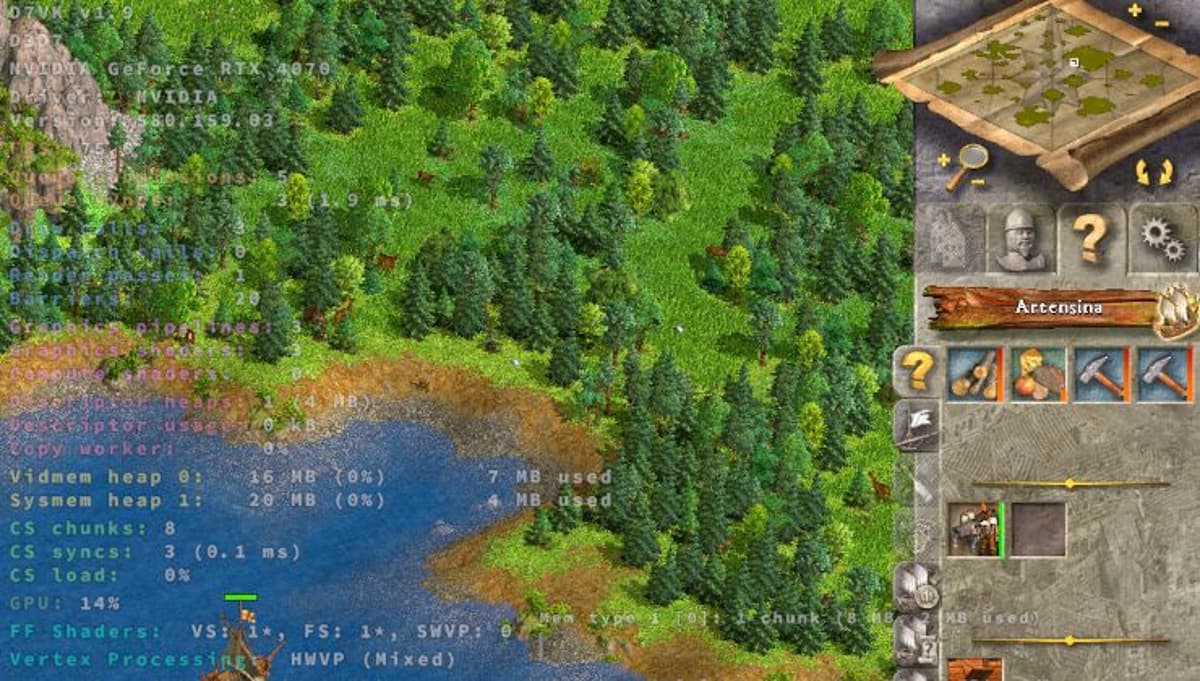
D7VK 1.9 Brings 2D Upgrades for Classic Direct3D Games on Linux

Why It Matters
By closing the performance gap for 2D Direct3D games, D7VK expands Linux's retro‑gaming library, attracting more users and developers to the platform. The efficiency gains also lower hardware demands, making legacy titles more accessible on modest systems.
Key Takeaways
- •Full surface dirty tracking boosts 2D performance, fixes over 30 bugs
- •Unified D3D9 objects cut memory use, restored Dungeon Keeper 2 rendering
- •Delayed image uploads reduce GPU load, improve frametime consistency
- •Enhanced color-key transparency fixes Nvidia issues, improves visual fidelity
Pulse Analysis
The D7VK 1.9 release marks a pivotal step for Linux gamers who rely on Direct3D compatibility layers to run legacy titles. While earlier versions focused on translating 3D pipelines, this update tackles the long‑neglected 2D domain by introducing delayed image uploads and a comprehensive dirty‑tracking system. These mechanisms postpone texture copies until the last possible moment, trimming GPU cycles and smoothing frame delivery in games that blend sprites, UI overlays, and static backgrounds.
Technical refinements extend beyond performance tweaks. By unifying D3D9 object handling, D7VK reduces its memory overhead and eliminates edge‑case crashes that plagued multi‑version interfaces, a change that directly revived titles like Dungeon Keeper 2. The project also fine‑tuned indexed‑draw buffers and introduced a device‑name configuration option, enabling hardware acceleration where it previously failed. Community contributions, notably from @CkNoSFeRaTU, sharpened color‑key transparency on Nvidia GPUs and resolved clipping anomalies in games such as RIM: Battle Planets and Revenant.
For the broader Linux gaming ecosystem, these improvements signal growing maturity of compatibility solutions, narrowing the gap with Windows‑only experiences. Lower GPU and memory demands mean older laptops and budget desktops can now enjoy smoother gameplay from the early 2000s era, potentially expanding the user base and encouraging developers to target Linux as a viable retro‑gaming platform. As D7VK continues to evolve, its blend of open‑source collaboration and performance‑centric engineering positions it as a cornerstone for preserving gaming heritage on modern hardware.
D7VK 1.9 brings 2D upgrades for classic Direct3D games on Linux
Comments
Want to join the conversation?
Loading comments...