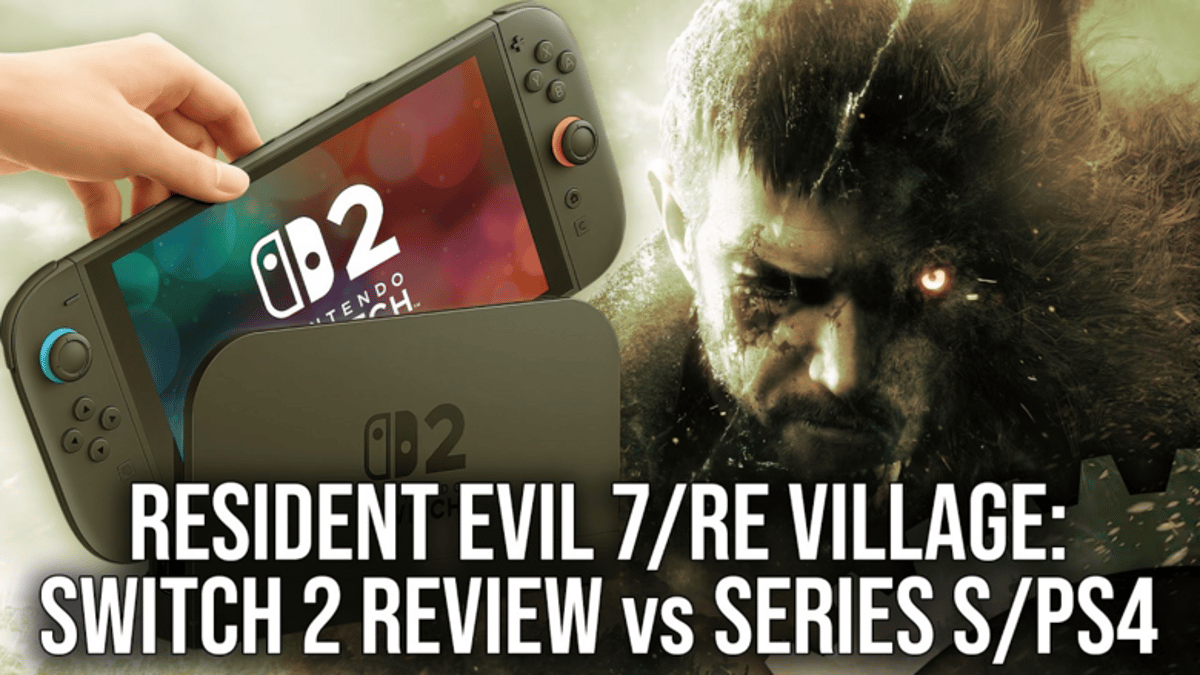
Digital Foundry Takes a Deep Dive Into Resident Evil 7 and Village on Switch 2
•March 7, 2026
0
Why It Matters
The findings demonstrate Switch 2’s ability to host demanding AAA titles, expanding its market relevance beyond handheld‑first games. Successful ports could encourage more developers to target the platform, boosting its software ecosystem.
Key Takeaways
- •RE7 runs near PS4 performance on Switch 2.
- •Village improves visuals but occasional 40 fps dips.
- •Black levels and colors slightly weaker than PS4.
- •Both titles deemed playable on handheld mode.
- •Port showcases Switch 2’s upgraded GPU capabilities.
Pulse Analysis
The Nintendo Switch 2 arrives with a custom NVIDIA‑based GPU, higher memory bandwidth, and a more efficient power envelope, positioning it as a true hybrid capable of handling modern AAA workloads. This hardware leap has reignited interest from publishers who previously dismissed the original Switch as a niche handheld. Capcom’s decision to bring Resident Evil 7 and Resident Evil Village—two graphically intensive survival‑horror franchises—to the platform underscores a broader industry shift toward cross‑generational releases. By leveraging the Switch 2’s upgraded architecture, developers can now target a larger install base without sacrificing core gameplay experiences.
Digital Foundry’s side‑by‑side comparison reveals that Resident Evil 7 runs almost on par with its PlayStation 4 version, delivering a stable 60 fps and only modest compromises in black‑level depth and color fidelity. Village, while visually sharper than its PS4 counterpart, suffers intermittent frame‑rate drops to around 40 fps in expansive environments, a trade‑off that remains acceptable for many players given the handheld convenience. The analysis also highlights differences between docked and handheld modes, with docked play offering marginally higher resolution and smoother performance. These metrics provide a realistic benchmark for future ports, illustrating where optimization efforts should focus.
The positive reception of these ports signals a turning point for the Switch 2’s software strategy, encouraging other AAA studios to consider hybrid releases. For consumers, the ability to experience flagship horror titles on a portable device expands the value proposition of the console, potentially driving higher attach rates for accessories and game sales. From a business perspective, successful high‑profile ports can strengthen Nintendo’s negotiating power with third‑party developers and diversify its revenue streams beyond first‑party titles. As more studios test the limits of the Switch 2, the platform may evolve into a mainstream hub for both indie and blockbuster experiences.
Digital Foundry takes a deep dive into Resident Evil 7 and Village on Switch 2
0
Comments
Want to join the conversation?
Loading comments...