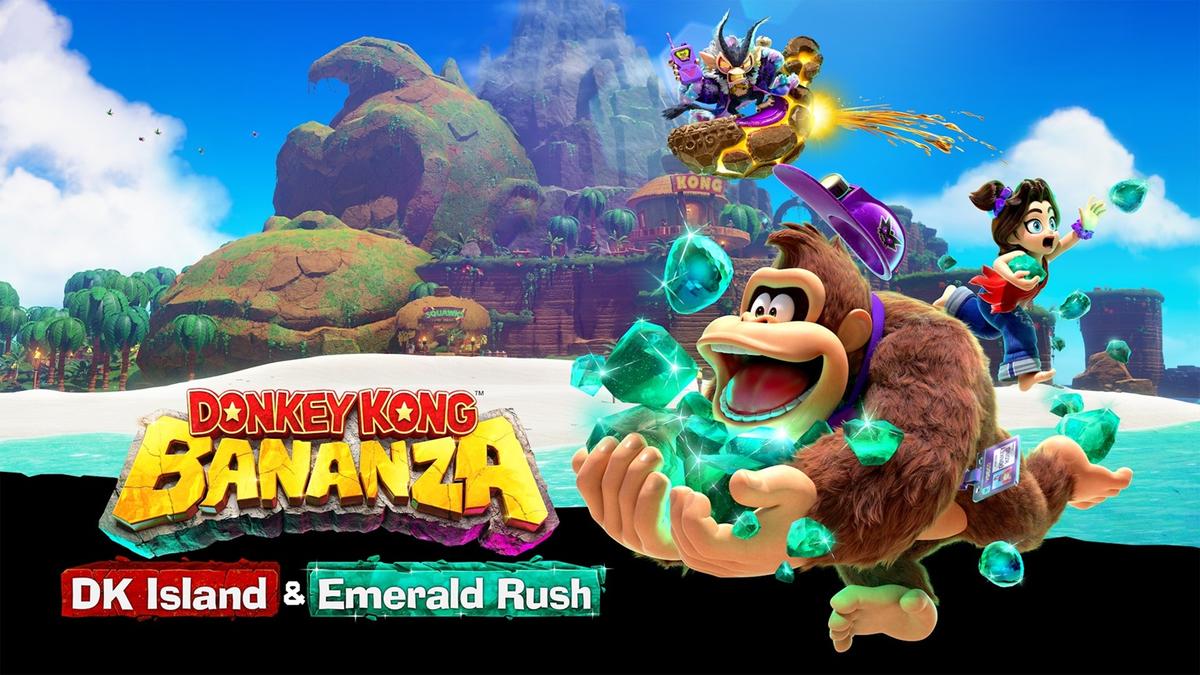
Donkey Kong Bananza’s Emerald Rush Is One of Nintendo’s Best and Most Underrated DLCs
•March 8, 2026
0
Why It Matters
The DLC revitalizes Donkey Kong Bananza’s longevity, providing seasoned players with meaningful challenges and justifying premium pricing in a market where post‑launch content is often sparse.
Key Takeaways
- •Emerald Rush adds 50+ hours replayable content.
- •Multiple difficulty tiers unlock across most game layers.
- •Limited-time events require specific perk strategies.
- •$20 price sparked criticism despite extensive content.
- •DLC emphasizes skill over base game's easy mode.
Pulse Analysis
Nintendo’s post‑launch strategy has increasingly leaned toward low‑effort add‑ons, yet Emerald Rush stands out by delivering a substantive, skill‑driven experience. Rather than a simple cosmetic pack, the DLC reworks the core loop: gold converts to emeralds, and players must master spin jumps, water‑bounce techniques, and a suite of perks to maximize yields. By resetting DK’s abilities each run and rewarding Banandium Chips, the mode creates a resource‑management challenge that dovetails with the series’ platforming roots while introducing a fresh roguelike cadence.
The design’s depth is evident in its layered difficulty system and selective stage availability. Seven difficulty tiers span most of the game’s worlds, unlocking progressively tighter time limits and tighter resource constraints. Players can equip gear such as the Soggy Cravat or Treasure Tie, each influencing run outcomes. Limited‑time events further enrich the meta‑game, forcing participants to prioritize specific perks—like Ostrich form bonuses—to meet million‑emerald targets. This dynamic encourages community discussion, strategy sharing, and repeated engagement, effectively extending the title’s lifespan far beyond its initial campaign.
From a market perspective, the $20 price tag sparked backlash, primarily due to perceived mis‑marketing that highlighted the minor DK Island bonus over the substantive Emerald Rush mode. However, when measured against the 50‑plus hours of content and the high replay value, the DLC offers a compelling value proposition. Its success underscores a growing appetite for meaningful, challenge‑focused expansions, suggesting that future Nintendo DLCs may shift toward richer, gameplay‑centric offerings rather than superficial add‑ons.
Donkey Kong Bananza’s Emerald Rush is one of Nintendo’s best and most underrated DLCs
0
Comments
Want to join the conversation?
Loading comments...