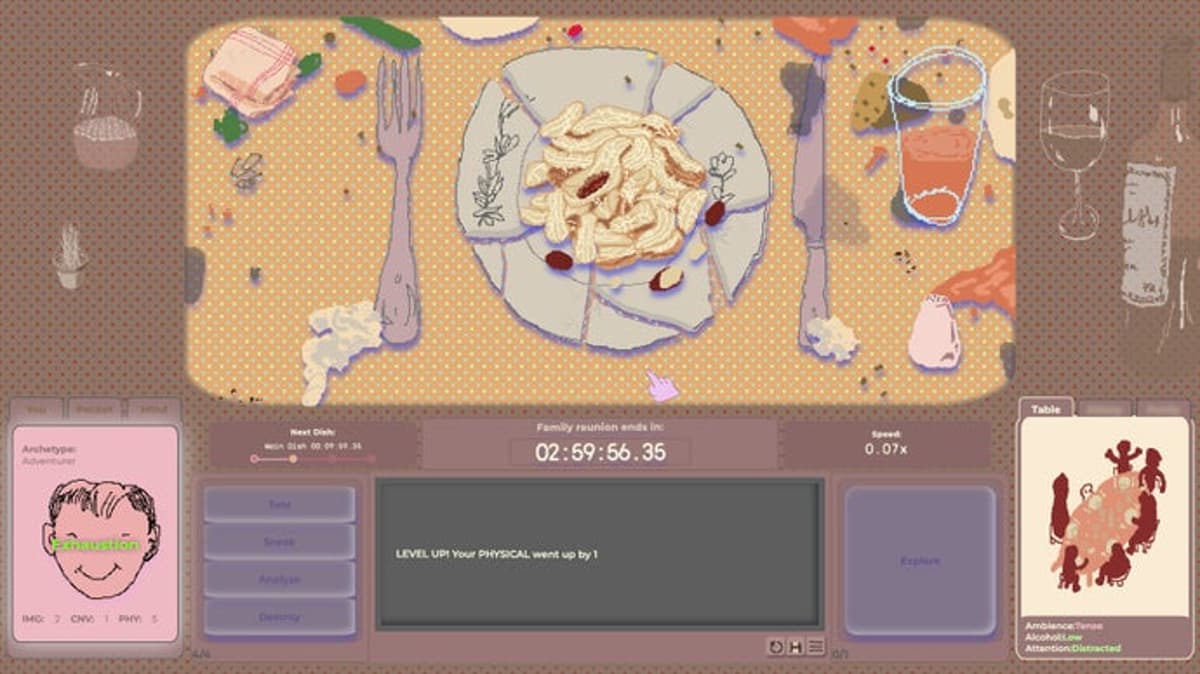
Family Reunion Is a Dinnertime Simulation Game that Captures the Wonder and Boredom of Being a Loosely Disciplined 7-Year-Old
Why It Matters
The title showcases how indie developers can turn everyday boredom into a compelling gameplay loop, expanding the simulation genre beyond traditional management titles. Its unique time‑dilation mechanic and child‑centric perspective could attract both casual gamers and critics looking for fresh narrative experiences.
Key Takeaways
- •Family Reunion is a time‑attack dinner simulation for kids
- •Players choose Introvert, Chatty, or Adventurer archetypes to pass time
- •Imaginative actions like alien drawings speed up the in‑game clock
- •Demo is free on Itch.io and Steam, demo covers starter course
- •Early‑access launch targeted for late 2026, no exact release date
Pulse Analysis
Indie developers have long used everyday rituals as fertile ground for experimental gameplay, and Family Reunion continues that tradition by turning a routine dinner into a sandbox of childlike imagination. The hand‑doodled art style evokes the shaky sketches children make before they learn to write, instantly signaling the game’s focus on perspective rather than polish. By framing the experience through the eyes of a loosely disciplined seven‑year‑old, the title taps into a universal feeling of being trapped at the table, a niche that mainstream simulation titles rarely explore. This approach aligns with a growing appetite for games that blend nostalgia with novel mechanics.
The core loop revolves around a ticking clock that slows the meal unless the player creates distractions. Three archetypes—Introvert, Chatty and Adventurer—grant different tools: day‑dreaming alien invasions, forced conversation, or a mini‑dungeon crawl that lets the child roam the house. Each action nudges the timer forward, rewarding creativity over brute force. The demo, available on Itch.io and Steam, demonstrates how simple gestures like drawing on the table or vandalizing a salt shaker can have measurable effects on the in‑game time. This design encourages experimentation, making the game feel like a living, reactive tabletop rather than a static puzzle.
From a business perspective, Family Reunion’s early‑access target for late 2026 positions it to capitalize on the seasonal surge of quirky titles that attract both streamers and press coverage. The low development overhead of a solo creator combined with a free demo lowers entry barriers, while the unique premise offers strong differentiation in a crowded indie market. If the time‑dilation mechanic resonates, the game could expand into downloadable content that adds new meals or family dynamics, creating a modular revenue stream. Ultimately, its success will hinge on how well it translates the universal boredom of childhood into sustained player engagement.
Family Reunion is a dinnertime simulation game that captures the wonder and boredom of being a loosely disciplined 7-year-old
Comments
Want to join the conversation?
Loading comments...