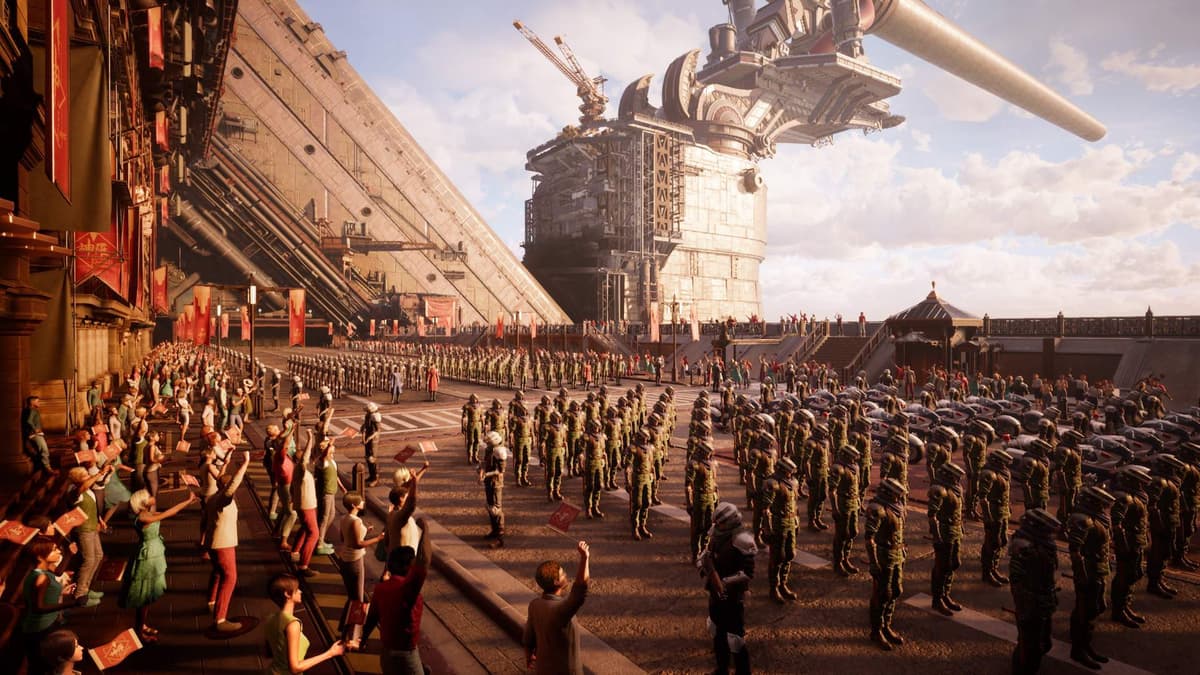
Final Fantasy 7 Remake Part 3 Going Multiplatform “Won’t in Any Way” Lower Visual Quality
•February 16, 2026
0
Why It Matters
A true‑cross‑platform launch without visual downgrade expands the franchise’s audience while setting a benchmark for quality parity across consoles and PC.
Key Takeaways
- •Part 3 will launch on PC, PS5, Xbox, Switch 2
- •Director promises no visual downgrade despite multiplatform shift
- •Game targets 30 FPS on low-end, 60 FPS on high-end
- •Assets created at PC quality, then downscaled per platform
- •Higher-spec hardware adds more NPCs for livelier towns
Pulse Analysis
Square Enix’s decision to release Final Fantasy VII Remake Part 3 across four major platforms reflects a broader industry shift toward inclusive publishing. By targeting both legacy and next‑gen consoles, the company taps into a diverse user base that spans traditional console gamers, handheld enthusiasts, and PC players. This strategy not only maximizes revenue potential but also positions the title as a flagship example of how high‑budget RPGs can maintain relevance in a fragmented market where hardware capabilities vary widely.
Technically, the development team employs a dual‑layered performance model: 30 frames per second on lower‑spec hardware such as the Switch 2 and Xbox Series S, and 60 frames per second on premium systems like the PS5 and high‑end PCs. Rather than designing a single asset set for the lowest common denominator, Square Enix creates 3‑D models and textures at PC‑grade fidelity and then applies a systematic "reduction" process for each platform. This approach preserves visual richness on powerful machines while allowing scalable compromises—such as fewer NPCs or reduced particle effects—on less capable devices, ensuring that performance targets are met without sacrificing core artistic intent.
The upcoming launch of Final Fantasy VII Rebirth on Switch 2 and Xbox Series X/S will act as a litmus test for Hamaguchi’s promises. If the title delivers comparable visual depth and fluidity to its PC counterpart, it could validate the reduction pipeline and encourage other studios to adopt similar workflows. Conversely, any perceived downgrade may fuel consumer skepticism about cross‑generation releases. Either outcome will shape future expectations for blockbuster RPGs, influencing how developers balance graphical ambition with the practicalities of a multi‑platform ecosystem.
Final Fantasy 7 Remake Part 3 Going Multiplatform “Won’t in Any Way” Lower Visual Quality
0
Comments
Want to join the conversation?
Loading comments...