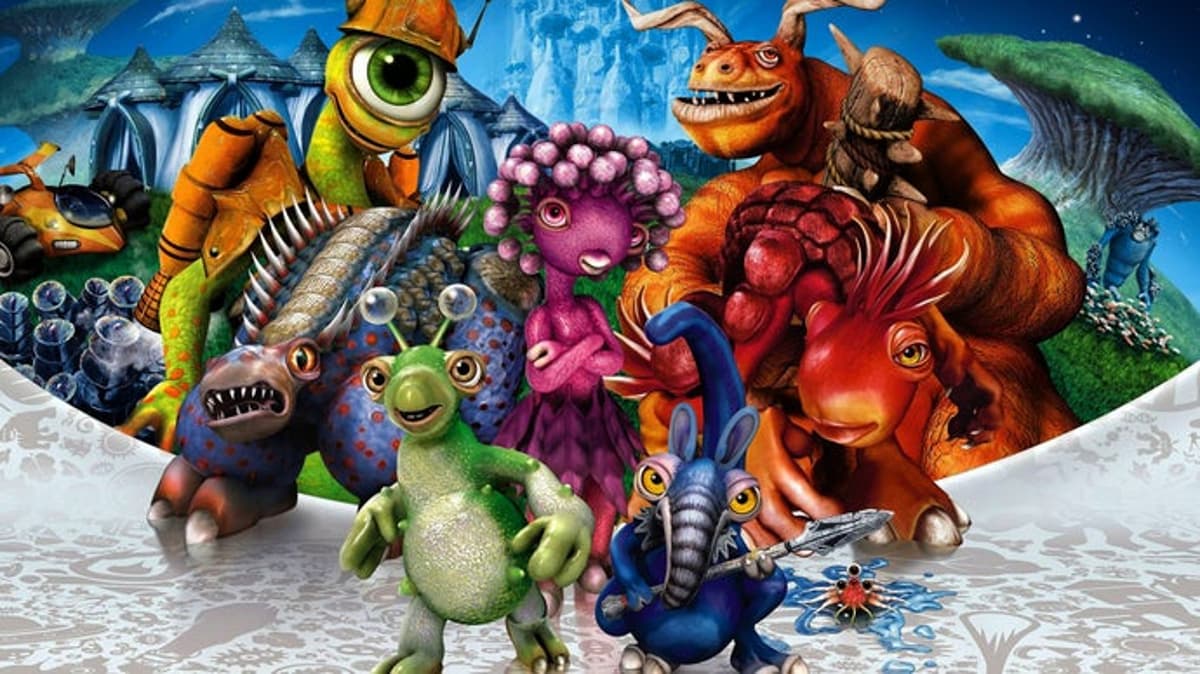
From Mr. Potato Head to a Cosmic '70s Documentary, Spore's Creators Share How It Came to Be
Companies Mentioned
Why It Matters
Spore’s experimental design showed that large‑scale procedural ecosystems are viable, influencing later sandbox and simulation titles and reshaping expectations for player creativity.
Key Takeaways
- •Inspired by 1977 'Powers of 10' documentary
- •Combined Pac‑Man, FPS, RTS, and 4X gameplay
- •Real‑time creature editor mimicked costly professional tools
- •Developed using a 'Mr. Potato Head' modular concept
- •Set precedent for procedural generation and user‑generated content
Pulse Analysis
Spore remains a landmark in the evolution of sandbox gaming, not merely because of its commercial profile but due to the audacious design brief that Will Wright set in the early 2000s. Drawing directly from Charles and Ray Eames’ “Powers of 10,” Wright envisioned a title that would compress the entire history of life into a single interactive experience, moving players from a single‑cell organism to a galaxy‑spanning civilization. This conceptual framework forced the team to stitch together mechanics from classic arcade, first‑person shooter, real‑time strategy, and 4X genres, creating a hybrid that was as daring as it was unwieldy.
The most technically demanding component was the creature‑creation system, which had to generate anatomically plausible models on the fly. Traditional animation pipelines required expensive software and months of labor; Spore’s engineers, led by Chris Hecker, engineered a real‑time modular rig that let players snap body parts together like a digital Mr. Potato Head. This approach reduced development costs dramatically but introduced challenges in ensuring smooth locomotion and believable physics. The breakthrough demonstrated that procedural modeling could be democratized for consumer hardware, paving the way for later tools such as Unity’s ProBuilder and Unreal’s MetaHuman Creator.
While critics often cite Spore’s fragmented gameplay as a flaw, its legacy is evident in today’s user‑generated content ecosystems. Games like No Man’s Sky, Dreams, and even Roblox echo Spore’s ambition to hand creative control to players, leveraging procedural algorithms to populate vast worlds. The oral history released by Design Room underscores how internal debates over simplicity versus depth shaped the final product, offering modern studios a cautionary tale about scope management. Ultimately, Spore proved that ambitious procedural design can coexist with mainstream appeal, a lesson that continues to inform the next generation of sandbox and simulation titles.
From Mr. Potato Head to a cosmic '70s documentary, Spore's creators share how it came to be
Comments
Want to join the conversation?
Loading comments...