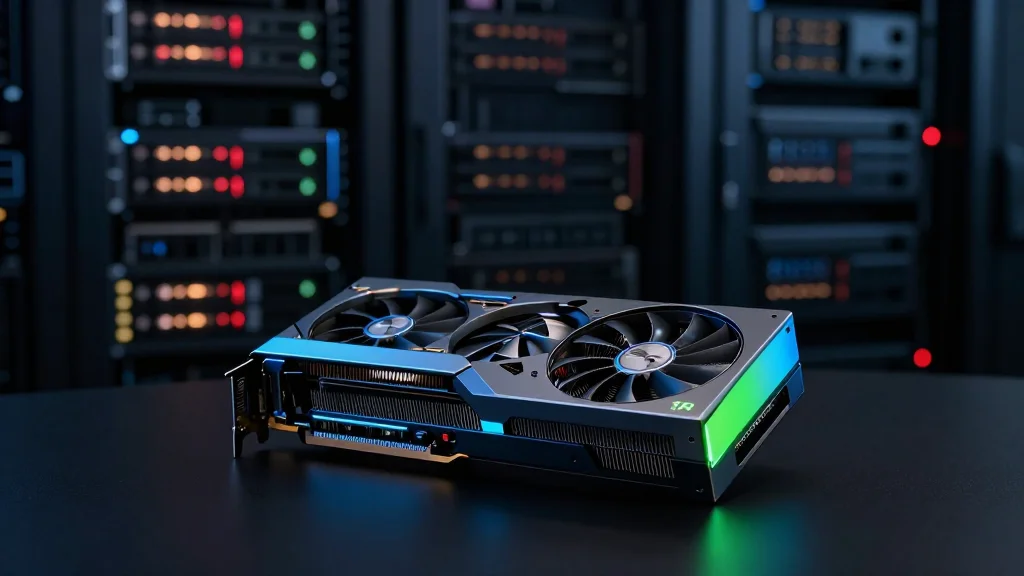
Gamers Slam Nvidia as AI Chip Focus Triggers GPU Shortage and Cancelled RTX 50 Super

Companies Mentioned
Why It Matters
The tension between Nvidia’s AI ambitions and the gaming market highlights a broader industry dilemma: how to allocate scarce semiconductor resources when AI workloads command premium margins. A prolonged GPU shortage could slow PC gaming growth, push consumers toward consoles or cloud platforms, and give competitors like AMD a chance to capture market share. Additionally, the backlash underscores the importance of brand loyalty in a sector where emotional attachment often drives purchase decisions. If Nvidia fails to address gamer concerns, the company risks eroding a core revenue stream and weakening its influence over game developers who rely on GeForce‑optimized technologies. Conversely, a successful rebalancing could set a precedent for how chipmakers manage dual‑market strategies in an era of exploding AI demand.
Key Takeaways
- •Nvidia’s data‑center segment now generates 91.5% of total revenue.
- •RTX 50 Super cancelled; RTX 60 series delayed to 2026, per TrendForce.
- •High Bandwidth Memory for AI chips requires ~4x more silicon per GB than traditional memory.
- •Blackwell B200 AI chip priced at $30,000‑$40,000; GeForce cards range $299‑$1,999.
- •Nvidia holds ~94% of the discrete GPU market despite gamer backlash.
Pulse Analysis
Nvidia’s pivot to AI is not merely a product shuffle; it reflects a structural shift in semiconductor economics. The margin differential—69% for compute versus 40% for consumer graphics—creates a powerful incentive to prioritize data‑center sales, especially as AI workloads proliferate across cloud providers and enterprise AI labs. Historically, Nvidia’s fortunes rose from the gaming community’s embrace of the GeForce line in the early 2000s, a relationship that now feels strained.
The memory bottleneck is a critical flashpoint. HBM’s superior bandwidth is essential for training large language models, but its production constraints mean fewer wafers for traditional GDDR‑based GPUs. As Nvidia allocates most of its HBM to AI, the downstream effect is a thinner supply of gaming cards, higher retail prices, and longer wait times. This scarcity could accelerate the shift toward AMD’s Radeon line or increase reliance on cloud‑gaming services like Nvidia’s own GeForce Now, which paradoxically benefits from the same AI infrastructure.
Strategically, Nvidia must navigate a delicate balance. Maintaining gamer goodwill is essential for ecosystem health—developers still optimize for GeForce drivers, and a vibrant PC gaming market fuels demand for high‑performance GPUs. Yet the AI market’s growth trajectory suggests that data‑center revenue will dominate for the foreseeable future. Nvidia’s public commitment to “always innovating, testing and releasing” gaming technologies may be more about preserving brand equity than signaling a near‑term shift in resource allocation. The next product cycle, likely in late 2026, will be the true test: can Nvidia deliver a compelling new GPU generation without sacrificing the AI momentum that now underpins its valuation?
Gamers Slam Nvidia as AI Chip Focus Triggers GPU Shortage and Cancelled RTX 50 Super
Comments
Want to join the conversation?
Loading comments...