GameStop Wants To Sell You Random Pokémon Cards For $5,000 A Pop

Companies Mentioned
Why It Matters
The program shows GameStop betting on high‑margin collectible gambling to offset declining retail, while exposing consumers to speculative purchases.
Key Takeaways
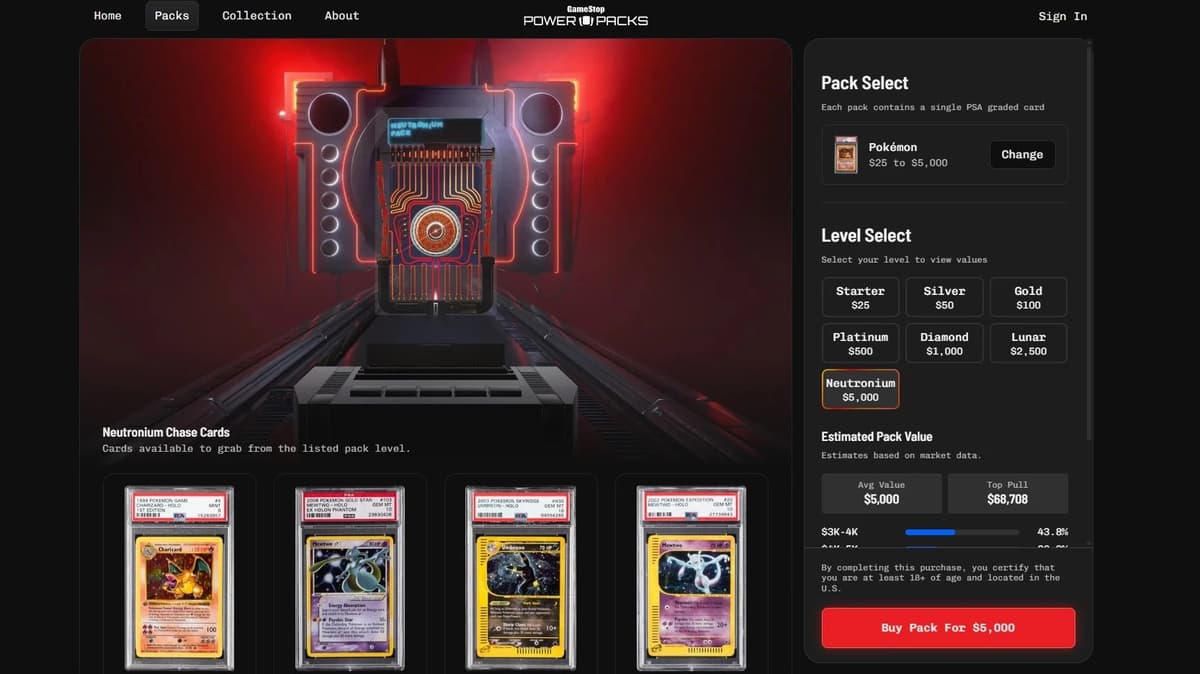
- •$5,000 “Neutronium” tier gives 0.4% chance >$40k
- •Odds favor house; 72% chance loss
- •Power Packs integrate PSA grading for legitimacy
- •GameStop pivots from NFTs to physical collectibles
- •Adult collectors drive soaring trading‑card market
Pulse Analysis
GameStop has been scrambling to reinvent itself since its stock collapse in 2021. After dabbling in NFTs, a short‑lived Bitcoin wallet, and an aborted bid to acquire eBay, the retailer now leans on nostalgia‑driven merchandise to generate profit. The latest experiment, a partnership with PSA, turns single trading‑card purchases into a high‑stakes gamble. By packaging a graded Pokémon card behind a digital “rip” mechanism, GameStop mimics the loot‑box model that has thrived in video games, but applies it to a market where collectors are willing to spend six‑figures on rare pulls.
The “Power Packs” program offers tiers from $25 to $5,000, with the top‑priced “Neutronium” tier promising a 0.4% chance of a card valued above $40,000. GameStop publishes estimated odds, yet the house edge remains steep: a 72% probability the card will be worth less than the purchase price and a 25% chance of modest upside. Buyers can have the card shipped, resell it on GameStop’s marketplace (where the company takes a commission), or store it in a climate‑controlled vault. This structure extracts revenue at multiple points, from the initial sale to any secondary‑market transaction.
The launch underscores a broader trend: adult collectors are inflating the secondary market for Pokémon and other trading cards, turning a childhood hobby into a speculative asset class. While the model can boost GameStop’s margins, it also raises consumer‑protection questions reminiscent of gambling regulations applied to loot boxes. If the program proves profitable, other retailers may emulate the approach, further blurring lines between retail and wagering. For investors, the initiative signals GameStop’s willingness to monetize niche enthusiasm, but its long‑term success will depend on sustaining demand without alienating a community already wary of price gouging.
GameStop Wants To Sell You Random Pokémon Cards For $5,000 A Pop
Comments
Want to join the conversation?
Loading comments...