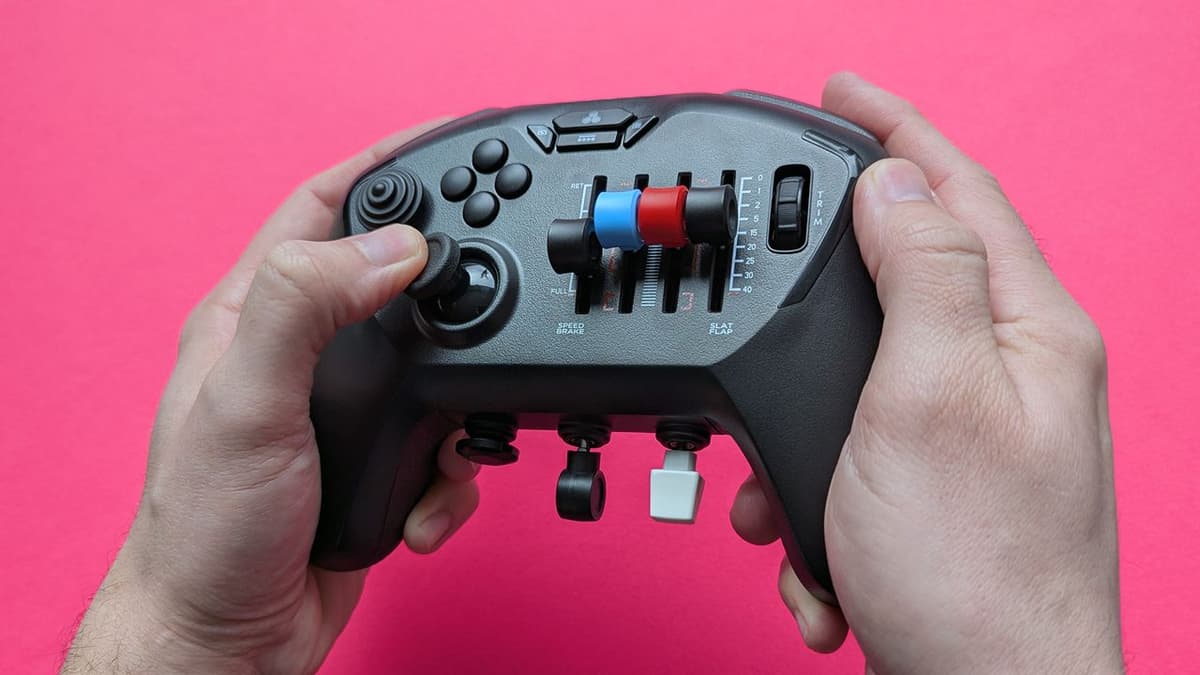
I Played Microsoft Flight Simulator with This Revolutionary Joystick Disguised as a Controller — and I'm in Love with It
•February 19, 2026
0
Why It Matters
It expands the niche market for portable, high‑fidelity flight‑sim hardware, giving PC gamers a more realistic experience while highlighting the platform gap with Xbox users.
Key Takeaways
- •Portable controller brings authentic flight controls to PC gamers
- •Hall‑Effect thumbstick eliminates drift, enhancing precision
- •Lacks Xbox support, limiting console users
- •Included case protects components for travel
- •Adjustable sensitivity ensures comfortable gameplay
Pulse Analysis
The flight‑simulation genre has surged in popularity, driven by titles like Microsoft Flight Simulator that demand precise input devices. While traditional enthusiasts invest in full‑size yokes, throttles, and pedal sets, the market now accommodates a growing segment of travelers and casual pilots who need a lightweight, all‑in‑one solution. Honeycomb’s Echo addresses this demand by condensing essential controls—thumbstick, throttle levers, rudder pedals—into a handheld form factor, allowing users to set up a realistic cockpit experience in minutes, whether at a coffee shop or a hotel room.
Beyond portability, the Echo’s technical choices differentiate it from generic gamepads. The Hall‑Effect thumbstick eliminates the drift issues common in cheaper controllers, delivering consistent analog input crucial for fine‑tuned aircraft maneuvers. Interchangeable lever caps and a solid trim wheel provide tactile feedback that mirrors larger hardware, while the included USB‑C dongle ensures low‑latency wireless connectivity. These features, combined with downloadable control profiles from Honeycomb, let pilots quickly map complex flight‑sim commands without extensive manual configuration, lowering the barrier to entry for newcomers.
However, the Echo’s PC‑only focus underscores a broader ecosystem challenge: the lack of cross‑platform support limits its appeal to the sizable Xbox audience. As Microsoft pushes Flight Simulator onto consoles, hardware makers that bridge this gap could capture untapped demand. For now, the Echo serves as a premium, travel‑ready alternative for PC users, reinforcing Honeycomb’s reputation for niche, high‑quality peripherals while hinting at future opportunities to expand into console compatibility.
I played Microsoft Flight Simulator with this revolutionary joystick disguised as a controller — and I'm in love with it
0
Comments
Want to join the conversation?
Loading comments...