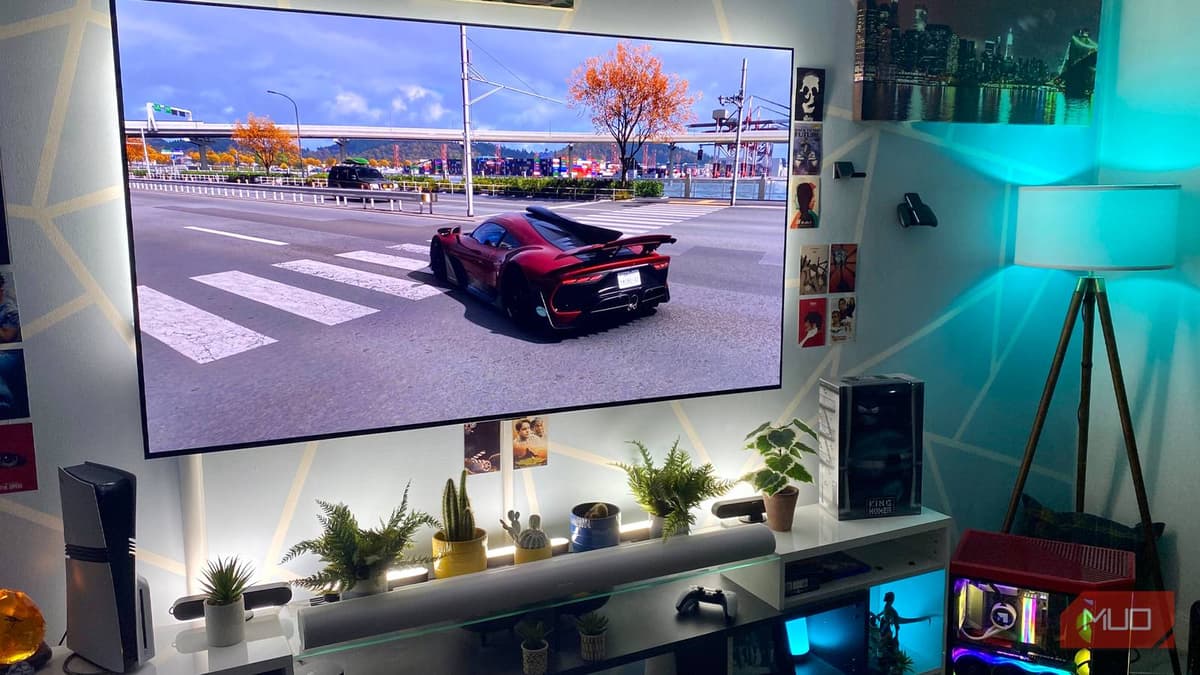
I Was Using DLSS Wrong — Switching This One Option Made My Games Run Far Better
Companies Mentioned
Why It Matters
DLAA’s high cost in FPS limits its practical use, shaping how gamers configure AI‑upscaled graphics and influencing Nvidia’s roadmap for future AI rendering features.
Key Takeaways
- •DLAA offers highest AI anti‑aliasing but cuts FPS on most GPUs
- •Only RTX 5090‑class cards sustain DLAA without major frame drops
- •DLSS Quality delivers near‑DLAA visuals with far better performance
- •Support varies; Forza Horizon 6 shows strongest DLAA gains
- •Choosing the right DLSS preset prevents unnecessary performance loss
Pulse Analysis
Nvidia’s AI‑driven rendering pipeline has evolved from basic supersampling to sophisticated solutions like DLSS and its newer sibling DLAA. DLSS leverages a neural network trained on high‑resolution frames to upscale lower‑resolution inputs, delivering crisp images with modest GPU load. DLAA, introduced as the premium anti‑aliasing tier, applies the same deep‑learning model without upscaling, preserving native resolution but demanding substantially more compute cycles. This progression reflects the industry’s push toward AI‑enhanced graphics that balance visual fidelity and performance.
Real‑world benchmarks reveal the trade‑off between image perfection and playable frame rates. On a flagship RTX 5090 system, DLAA can shave roughly 30‑35 FPS compared to DLSS Quality, dropping from the mid‑100s to the low‑70s in 4K titles such as Forza Horizon 6 and Cyberpunk 2077. Mid‑range GPUs like the RTX 5080 or RTX 4070 struggle to maintain smooth gameplay under DLAA, often falling below 60 FPS. Consequently, most gamers opt for DLSS Quality, which offers near‑DLAA clarity while preserving the fluidity essential for competitive and immersive experiences.
The broader market implication is clear: AI‑upscaling will dominate future graphics pipelines, but manufacturers must provide scalable presets that cater to diverse hardware tiers. Nvidia’s emphasis on DLSS Quality as the default suggests a strategic focus on mass‑market adoption rather than niche, ultra‑high‑fidelity modes. For consumers, the key is to assess their GPU’s capability and prioritize DLSS Quality unless they possess a top‑end card and are willing to sacrifice frame rate for marginal visual gains. This approach ensures optimal performance without compromising the overall gaming experience.
I was using DLSS wrong — switching this one option made my games run far better
Comments
Want to join the conversation?
Loading comments...