Gaming News and Headlines
  • All Technology
  • AI
  • Autonomy
  • B2B Growth
  • Big Data
  • BioTech
  • ClimateTech
  • Consumer Tech
  • Crypto
  • Cybersecurity
  • DevOps
  • Digital Marketing
  • Ecommerce
  • EdTech
  • Enterprise
  • FinTech
  • GovTech
  • Hardware
  • HealthTech
  • HRTech
  • LegalTech
  • Nanotech
  • PropTech
  • Quantum
  • Robotics
  • SaaS
  • SpaceTech
AllNewsDealsSocialBlogsVideosPodcastsDigests

Gaming Pulse

EMAIL DIGESTS

Daily

Every morning

Weekly

Sunday recap

NewsDealsSocialBlogsVideosPodcasts
GamingNewsI Wasn't Expecting Alien Vibes From the Life Is Strange Dev's New Sci-Fi Adventure: "We Intend the Nemesis to Be Difficult"
I Wasn't Expecting Alien Vibes From the Life Is Strange Dev's New Sci-Fi Adventure: "We Intend the Nemesis to Be Difficult"
Gaming

I Wasn't Expecting Alien Vibes From the Life Is Strange Dev's New Sci-Fi Adventure: "We Intend the Nemesis to Be Difficult"

•February 19, 2026
0
GamesRadar+
GamesRadar+•Feb 19, 2026

Why It Matters

*Aphelion* showcases how narrative‑driven studios can merge cinematic storytelling with emergent gameplay, signaling a fresh direction for sci‑fi games amid growing climate‑concern themes.

Key Takeaways

  • •Aphelion launches spring 2026, third‑person action adventure
  • •Story set 2062, ESA partnership grounds sci‑fi realism
  • •Nemesis enemy uses sound, creates challenging stealth encounters
  • •Dual‑character gameplay alternates climbing and grappling mechanics
  • •Linear narrative, no branching, emphasizes player choice consequences

Pulse Analysis

Don’t Nod has built a reputation for narrative experimentation, from the dialogue‑free ascent of *Jusant* to the gothic intrigue of *Vampyr*. With *Aphelion*, the studio pushes that pedigree into hard science fiction, partnering with the European Space Agency to embed authentic space‑mission details. The setting—a thawing ice planet in 2062—mirrors real‑world climate anxieties, positioning the game as both entertainment and a speculative commentary on humanity’s search for new habitats.

Gameplay differentiates itself through a dual‑protagonist structure. Ariane’s sections demand precise timing as players climb icy cliffs, echoing classic platform challenges while remaining accessible via generous input windows. Thomas, meanwhile, relies on a grappling hook to manipulate the environment, offering a contrast that keeps pacing fresh across the eleven hour‑long chapters. The Nemesis, an ice‑bound entity that tracks sound, introduces a high‑risk stealth layer; its difficulty is intentional, yet the title promises adjustable accessibility settings to accommodate a broad audience.

From a market perspective, *Aphelion* arrives at a time when players crave narrative depth without sacrificing interactivity. Its linear story, free of branching outcomes, allows the developers to craft a tightly controlled cinematic arc, a strategy that could attract both story‑first gamers and those seeking skill‑based challenges. The ESA collaboration and climate‑centric premise also open avenues for cross‑industry partnerships and educational outreach, potentially expanding the game’s reach beyond traditional gaming circles. As the spring 2026 launch approaches, industry observers will watch how Don’t Nod balances difficulty, accessibility, and narrative ambition in this ambitious sci‑fi venture.

I wasn't expecting Alien vibes from the Life is Strange dev's new sci-fi adventure: "We intend the Nemesis to be difficult"

By Heather Wald · published 7 hours ago

Hands‑on – Don’t Nod’s new narrative thriller Aphelion feels like a culmination of the studio’s work, with its own surprises in store

Crash landing anywhere is never a good time, let alone when it’s on a thawing alien ice planet on the edge of the solar system. But that’s exactly what happens in my introduction to Aphelion, the upcoming third‑person action‑adventure from Life is Strange developer Don’t Nod.

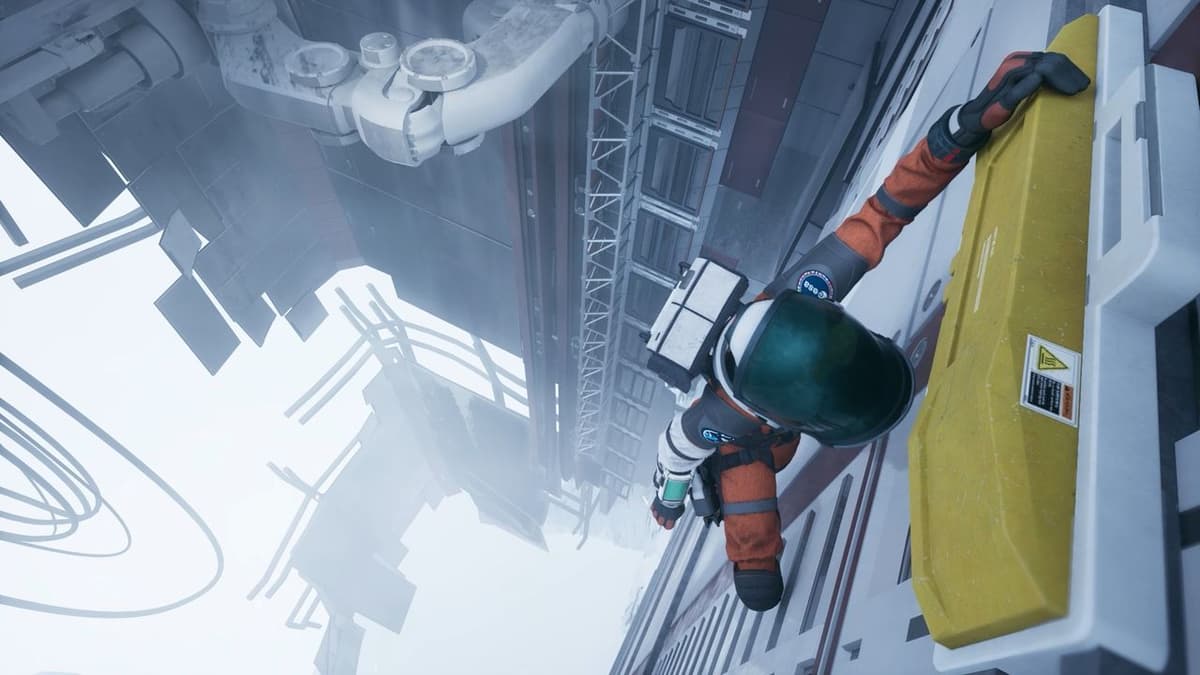
As protagonist Ariane, I’m sliding down my wrecked ship after exiting the cockpit, swerving this way and that to avoid obstacles—fiery blaze, pieces of wrenched metal. Separated from my fellow astronaut crewmate Thomas, I’m now on a mission to find him, but I’ll soon learn we’re not the only life residing on this cold world.

I didn’t know what to expect going into Aphelion if I’m completely honest. Don’t Nod keeps trying to do new things with its narrative chops. From the climbing adventure Jusant, which tells a moving tale without dialogue, to the highly underrated atmospheric action‑RPG Vampyr, or the dark fantasy Banishers: Ghosts of New Eden, the developer continually surprises me—in the best sense. Even the latest episodic fare Lost Records: Bloom and Rage experimented with past‑and‑present timelines that hooked me in.

Now that I’ve seen a preview—guided by creative director Florent Guillaume and executive producer Dimitri Weideli—and tried a short demo, Aphelion looks set to continue this trend by exploring a sci‑fi story with its own surprises.


The climb

The game is set in 2062, when Earth is in crisis because of global warming. Aphelion follows astronauts Ariane and Thomas, the two‑person team of the European Space Agency’s (ESA) Hope‑01 scientific mission. They aim to survey the newly discovered ice planet Persephone and see if it’s habitable for humanity. Don’t Nod actually collaborated with ESA, wanting to make a sci‑fi experience that feels like a “projection of our current world” rather than a pure fantasy.

An emergency crash landing wasn’t part of the plan, nor was the separation of Thomas and Ariane. While I don’t get to play as Thomas during my demo, Guillaume explains we’ll play as both astronauts across 11 hour‑long chapters. Ariane is the main protagonist, with more involved sections; Thomas is injured and can’t traverse the same way.

My demo lets me try short parts of chapters 1 and 4 as Ariane. The slide down the ship ends with me pressing A on my Xbox Series X controller to grab a latch and avoid falling into the icy depths. Because the vessel is no longer upright, the only way off the ship is to climb.

The climb in chapter 1 serves as a tutorial, teaching the inputs and movements. As Guillaume says, Ariane has to do her fair share of climbing planet‑side to navigate the frozen terrain. Climbing up and jumping across ledges “Assassin’s Creed‑style”, you don’t immediately latch onto surfaces; you have a brief window to press X to avoid falling. If you miss, a follow‑up button lets you catch yourself. Guillaume adds:

“We’re not the same team as Jusant but we share a few people, and it helped when developing the game. We chose a different way because it is much more systemic in the way they climb. In our game we wanted something fluid, accessible, but still requiring a timing challenge.”

On Thomas’s side, he can’t climb because of his injuries, but he uses a grappling hook to latch onto obstacles and tug them down, allowing him to explore a mysterious settlement. His sections focus more on exploration and environmental interaction, which should vary the flow and pacing of each chapter.


The Nemesis

In terms of story, Guillaume and Weideli confirm Aphelion is a linear experience—no branching narratives or multiple endings like in Life is Strange or Lost Records. The story follows the two separated characters, and actions in one chapter can affect the other.

Ariane and Thomas keep audio logs of what they’re seeing, a “message in a bottle” that the other can find. These logs help convey each character’s feelings and also serve as narrative devices.

During my demo of chapter 4, the main antagonist—the Nemesis—appears. After falling through an ice sheet, Ariane encounters an unknown entity the team calls “the Nemesis”. It’s made of ice with a gaseous nature, allowing it to snake through the environment and appear unexpectedly. Visually it resembles a black, tendril‑y serpent with an ominous glowing red maw, reminiscent of the Thresher Maw from Mass Effect.

“You will learn from your mistakes, you will try a route, fail, come back and try again. That’s part of the experience we intend with the Nemesis.”

— Florent Guillaume, creative director

The Nemesis cannot see; it relies on sound. The moment I climb, crouch, or run, it zeroes in on me. I must sneak past it and escape an ice cave, using a navigator that looks like the viewfinder of BD‑1’s scope in Star Wars Jedi: Survivor to find the exit. The encounters will become more challenging over time, taking inspiration from the Alien films and subtly nodding to Alien: Isolation. New abilities—such as decoys—will help players deal with it.

“We intend the Nemesis to be difficult. We intend it to be accurate and to propose a challenge for players,” Guillaume says. “Obviously we try to balance the fact that it is difficult but accessible. It is doable, but we want players to find different ways to beat these situations. We believe that being difficult makes it rewarding.”

Accessibility options will allow players to tailor the experience. While I only saw the initial encounter, the Nemesis already feels like one of the many surprises Aphelion has to offer. Don’t Nod’s willingness to experiment with narrative games keeps me curious about how Ariane and Thomas’s story will unfold when the game releases in Spring 2026.


Heather Wald is the Evergreen Editor, Games at GamesRadar+. Her writing career began on a student‑led magazine at Bath Spa University, where she earned a BA (Hons) in English literature. She later earned an MA in magazine journalism at Cardiff University and has spent almost seven years at GamesRadar+ developing evergreen features, the Indie Spotlight series, op‑eds, and interviews.

Read Original Article
0

Comments

Want to join the conversation?

Loading comments...