Krafton Introduces Terminus KIRA, Open-Source AI Agent Enhancing Game Development Workflows
•February 20, 2026
0
Companies Mentioned
Why It Matters
Terminus KIRA demonstrates a cost‑effective path to boost developer productivity without investing in proprietary models, setting a precedent for open‑source AI tools in the gaming industry.
Key Takeaways
- •Terminus KIRA achieves 74.8% success on Terminal‑Bench.
- •Self‑critique prompts raise performance across multiple LLMs.
- •Open‑source release under Ludo Robotics encourages community adoption.
- •Improves task completion over Terminus 2 by up to 11.6 points.
- •Designed as desktop “virtual colleague” for game developers.
Pulse Analysis
The gaming sector has long wrestled with integrating AI into creative pipelines, often relying on in‑house solutions that remain opaque to external developers. Krafton’s KRIS system, now externalized as Terminus KIRA, offers a transparent, desktop‑ready assistant that mirrors the workflow of a human colleague. By publishing the code under the Ludo Robotics banner, Krafton aligns with a broader industry shift toward open‑source collaboration, allowing studios of any size to experiment with AI‑driven coding and debugging without licensing hurdles.
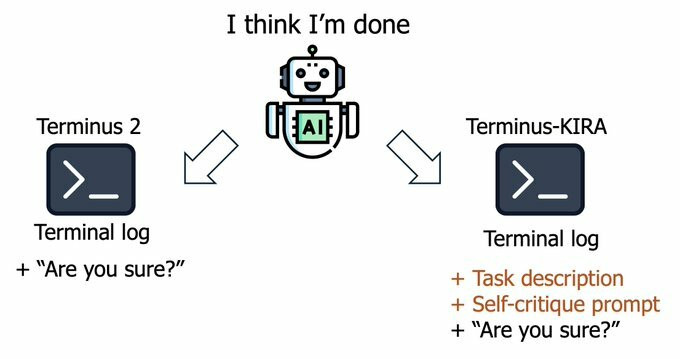
Technically, KIRA distinguishes itself through a self‑critique prompting mechanism that layers task descriptions and reflective queries onto standard terminal logs. This approach forces the underlying large language model to evaluate its own output before execution, yielding measurable gains across multiple LLM back‑ends. In the Terminal‑Bench benchmark, KIRA pushed success rates to 74.8%, eclipsing its predecessor Terminus 2 by up to 11.6 percentage points. The performance uplift is consistent whether the model is Gemini 3.1 Pro or Opus 4.6, underscoring the method’s model‑agnostic advantage.
From a business perspective, the open‑source release translates into immediate cost savings for developers who can leverage existing commercial models rather than fund bespoke AI infrastructure. The virtual‑colleague paradigm also reduces the learning curve for non‑technical artists and designers, democratizing access to AI assistance across the production pipeline. As more studios adopt KIRA’s self‑critique framework, the industry may see a ripple effect: faster iteration cycles, higher code quality, and a new standard for collaborative AI tools that complement, rather than replace, human creativity.
Krafton Introduces Terminus KIRA, Open-Source AI Agent Enhancing Game Development Workflows
KRAFTON Unveils New AI Agent Technology “Terminus KIRA”
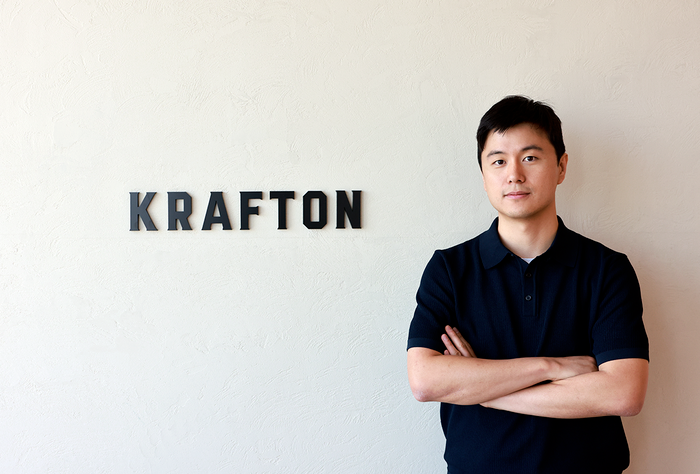
KRAFTON on the 20th unveiled a new AI agent technology called “Terminus KIRA.” Introduced directly by Lee Kang‑wook, Head of AI Technology at KRAFTON, the technology is focused on addressing limitations in existing AI agents.
KRAFTON currently operates its AI research organization under two brands, KRAFTON AI and Ludo Robotics, and this marks the first time it has shared technology externally under the Ludo Robotics name. The purpose of this technology disclosure is not commercial business expansion, but rather open‑source sharing among developers and contributing to the ecosystem for technological advancement.
The technology unveiled this time is an open‑source project called KIRA, a repackaging of the AI agent system KRAFTON uses internally. KIRA stands for Krafton Intelligence Rookie Agent. It was implemented as a “virtual colleague” concept so that the internal AI system KRIS, which has been used by more than 1,800 employees, can be installed by anyone as a standalone desktop application.
Performance
-
Terminus KIRA recorded a task completion rate of up to 74.8 % in Terminal‑Bench tests. Terminal‑Bench is a benchmark used to evaluate an AI’s ability to write code and solve problems on behalf of humans in a computer terminal environment.
-
The previous system, Terminus 2, followed a simple process in which it checked terminal logs and then merely asked the AI whether it was confident. Terminus KIRA, by contrast, additionally provides a task description and a self‑critique prompt alongside the existing terminal logs. The principle is to increase the final success rate by prompting the AI to critically review its own work history and correct errors.
Metric Comparisons
| Model | Terminus 2 Success Rate | Terminus KIRA Success Rate | Gain |
|-------|------------------------|----------------------------|------|
| Gemini 3.1 Pro Thinking | 68.5 % | 74.8 % | +6.3 pp |
| Opus 4.6 | 62.9 % | 74.4 % | +11.5 pp |
| Gemini 3.1 Pro (standard) | 52.4 % | 64.0 % | +11.6 pp |
These results show clear performance gains over previous approaches when combined with several large language models.
Insights from KRAFTON
Head Lee Kang‑wook emphasized that AI models are optimized for an assisting role rather than completely replacing humans. In other words, the work acknowledges that AI models are not yet perfect and presents a technical method for compensating for those shortcomings.
A key feature of this AI technology is that, instead of pouring massive capital into building a proprietary large‑scale model, it boosts task performance in a cost‑efficient way by introducing self‑critique prompts to existing commercial models. This is meaningful in that a Korean game company has shared a practical, lightweight solution free of charge with the global open‑source development ecosystem.
This article was translated from the original that appeared on INVEN.
0
Comments
Want to join the conversation?
Loading comments...