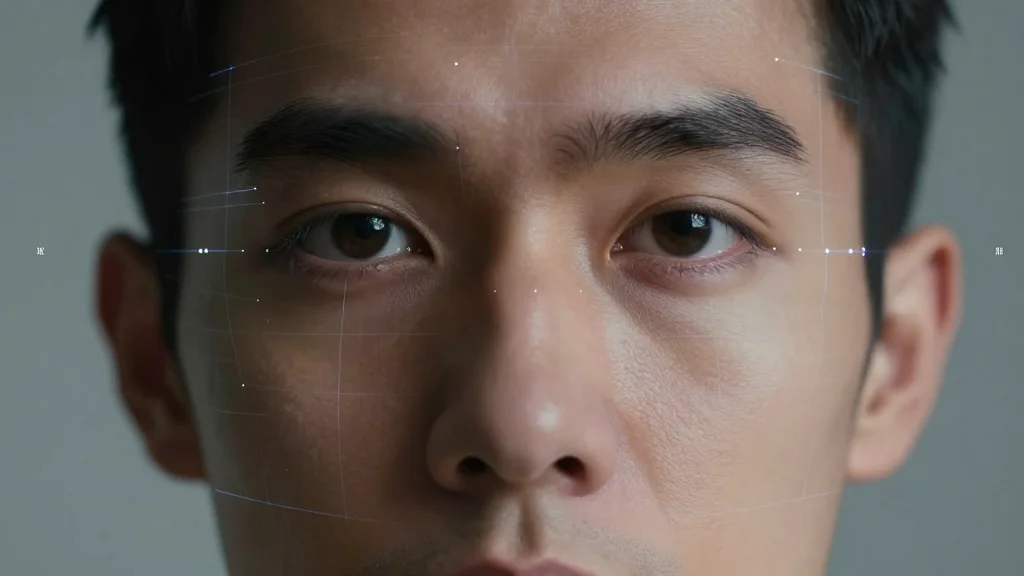
LA Noire’s MotionScan Tech Still Defines Facial Animation 15 Years On

Why It Matters
LA Noire’s MotionScan set a visual benchmark that forced the gaming industry to confront the trade‑offs between cinematic realism and production practicality. By exposing the storage and workflow constraints of ultra‑high‑resolution facial capture, the game spurred investment in more scalable motion‑capture solutions that now underpin the facial animation of AAA titles and live‑service games alike. The technology’s influence also rippled into adjacent fields such as film VFX and virtual reality, where realistic human expression remains a key differentiator. The ongoing relevance of MotionScan underscores how a single technical breakthrough can reshape development priorities across an entire medium. As studios adopt AI‑enhanced facial synthesis and cloud‑based rendering, the balance struck by LA Noire between artistic ambition and engineering limits will continue to inform budgeting, pipeline design, and talent acquisition decisions.
Key Takeaways
- •MotionScan recorded actors at ~1 GB per second, generating ~35 TB of raw data for LA Noire.
- •Only 21 hours of the 75 hours captured made it into the final game.
- •The Xbox 360 version required three DVDs; the PC version needed six DVD‑ROMs; PS3 used a single Blu‑Ray.
- •Depth Analysis’s R&D head Oliver Bao highlighted cost‑time trade‑offs as a barrier to broader adoption.
- •LA Noire’s facial animation is credited with accelerating industry‑wide adoption of full‑body performance capture.
Pulse Analysis
The enduring conversation around LA Noire’s MotionScan illustrates a classic technology adoption curve: an early breakthrough that dazzles but is too costly for mass deployment, followed by a period of incremental improvement that eventually democratizes the core capability. In 2011, the sheer volume of data—35 TB for a single title—made the system a bespoke solution for a single studio. Today, cloud storage, faster SSDs, and AI‑driven compression have reduced those barriers dramatically, allowing studios of all sizes to integrate high‑fidelity facial capture into their pipelines.
From a market perspective, the ripple effect of MotionScan can be seen in the valuation of companies that specialize in facial animation software and hardware. Firms that provide real‑time facial rigging tools now command multi‑hundred‑million‑dollar valuations, a trajectory that can be traced back to the proof‑of‑concept that LA Noire delivered. Moreover, the game’s success demonstrated consumer appetite for narrative depth driven by subtle visual cues, prompting publishers to allocate larger portions of development budgets to animation talent and R&D.
Looking forward, the next inflection point may arrive when generative AI models can synthesize believable micro‑expressions on the fly, eliminating the need for extensive capture sessions. If that technology lives up to its promise, the industry could finally achieve MotionScan‑level realism at a fraction of the historical cost, fulfilling the vision that Oliver Bao hinted at in 2011. Until then, LA Noire remains a touchstone—a reminder that pushing the envelope can reshape an entire ecosystem, even if the original tool never becomes mainstream.
LA Noire’s MotionScan tech still defines facial animation 15 years on
Comments
Want to join the conversation?
Loading comments...