Why It Matters
The tutorial fills a gap in up‑to‑date Phaser 4 education, enabling developers to quickly prototype modern browser games without legacy code. This accelerates skill acquisition and can boost indie game production pipelines.
Key Takeaways
- •Free YouTube mini-course teaches Phaser 4 fundamentals
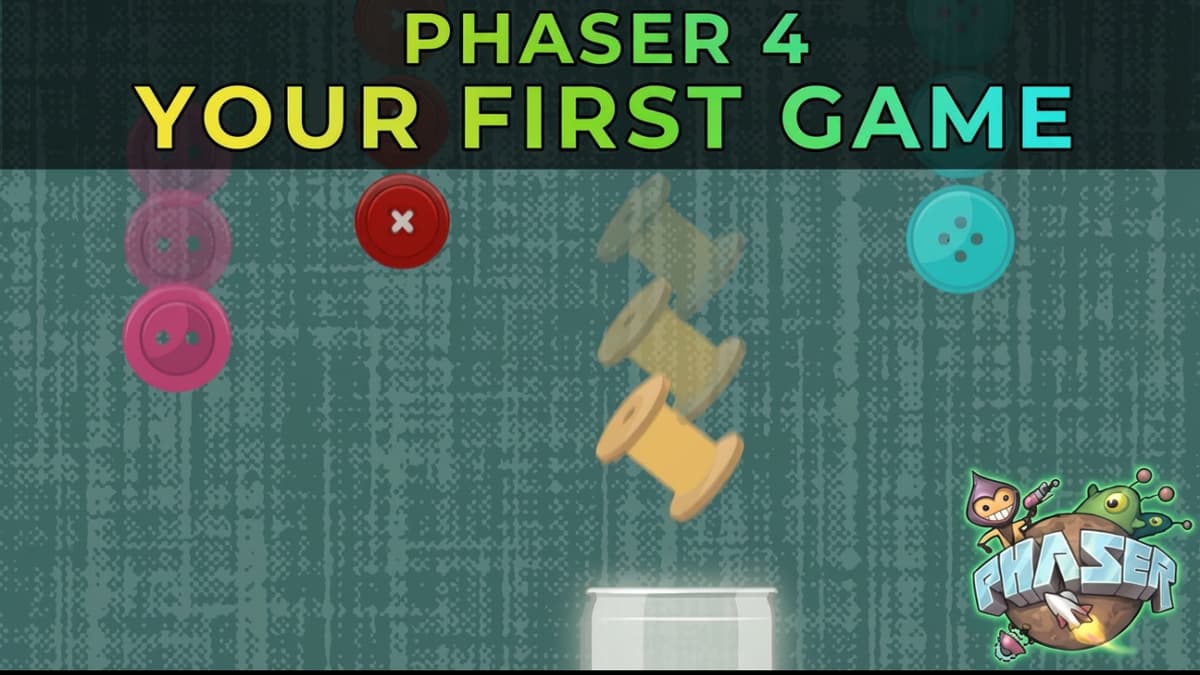
- •Build a playable falling‑object catch game in the browser
- •Covers game loop, scenes, sprites, input, collision without physics
- •Episodes 3‑12 minutes, released regularly for continuous learning
- •Targets JavaScript developers new to browser game development
Pulse Analysis
Phaser 4 arrived as the next evolution of the open‑source HTML5 game framework, offering a cleaner API and performance gains over its predecessor. Yet the ecosystem has lagged in up‑to‑date instructional material, leaving many developers stuck on outdated Phaser 3 tutorials. Westover’s mini‑course directly addresses this void by delivering concise, version‑specific lessons that reflect the engine’s current best practices, ensuring learners avoid legacy workarounds that can hinder scalability.
The curriculum is deliberately modular: each episode introduces a single concept—such as the game loop, scene lifecycle, or sprite rendering—and immediately applies it to a functional falling‑object catch game. This hands‑on approach shortens the learning curve, allowing JavaScript developers to see tangible results after just a few minutes of viewing. By covering input handling, collision detection without a physics engine, and scoring mechanics, the series equips creators with a full toolkit for rapid prototyping, making it easier to iterate on gameplay ideas without extensive boilerplate code.
For the broader indie game community, accessible Phaser 4 training lowers the barrier to entry for browser‑based titles, a market segment that continues to grow as mobile and desktop users favor lightweight, instantly playable experiences. Developers who master these fundamentals can more quickly bring games to market, experiment with monetization strategies, or integrate Phaser 4 projects into larger web applications. As the demand for cross‑platform, low‑latency games rises, resources like Westover’s course become strategic assets for studios and solo creators alike.
Learn Phaser 4 with Scott Westover's Free Mini Course
Comments
Want to join the conversation?
Loading comments...