LG Unveils World's First Native 1,000 Hz Full‑HD Gaming Monitor

Companies Mentioned
Why It Matters
A native 1,000 Hz refresh rate pushes the envelope of visual responsiveness, potentially lowering the perceptual gap between human reaction time and on‑screen action. For esports athletes, even a few milliseconds can decide a match, so a monitor that can display motion with virtually no blur could become a decisive training tool. Beyond competitive play, the technology may trickle down to mainstream gamers seeking smoother experiences in fast‑action titles. If production costs can be managed, the 1,000 Hz panel could set a new baseline for high‑performance displays, prompting a cascade of innovations in panel manufacturing, driver firmware, and GPU output capabilities.
Key Takeaways
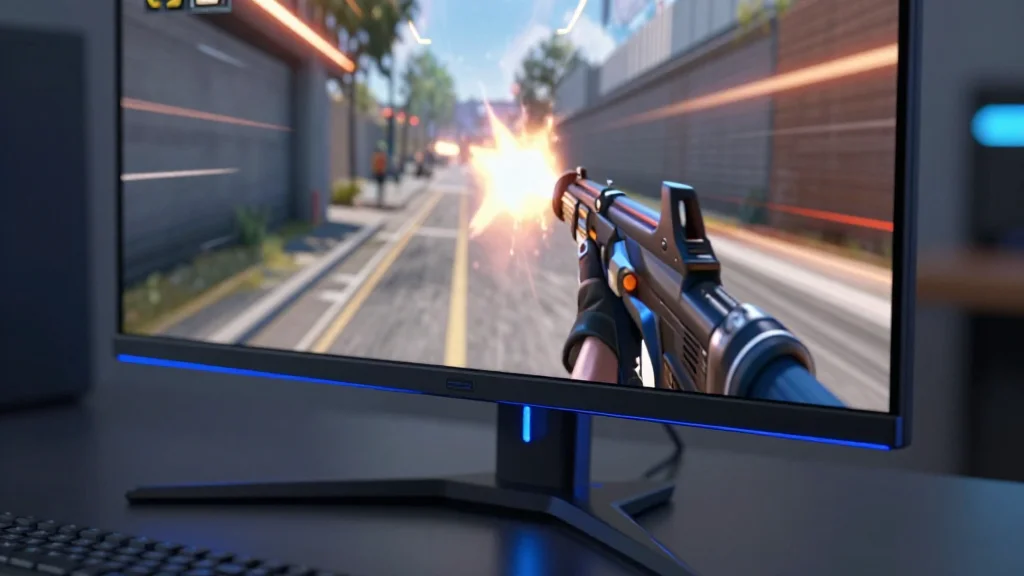
- •LG UltraGear 25G590B offers a native 1,000 Hz refresh rate on a 24.5‑inch Full‑HD IPS panel
- •Features include Motion Blur Reduction Pro, AI Scene Optimization, and AI Sound for spatial audio
- •Designed for esports with minimal‑footprint stand, ergonomic adjustments, and RGB‑lit UltraGear logo
- •Current esports monitors max out at 360 Hz; LG’s claim could create a new premium tier
- •Commercial launch expected later in 2026, pricing not yet disclosed
Pulse Analysis
LG’s announcement arrives at a moment when the esports ecosystem is hungry for marginal gains. Historically, display refresh rates have followed a logarithmic improvement curve—120 Hz to 240 Hz to 360 Hz—each jump accompanied by diminishing returns for the average consumer. The 1,000 Hz leap, however, is not merely a numeric milestone; it forces the entire graphics pipeline to reconsider output limits. GPUs will need to sustain higher frame rates, and driver stacks must handle ultra‑low latency buffers. Early adopters will likely pair the monitor with high‑end RTX 50‑series or comparable cards, creating a niche market that could accelerate the rollout of next‑gen graphics hardware.
From a competitive standpoint, the monitor could widen the gap between well‑funded pro teams and smaller outfits. Teams with access to the 1,000 Hz hardware may experience measurable improvements in reaction time, especially in titles where frame‑by‑frame precision matters. This could pressure tournament organizers to standardize hardware specifications, much like the shift to 144 Hz monitors a few years ago. Conversely, if the performance gains prove marginal in real‑world play, the market may view the 1,000 Hz claim as a marketing overreach, tempering demand.
Looking ahead, the broader display industry may see a cascade effect. Panel manufacturers will need to refine backlight scanning and overdrive algorithms to sustain such refresh rates without sacrificing color accuracy or introducing flicker. If LG can deliver a commercially viable product at a reasonable price point, we could witness a new class of ultra‑high‑refresh monitors entering the consumer market, redefining expectations for smoothness across gaming, VR, and even high‑speed video production.
LG Unveils World's First Native 1,000 Hz Full‑HD Gaming Monitor
Comments
Want to join the conversation?
Loading comments...