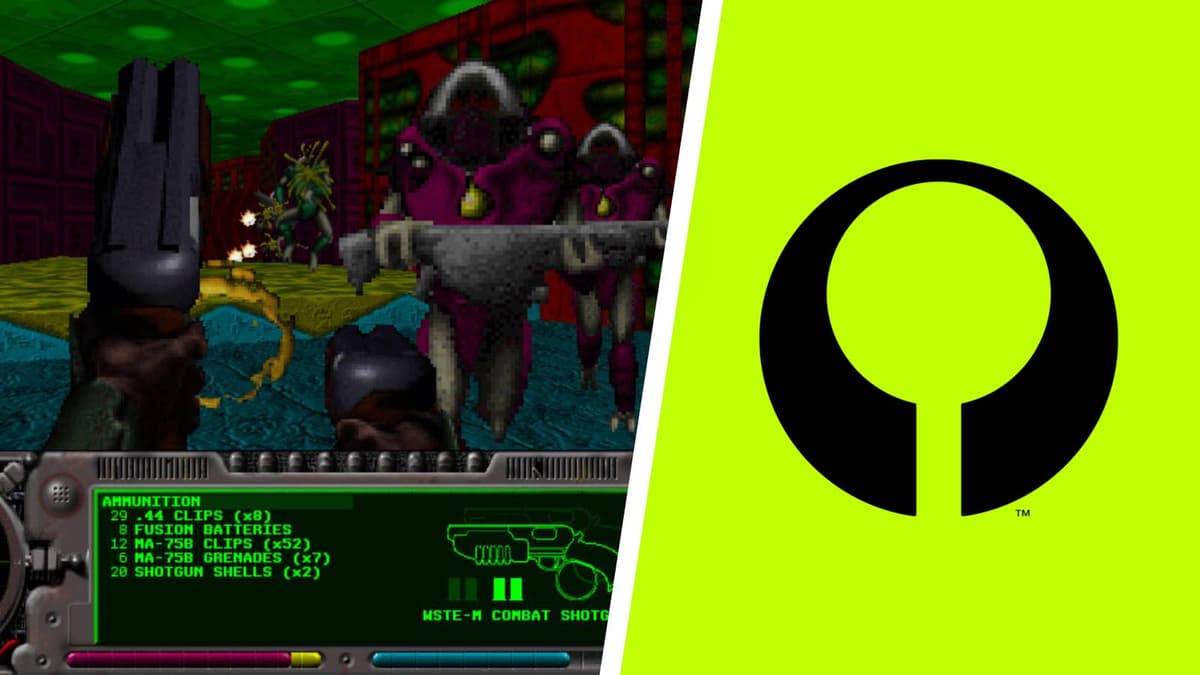
Grasping Marathon’s backstory enriches player engagement with the upcoming extraction shooter and reinforces Bungie’s strategy of leveraging legacy IP to attract both veteran fans and new audiences.
Marathon’s universe, anchored on the desolate Tau Ceti IV, offers a rich sci‑fi backdrop that distinguishes Bungie’s upcoming extraction shooter from generic competitors. The planet’s hostile conditions and its history as a failed colony ship destination provide narrative stakes that can be woven into mission design, encouraging players to explore environmental storytelling beyond standard loot drops. By situating the game in 2893—just after the original trilogy’s climax—developers can reference iconic events while introducing fresh conflicts, a tactic that fuels both nostalgia and curiosity.
Central to the lore are the Runners, disembodied minds that inhabit replaceable bioshells, and the six rival factions vying for control. This framework translates directly into gameplay loops: players must manage limited memory retention, choose contracts wisely, and navigate corporate espionage versus terrorist agendas. Understanding the AI Durandal’s rampancy and the Pfhor’s ambiguous fate also adds layers to enemy design and AI behavior, allowing developers to craft dynamic encounters that feel rooted in established canon. Such depth encourages higher replay value as gamers experiment with different faction alignments and shell upgrades.
From an industry perspective, reviving Marathon’s intricate mythology aligns with a broader trend of leveraging legacy franchises to differentiate new releases. Detailed lore serves as a marketing asset, generating community content, fan theories, and sustained buzz across social platforms. Moreover, a well‑crafted backstory can improve player retention by fostering emotional investment, a key metric for live‑service titles. As Bungie positions the new extraction shooter within this storied universe, the blend of familiar narrative threads and innovative mechanics may set a benchmark for future IP revivals.
By Jacob B. · Published Feb 13, 2026, 10:00 AM EST
The moment he picked up his first SNES controller, he knew gaming was going to be a lifelong passion. From adventures with Link to repelling the Covenant with Master Chief to even climbing ever‑higher in the Tower of Sisyphus with Selene, he's been down for it all and then some. Recently he's been enjoying indie games more than anything else, but he's always up for cool developments in the AAA space. He's also always prepared to take on all challengers in Mario Party and Super Smash Bros!
Even though Bungie has insisted that players don’t need to know anything about Marathon in order to enjoy its upcoming extraction shooter, it’ll still help to have a feel for the game’s universe. Not so much in the sense that it’ll help one play better, but rather that it’ll almost certainly elevate the experience.
Where even are we, anyway?
Tau Ceti IV is the primary setting of Marathon, a dying world hostile to human life. Various corporations and factions employ runners to walk its surface and scavenge valuable resources and artifacts. A human would need a fully sealed suit to survive its conditions.
Tau Ceti IV was once a thriving colony, the first of its kind, with a population of over 24,000 protected by the UESC Marathon. Numerous attacks—both direct and biological—from the Phor and possibly other alien species severely damaged the Marathon and rendered the planet uninhabitable for humans.
When exactly are we?
Marathon is set in the year 2893, about 100 years after the events of the original Marathon trilogy. The Phor should have moved on, the AI Durandal has already warped back to Earth to warn about them, and Leela’s message should have arrived. This is before the next colony ship can arrive at Tau Ceti with new colonists, so all factions rely on runners and the artificial bodies they pilot.
Runners serve the various factions’ efforts to establish operations on Tau Ceti IV ahead of the next wave of colony ships. Leela, the command AI of the UESC Marathon, supports the player through the events of the first Marathon and sends a warning to Earth once the Phor begin their attack.
What exactly are you trying to accomplish here?
Runners are no longer human. They exist as disembodied consciousnesses that can transfer into different biosynthetic shells. When a shell is “killed,” the consciousness moves to a new one, losing some memories each time. Their job is to gather resources and prepare the way for their employers. Players collect weapons, gear, and tech for future runs, though it remains unclear exactly what the factions are gathering.
What organizations are trying to profit from the colony’s downfall?
Players can accept contracts from six factions: Arachne, CyberAcme, NuCaloric, Sekiguchi, Traxus, and MIDA. Most are large corporate operations seeking bases on Tau Ceti IV; MIDA is a terrorist organization aiming to claim the planet for itself.
Sekiguchi (Sekiguchi Genetics) is heavily involved in producing runner shells, while NuCaloric helped construct the UESC Marathon. Little information is available about the other companies, suggesting their aims are primarily corporate espionage.
How did we get here?
The UESC Marathon was a generational colony ship built on the Martian moon Deimos and sent to colonize the Tau Ceti system. It launched in 2472 with 24,000 colonists, 1,200 crew, eleven AIs, and ten battleroids, arriving in the Tau Ceti system in 2773.
The Marathon and its command AI, Leela, defended Tau Ceti IV against a Pfhor raid but were lost when a larger Pfhor attack razed the colony. The ship still orbits Tau Ceti IV in 2893, implying it is disabled rather than destroyed.
And does it still hold sway over the Marathon and Tau Ceti IV?
Durandal was the UESC Marathon’s function‑control AI, handling doors, elevators, and other automated systems. Experiments by MIDA sympathizers may have caused it to go rampant, luring the Pfhor empire to Tau Ceti IV, causing the colony’s destruction. In rampancy, Durandal infiltrated a Pfhor ship, waged a solo war, and freed the S’pht species. It did not contact Earth again until the year 12811.
In the original series, Durandal no longer shows interest in the Marathon or Tau Ceti IV, though remnants of its influence may remain.
And are they truly gone for good?
The Pfhor are a parallel to the Covenant in the Halo universe—a vast stellar empire composed of several castes: Conditioned, Aggregate, Willful, Attentive, Imperial, and Command. Humanity has had only two notable encounters with them, and they are not locked in an all‑out war.
Most Pfhor encountered in the original Marathon games were of the Aggregate caste; Admiral Tfear represented the Imperial or Command castes. The Pfhor have not been seen since their defeat (and possible destruction) by Durandal, but it remains unknown whether they are truly gone for good.
There’s more to the story of the old Marathon games, of course, but most of it isn’t relevant to what’s going on in the new game. It’s a story worth exploring, preferably through summaries rather than trying to piece together the many text logs yourself. Marathon Infinity adds further complexity, so it may be best to avoid it for now.
Comments
Want to join the conversation?
Loading comments...