Gaming News and Headlines
  • All Technology
  • AI
  • Autonomy
  • B2B Growth
  • Big Data
  • BioTech
  • ClimateTech
  • Consumer Tech
  • Crypto
  • Cybersecurity
  • DevOps
  • Digital Marketing
  • Ecommerce
  • EdTech
  • Enterprise
  • FinTech
  • GovTech
  • Hardware
  • HealthTech
  • HRTech
  • LegalTech
  • Nanotech
  • PropTech
  • Quantum
  • Robotics
  • SaaS
  • SpaceTech
AllNewsDealsSocialBlogsVideosPodcastsDigests

Gaming Pulse

EMAIL DIGESTS

Daily

Every morning

Weekly

Sunday recap

NewsDealsSocialBlogsVideosPodcasts
GamingNewsMario Tennis Fever Review
Mario Tennis Fever Review
Gaming

Mario Tennis Fever Review

•February 10, 2026
0
Giant Bomb – News
Giant Bomb – News•Feb 10, 2026

Why It Matters

The title’s pricing and thin content could erode consumer confidence in Nintendo’s premium sports offerings, impacting Switch 2’s launch momentum and broader market perception of Nintendo’s value proposition.

Key Takeaways

  • •Core tennis mechanics remain solid
  • •Adventure mode feels disjointed and filler
  • •$70 price tag seems excessive
  • •New rackets add chaotic gameplay
  • •Nintendo's sports titles risk stagnation

Pulse Analysis

Mario Tennis Fever arrives as one of the flagship sports titles for the upcoming Switch 2, but its $70 price point has sparked debate among gamers and analysts. While the core tennis engine feels polished—mirroring the tight controls of the N64 classic—the surrounding content falls short of modern expectations. The adventure mode, intended to provide a narrative hook, consists of fragmented vignettes and lengthy, static dialogues that interrupt gameplay flow, making the single‑player experience feel more like a series of chores than an engaging journey.

The introduction of "Fever" rackets injects a fresh layer of chaos, allowing players to deploy hazards, power‑ups, and timed shots that can swing matches dramatically. This mechanic showcases Nintendo’s willingness to experiment within familiar frameworks, yet it also highlights a design imbalance: traditional tennis fundamentals become overly forgiving, reducing the skill ceiling that long‑time fans appreciate. Critics note that the game’s difficulty curve is softened, and the risk of hitting out‑of‑bounds is nearly eliminated, which may dilute competitive appeal for seasoned players.

Beyond gameplay, the review underscores a broader strategic concern for Nintendo. Releasing a premium‑priced sports title with limited depth signals a potential stagnation in the company’s approach to its flagship franchises. As the Switch 2 aims to attract both legacy fans and new audiences, delivering richer, more purposeful content will be essential to justify higher price tags and maintain the brand’s reputation for innovative, value‑driven experiences. Failure to evolve could pressure Nintendo to rethink pricing and content strategies for future sports releases.

Mario Tennis Fever Review

Mario Tennis Fever has me worried for Nintendo’s sports games on Switch 2. It’s not worse than any of the sports games on Switch 1, but it’s also not any better. The trouble is that it commits almost all of the same sins: the mechanics are solid, but nothing outside of the core tennis gameplay is that much fun.

Nintendo’s presentation style was already showing signs of aging with games like Mario Tennis Aces. Here, it’s even more noticeable due to tough comparisons to similar games like Golf Story or LEGO Party. Unlike many, I was more ready to forgive these problems with the Switch 1 Mario sports games because it was clear to me that Nintendo was making family-style party games. During COVID lockdowns, that seemed like a fair priority.

But now? At $70? A game like Fever feels lazy and rote.

Adventure mode is a series of disconnected vignettes that creates a minimal sense of joy

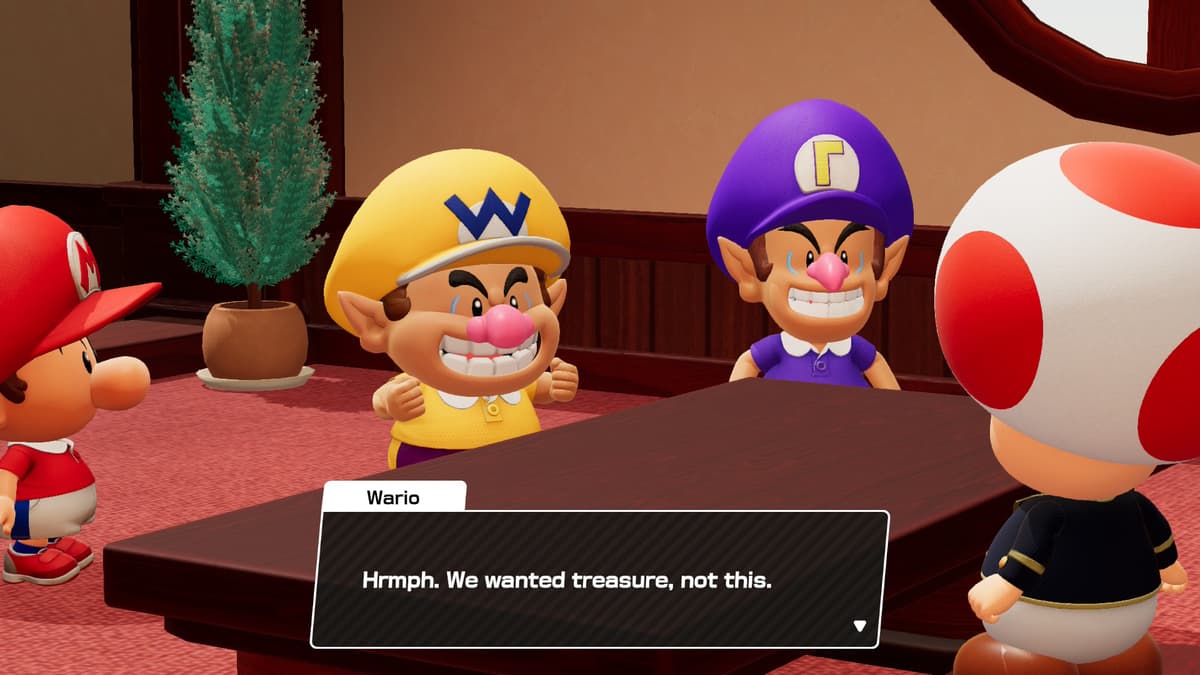
The primary thing that I want to be doing in an arcade tennis game’s single-player campaign is solving quirky problems with tennis — and Fever does exactly that. But it offers up that content after painfully introducing every single minigame with a long-winded exchange between the characters. Those exchanges don’t happen naturally in the world — the game instead takes you from the world map and plops you into a slow-moving pseudo-cutscene where the characters barely animate while taking turns talking. When it’s time to actually play tennis, the game cautiously stops to ask if you’re ready for the thing you bought the game to do.

It’s so stilted.

That racket's bananas. b a n a n a s

All of that is just the setup for each individual quest. Getting from one mission to the next involves pointlessly trekking across a world that doesn’t have much going on.

Look — I’m done expecting a successor to the Mario Tennis RPG-style adventure that was in the Game Boy Color game. I’m serious. While that was an incredible mode, I recognize it has been, like, 10 years since then (please don’t fact-check that — I swear to god). I did not go into this campaign with any of that baggage. The majority of the people who will play this game probably have never even held a Game Boy Color.

With all of that said, it’s baffling to me that Camelot doesn’t give these adventure modes just a little bit more juice. What is the point of this explorable 3D environment? Fever has nothing to explore or uncover. It’s not like in Golf Story, where you can drop a ball anywhere and start interacting with the environment by swinging your club. The various challenges could’ve been presented as a list, and the only reason I think they weren’t is because there is another mode in the game that is exactly that.

Maybe the cute and charming Mario cast could make that work, but nothing matters. And I don’t say that because I need my Mario Tennis to be high art. Instead, I’m frustrated that nothing in Adventure happens with any sense of purpose from the designers. It’s busywork and filler.

Toad gives Baby Mario another Tennis mission -- a Tennision.

That extends to the rest of the solo modes.

Tournament has three cups for both singles and doubles, and it does what it says on the tin. Trial Towers, meanwhile, offers up similar challenges to the story campaign. You need to defeat each level to ascend to the tower’s summit without losing three times. Once you’ve done that across the three available towers, Fever unlocks all of the various minigames in that aforementioned list format. Here, you can complete specific challenges to earn up to three stars in each.

More filler.

What about the tennis?

But hey — I still like this game because the tennis is fun. Is it as fun as even the original Nintendo 64 game? I don’t know. I’ve completed the campaign, climbed the towers, and played more than 50 matches, and I definitely have some things I don’t love. But the fundamentals are still mostly very well done.

It’s great to move Mario and friends around, and getting into a long rally with Baby Wario and Dry Bowser makes for a pretty thrilling video game. The characters feel a tad more varied than they have in the past in terms of their stats. And that makes every member of the robust roster (which includes characters that Mike Minotti believes do not have souls) feel valuable. For example, the common Mario enemy Boom Boom is a defensive-style character with a lot of power, and you see that in his stats. What you won’t see in the numbers is that he also has the ability to quickly move side-to-side, but is extra slow moving north and south on the court.

All of this really clicks when you take things online.

Fever has a bunch of “Special Matches” that add variety to your tennis parties, but I still primarily show up for the vanilla stuff. That is still the game’s bread and butter, and I think it still delivers.

Wario and Waluigi drop death from above.

So then, what about the titular feverish rackets? They add a decently fun layer of complexity to the traditional tennis action. Like the character cast, you’ll find a ton of different rackets with a myriad of effects, but they primarily fall into a handful of categories. Some, like the Banana Racket, drop hazards in an area on the court. Others, like the Swerve Racket, temporarily power up your character. For some of the more damaging and annoying abilities, you’ll need to activate the Fever Shot (which slows down the game so you can aim your shot) and then successfully land the ball on your opponent’s side of the playfield. If they volley it back before it touches the ground, they can potentially send your trap right back at you.

This creates a lot of panic and scrambling, and I’m generally a fan of how this affects the action.

What I’m less of a fan of is that I think Camelot took out some of the risk of the traditional tennis shots to emphasize the effects of the Fever rackets. For example, it’s almost impossible to hit a shot out of bounds. The only way I’ve been able to get an opponent to do it is to hit a Swerve Racket shot so far outside the enemy’s area that they got sort of handcuffed into returning it out of bounds.

This makes the standard tennis feel a bit too friendly.

Mario Sports games don’t need their Breath of the Wild, but c’mon

Nintendo needs to modernize its games. I’m not asking for voice acting or any of those other “nice-to-haves.” I’m asking for a more thoughtful approach so that a game like Mario Tennis Fever feels like it's worth $70.

And I think that’s the real problem. The company wants to charge $70 for this, so it built a game with just enough content to look like it has value if you squint. But as with all of the last generation of Mario sports titles, all of the value is in the mechanics, and the rest feels devoid of life — let alone any sense that it's worthy of its cost.

But I also can't help but still enjoy the game due to it still mostly playing like Mario Tennis for N64.

Read Original Article
0

Comments

Want to join the conversation?

Loading comments...