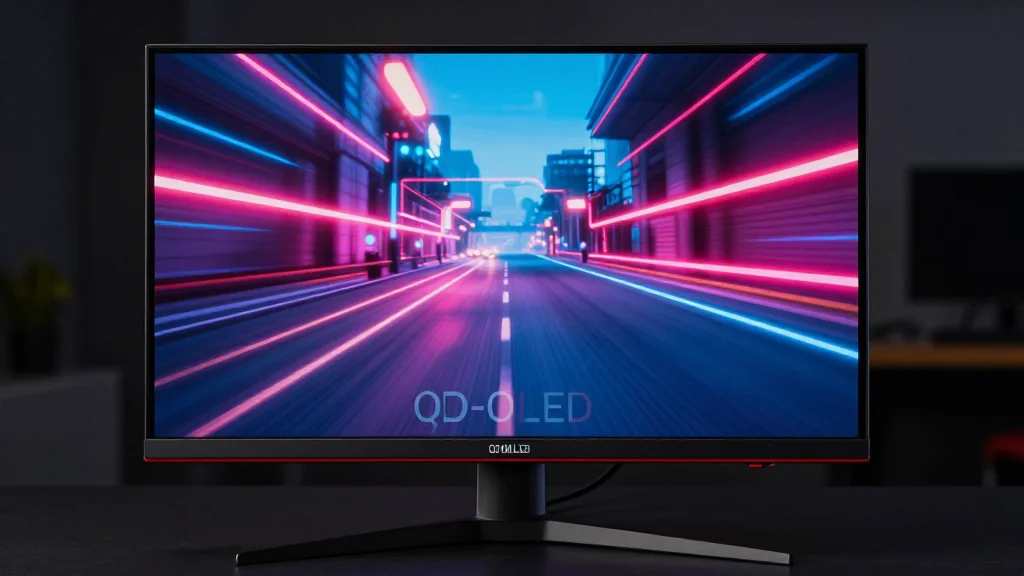
MSI Launches Triple‑mode QD‑OLED Monitor that Toggles Between 4K‑240Hz, 1440p‑360Hz and 1080p‑500Hz

Companies Mentioned

Why It Matters
The monitor tackles a long‑standing trade‑off in PC gaming: visual fidelity versus raw responsiveness. By allowing a single display to serve both high‑resolution cinematic experiences and ultra‑fast esports play, MSI could reshape purchasing decisions for high‑end gamers, reducing the need for multiple monitors and simplifying desk setups. Moreover, the integration of AI‑driven visual enhancements signals a shift toward software‑augmented hardware, a trend that could spill over into other peripherals such as keyboards, mice and even networking equipment. If the triple‑mode approach gains traction, it may accelerate the adoption of QD‑OLED panels across the broader monitor market, pushing competitors to develop similar adaptive technologies. This could also influence GPU manufacturers to optimize drivers for rapid resolution and refresh‑rate changes, further tightening the hardware‑software feedback loop that defines modern gaming performance.
Key Takeaways
- •MSI's MPG OLED 322URDX36 can switch among 4K @ 240 Hz, 1440p @ 360 Hz and 1080p @ 500 Hz.
- •Panel uses Samsung's QD‑OLED tech, VESA DisplayHDR True Black 500, and 0.03 ms response time.
- •AI‑assisted scene enhancement and adaptive crosshair aim to improve visibility in fast‑paced games.
- •Connectivity includes DisplayPort 2.1a, HDMI 2.1 and USB‑C with power delivery.
- •Pricing and availability remain undisclosed; premium positioning expected above $1,500.
Pulse Analysis
MSI’s triple‑mode monitor arrives at a moment when the high‑end display market is saturated with incremental upgrades—higher refresh rates, brighter panels, and better HDR. By bundling three distinct performance envelopes into a single chassis, MSI is attempting a categorical shift rather than a marginal one. The success of this strategy hinges on two technical challenges: the ability to switch modes without perceptible latency, and the maintenance of consistent color accuracy across vastly different pixel densities. Early adopters will likely be professional esports athletes and content creators who already invest heavily in top‑tier GPUs; their feedback will determine whether the concept is a genuine productivity boost or a niche novelty.
From a competitive standpoint, the move pressures rivals to innovate beyond raw specs. Companies like Dell, LG and Samsung have already introduced mini‑LED and OLED monitors with 240 Hz or higher, but none have offered dynamic resolution scaling at the hardware level. If MSI can prove the reliability of AI‑driven scene enhancement, it may open a new revenue stream for software services tied to display hardware, echoing the AI‑boosted networking features seen in ASUS’s new Wi‑Fi 8 router. This convergence of AI and hardware could become a defining characteristic of the next generation of gaming peripherals.
Looking ahead, the monitor’s market impact will be measured by adoption rates and the speed at which GPU manufacturers optimize drivers for rapid mode changes. Should the industry coalesce around a standard for dynamic resolution switching, we could see a cascade of innovations—adaptive lighting, variable‑rate shading, and even cloud‑rendered gaming services that tailor output to the monitor’s current mode. MSI’s gamble may therefore be less about a single product launch and more about setting a template for flexible, software‑augmented gaming hardware.
MSI launches triple‑mode QD‑OLED monitor that toggles between 4K‑240Hz, 1440p‑360Hz and 1080p‑500Hz
Comments
Want to join the conversation?
Loading comments...