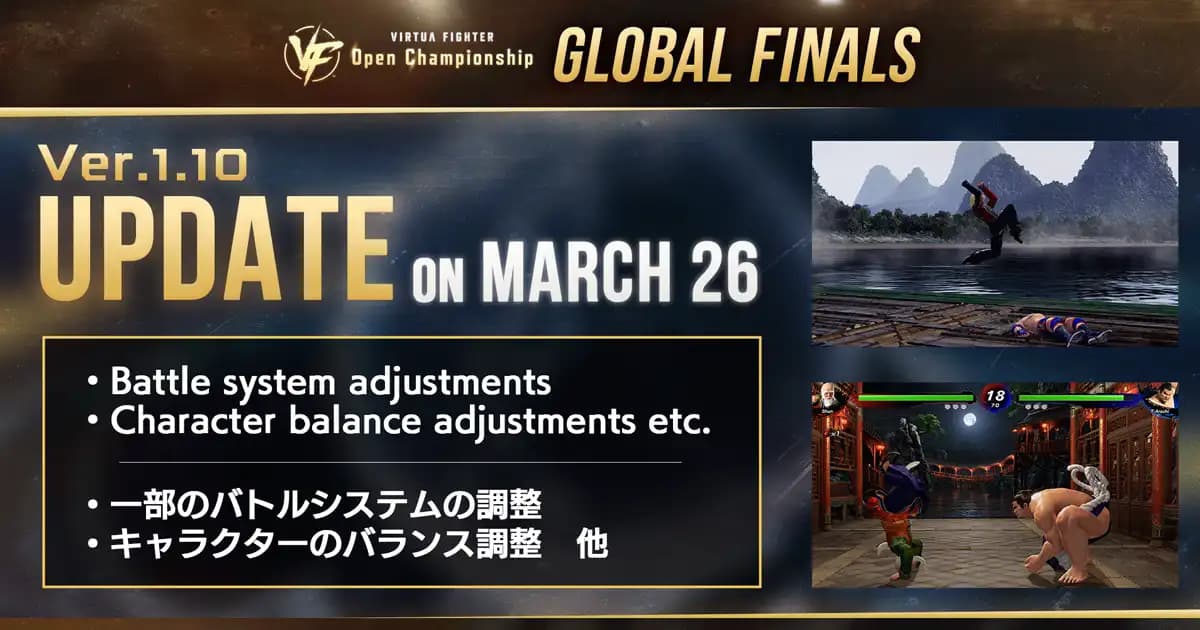
New Balance Update Revealed for Virtua Fighter 5 R.E.V.O. World Stage, Virtua Fighter Open Championship 2026 Announced
•March 1, 2026
0
Why It Matters
The demo and balance update revitalize a legacy fighting‑game, extending its competitive lifespan while generating buzz for Sega’s upcoming mainline title. This reinforces Sega’s commitment to esports and monetizing long‑standing IP.
Key Takeaways
- •Demo launches March 26, 2026 on Switch 2, PS5, Xbox
- •Balance patch adds battle system tweaks and character adjustments
- •Open Championship 2026 tour includes Evo Japan, Evo, others
- •New Virtua Fighter project reveals Akira Yuki, Stella, Wolf Hawkfield
- •Game receives updates 20 years after original arcade debut
Pulse Analysis
Virtua Fighter 5 has become a rare example of a fighting game that remains commercially viable two decades after its arcade debut. Its enduring popularity stems from a dedicated competitive community, regular balance tweaks, and a nostalgic appeal that newer titles struggle to match. By continuing to support the title, Sega taps into a niche yet lucrative segment of esports, where long‑term player investment translates into steady tournament viewership and peripheral sales.
The March 26 demo rollout across modern consoles signals Sega’s intent to broaden the game’s reach beyond its traditional PC‑arcade base. Simultaneously releasing a balance patch demonstrates a data‑driven approach to fine‑tuning gameplay, addressing meta‑shifts that emerge from high‑level competition. Coupled with the Virtua Fighter Open Championship 2026—a circuit spanning Evo Japan, Evo, Combo Breaker, and other major events—the company is positioning the franchise as a staple of the global fighting‑game calendar, attracting sponsors, streamers, and new entrants to the scene.
Meanwhile, the teaser of a new Virtua Fighter project, featuring familiar faces like Akira Yuki alongside newcomer Stella and veteran Wolf Hawkfield, hints at a next‑generation evolution of the series. By revealing characters early, Sega builds anticipation and leverages cross‑promotion with the existing title’s tournament ecosystem. This dual‑track strategy—maintaining legacy support while seeding a fresh IP—offers a blueprint for other publishers seeking to maximize the lifespan of established franchises in an increasingly competitive esports landscape.
New balance update revealed for Virtua Fighter 5 R.E.V.O. World Stage, Virtua Fighter Open Championship 2026 announced
0
Comments
Want to join the conversation?
Loading comments...