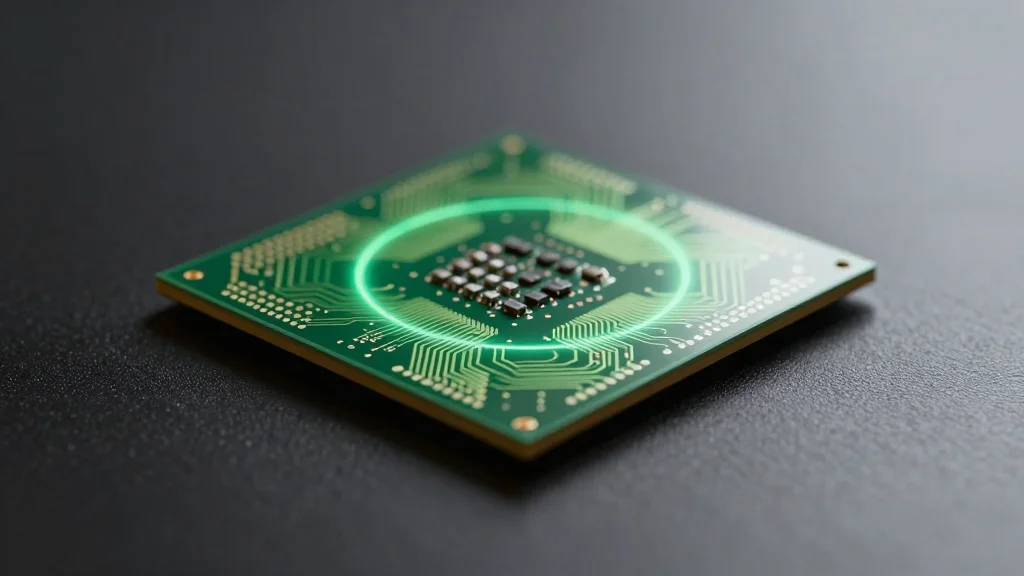
Nvidia's N1X Laptop CPU Promises 20‑Core Power, Sparks ARM Compatibility Debate

Companies Mentioned
Why It Matters
The N1X represents Nvidia’s first serious foray into laptop CPUs, a move that could upend the traditional Intel‑AMD duopoly in the high‑performance notebook segment. By bundling a Blackwell GPU with an ARM‑based CPU, Nvidia aims to simplify hardware stacks and leverage its AI‑driven upscaling tech, potentially lowering costs for OEMs and delivering better battery life for gamers. However, the ARM architecture raises compatibility concerns that could stall adoption unless developers and the Windows ecosystem adapt quickly. Success would not only broaden Nvidia’s revenue streams beyond GPUs but also accelerate the industry’s shift toward heterogeneous computing architectures. Conversely, if Nvidia fails to resolve the software bugs or cannot convince developers to support ARM, the N1X could become a cautionary tale of a dominant GPU maker overreaching into a mature CPU market. Intel and AMD would likely retain their lead, and the gaming laptop market would continue to rely on discrete GPUs paired with x86 CPUs, preserving the status quo for the next few years.
Key Takeaways
- •Nvidia’s N1X APU combines a 20‑core (10P+10E) ARM CPU with 6,144 CUDA cores based on Blackwell architecture.
- •TDP is slated between 65 W and 120 W, targeting premium gaming laptops while aiming for RTX 5060 Ti‑level graphics performance.
- •The chip will support DLSS 4.5 upscaling without a separate GPU, promising higher frame rates at lower power.
- •Sources report ongoing Windows 11 driver bugs, described as “a nightmare,” that could delay launch.
- •Launch is projected for late 2026 or early 2027, with a key showcase at Computex on June 1.
Pulse Analysis
Nvidia’s decision to bundle a Blackwell GPU with an ARM‑based CPU is a bold attempt to control the entire graphics pipeline in laptops. Historically, Nvidia has excelled by focusing on GPUs and leaving CPU design to Intel and AMD. The N1X could give the company a unique value proposition: a single silicon solution that eliminates the latency of CPU‑GPU communication and unlocks tighter integration of AI‑driven features like DLSS. If Nvidia can deliver stable drivers and convince OEMs that the ARM architecture won’t cripple game compatibility, it could command premium pricing and reshape OEM design cycles.
However, the timing is precarious. Intel’s upcoming Meteor Lake refresh and AMD’s Zen 5‑based mobile chips are expected to hit the market before the N1X’s projected launch. Both rivals are improving integrated graphics while retaining x86 compatibility, a critical factor for the vast majority of PC games. Nvidia’s reliance on ARM may force developers to adopt new toolchains or rely on emulation, which historically incurs performance penalties. The reported “nightmare” of bug fixing suggests that driver maturity—a hallmark of Nvidia’s GPU success—has not yet been achieved for the CPU side.
Strategically, the N1X could be a catalyst for broader industry change. If Nvidia can demonstrate that an ARM‑centric laptop delivers comparable or superior gaming performance, it may accelerate the adoption of ARM in Windows PCs, echoing the recent push from Qualcomm and Apple. This would open new revenue streams for Nvidia and potentially diminish Intel’s leverage over the PC market. Yet the risk remains high: a misstep could cement Nvidia’s reputation as a GPU specialist while ceding the CPU arena to entrenched rivals.
Nvidia's N1X Laptop CPU Promises 20‑Core Power, Sparks ARM Compatibility Debate
Comments
Want to join the conversation?
Loading comments...