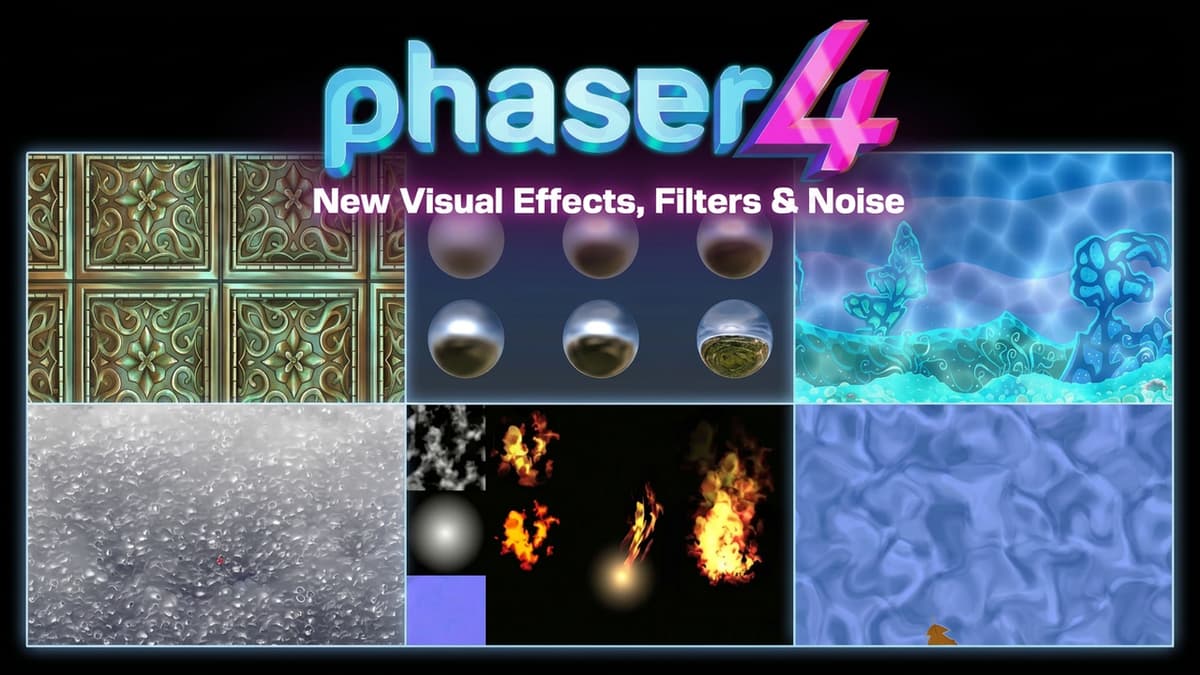
Phaser 4 Filter System Explained: Unified Visual Effects for Every Game Object
Why It Matters
The unified Filter pipeline cuts implementation complexity and bug risk, accelerating HTML5 game production and enabling richer visual experiences across browsers.
Key Takeaways
- •Unified Filter pipeline replaces separate FX and Mask systems.
- •Filters apply to any game object, camera, or scene without restrictions.
- •Internal vs external filters enable object‑level and full‑screen effects.
- •Built‑in library includes blend, gradient, image lighting, and more.
- •Simplifies migration from Phaser 3, cutting development time.
Pulse Analysis
Phaser 4’s overhaul of its visual‑effects engine marks a pivotal shift for HTML5 game development. By unifying FX and Mask functionality under a single Filter pipeline, the framework delivers a consistent shader‑based workflow that can be applied to any renderable element—sprites, text, tilemaps, or even entire camera views. The distinction between internal filters, which affect only the target object, and external filters, which process the full rendering context, gives developers granular control over both micro‑level tweaks and cinematic post‑processing, all while maintaining performance across WebGL and Canvas back‑ends.
For developers, the new system translates into tangible productivity gains. Filters are stackable in any order, eliminating the fragile preFX/postFX hierarchy that plagued Phaser 3. The out‑of‑the‑box library—featuring blend modes, gradient maps, image‑based lighting, quantization, and more—means studios can prototype sophisticated visual styles without writing custom shaders. This reduces time‑to‑market for indie teams and lowers maintenance costs for larger studios, as the unified API minimizes bugs and simplifies migration paths from older Phaser versions.
In the broader market, Phaser’s enhanced filter capabilities strengthen its competitive edge against rivals like Unity WebGL and Godot’s HTML5 export. As browser‑based gaming continues to grow—driven by mobile accessibility and instant‑play models—developers seek engines that balance visual fidelity with lightweight footprints. Phaser 4’s streamlined effects pipeline positions it as a go‑to solution for rapid, high‑quality web game production, likely accelerating adoption among studios aiming to deliver console‑like aesthetics without the overhead of heavyweight engines.
Phaser 4 Filter System Explained: Unified Visual Effects for Every Game Object
Comments
Want to join the conversation?
Loading comments...