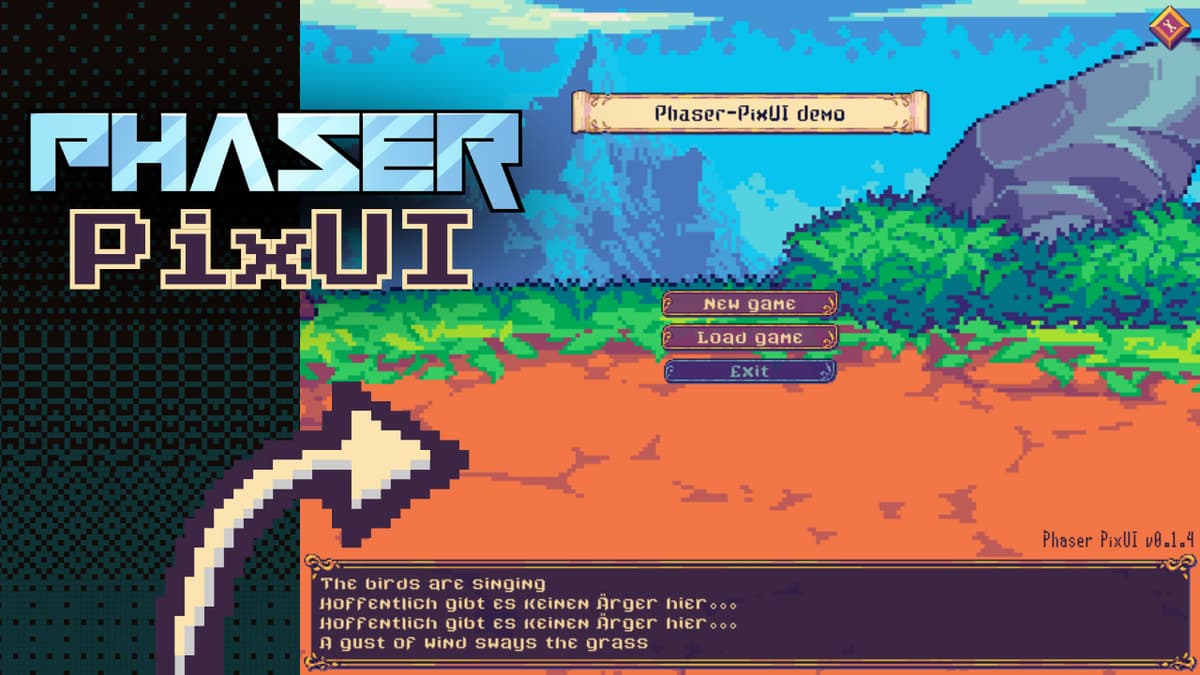
Phaser PixUI: Open-Source UI Library for Pixel Art Games
•February 23, 2026
0
Why It Matters
Pixel‑art titles often suffer from blurry UI and scaling bugs; PixUI solves these issues, accelerating development and preserving visual fidelity, which can boost player immersion and market competitiveness.
Key Takeaways
- •Open-source UI library for Phaser 4 pixel games
- •Ensures integer scaling for crisp pixel visuals
- •TypeScript definitions improve developer productivity
- •MIT license allows free commercial use
- •Lightweight, npm installable, ready for contributions
Pulse Analysis
Pixel‑art games demand visual precision, yet most generic UI frameworks blur or distort sprites when scaled, breaking the retro aesthetic. Developers traditionally spend hours crafting custom UI solutions, wrestling with integer scaling, asset atlasing, and responsive layout quirks. By targeting these pain points, Phaser PixUI fills a niche that has been largely ignored, offering a plug‑and‑play set of components that maintain pixel integrity across devices. This focus on crispness not only preserves artistic intent but also reduces the time‑to‑market for indie studios.
Built on Phaser 4, PixUI leverages TypeScript to deliver strong typing, enabling developers to catch errors early and streamline code maintenance. Its component library includes pixel‑perfect buttons, progress bars, text fields, and positioning helpers, all styled to match classic 8‑bit and 16‑bit aesthetics. The MIT license removes legal barriers, allowing commercial exploitation without royalties, while npm distribution ensures a one‑command setup. Active development and an open‑source model encourage community contributions, fostering a growing ecosystem of extensions, themes, and bug fixes that keep the library aligned with evolving engine updates.
For the broader game development market, PixUI represents a shift toward specialized tooling that respects genre‑specific requirements. Studios can now allocate resources previously spent on UI scaffolding toward core gameplay, narrative, or art production, potentially increasing overall quality and profitability. Moreover, the library’s lightweight footprint means it won’t bloat game builds, preserving performance on low‑end hardware—a critical factor for retro‑style titles. As pixel‑art experiences continue to enjoy mainstream popularity, tools like Phaser PixUI are poised to become essential components of the indie developer’s toolkit.
Phaser PixUI: Open-Source UI Library for Pixel Art Games
0
Comments
Want to join the conversation?
Loading comments...