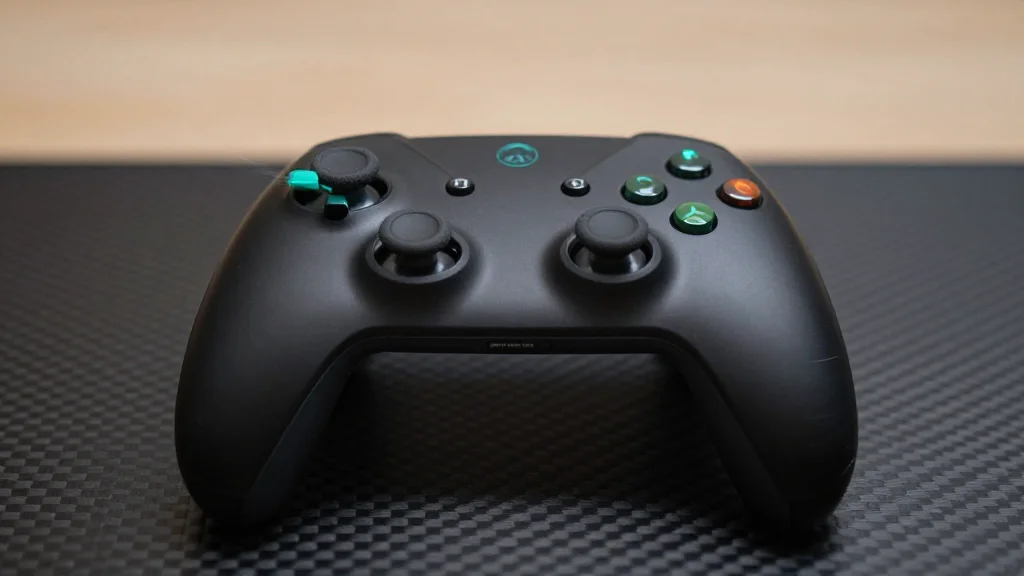
Razer and GameSir Unveil 8,000 Hz PC Controllers, Raising the Bar for Input Speed

Companies Mentioned
Why It Matters
Ultra‑high polling rates represent a technical arms race in the PC gaming peripheral market. By pushing input latency toward the theoretical minimum, manufacturers like Razer and GameSir aim to capture the attention of esports athletes and hardcore enthusiasts who can leverage even micro‑second advantages. If the 8 kHz controllers prove beneficial in competitive play, we could see a cascade of similar upgrades across mice, keyboards, and even VR controllers, reshaping hardware expectations for performance‑focused gamers. Moreover, the pricing strategy—only a $10 premium for GameSir’s 8K model—suggests that manufacturers are testing the market’s willingness to pay for incremental latency improvements. Should demand rise, we may see broader adoption of high‑polling technology, potentially driving down costs and making ultra‑responsive input a new baseline rather than a niche feature.
Key Takeaways
- •Razer launches Wolverine V3 Pro with 8,000 Hz polling rate for PC gamers.
- •GameSir releases G7 Pro 8K at $89.99, a $10 increase over the standard model.
- •Two of three upcoming Tarantula Pro controllers will also feature 8 kHz polling.
- •8BitDo’s Ultimate 3E offers modularity but caps PC polling at 1,000 Hz, priced at $149.99.
- •High‑polling controllers target a niche of esports and latency‑sensitive gamers.
Pulse Analysis
The debut of 8 kHz controllers marks a strategic pivot toward ultra‑low latency as a differentiator in a crowded peripheral market. Historically, the industry has focused on ergonomics, battery life, and feature sets; input speed has been a secondary concern, typically capped at 1,000 Hz for most high‑end devices. Razer’s decision to push the Wolverine V3 Pro to 8 kHz signals confidence that a segment of the market values raw performance over other attributes. This move could force competitors to either match the polling rate or double‑down on alternative value propositions, such as modularity, brand licensing, or price competitiveness.
From a business perspective, GameSir’s modest price increase suggests a calculated risk: offering a premium feature without alienating its core price‑sensitive audience. If sales data shows strong uptake, we may see a rapid price compression for 8 kHz controllers, making them accessible to a broader user base. Conversely, if the perceived benefit remains limited to elite players, the technology could stay confined to a high‑margin niche, similar to the way 8 kHz polling has persisted in gaming mice.
Looking ahead, the real test will be empirical: does an 8 kHz controller deliver a measurable advantage in competitive settings? Early adopters and esports teams will likely publish performance benchmarks, influencing consumer perception. Should the data confirm a tangible edge, we could witness a cascade effect, with developers optimizing games to exploit higher input frequencies and other peripheral makers racing to match or exceed the 8 kHz benchmark. In that scenario, the controller market could experience a new era of hardware‑driven performance differentiation, reshaping how gamers evaluate and purchase their input devices.
Razer and GameSir Unveil 8,000 Hz PC Controllers, Raising the Bar for Input Speed
Comments
Want to join the conversation?
Loading comments...