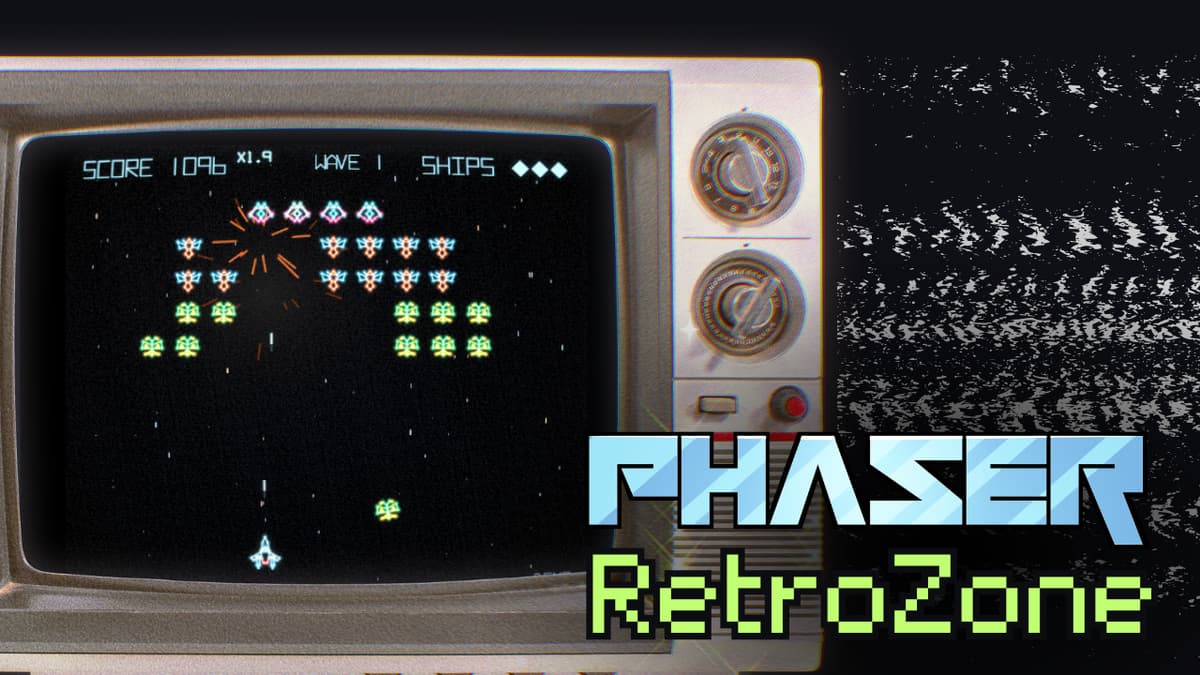
RetroZone: CRT and Scanline Effects for HTML5 Games
•February 26, 2026
0
Why It Matters
RetroZone lowers the technical barrier for indie developers to deliver nostalgic visuals, expanding market appeal for retro‑styled games across multiple JavaScript engines.
Key Takeaways
- •Free, open‑source WebGL shader library for retro effects.
- •Works with Phaser, PixiJS, Three.js, Canvas2D.
- •Offers CRT mode with scanlines, halation, interlace flicker.
- •Provides vector mode emulating Vectrex and 1983 Star Wars.
- •No engine lock‑in; simple post‑process integration.
Pulse Analysis
The resurgence of retro aesthetics in gaming has created demand for tools that can authentically reproduce vintage displays without heavy asset pipelines. RetroZone answers that call by delivering a lightweight, open‑source WebGL shader package that can be dropped into any HTML5 canvas workflow. Its compatibility with popular frameworks such as Phaser, PixiJS, and Three.js means developers can maintain existing pipelines while instantly gaining access to CRT scanlines, phosphor glow, and vector‑style beam effects, all rendered in real time on the GPU.
Technically, RetroZone separates rendering from post‑processing, allowing developers to draw bright shapes on a black background and let the shader handle bloom, persistence trails, and chromatic aberration. The CRT mode simulates a 256×224 NTSC screen with realistic beam scanlines, Trinitron aperture grille, and interlace flicker, while the Vector mode reproduces the blue phosphor glow of classic arcade cabinets. By leveraging additive blending and multi‑pass rendering, the library achieves high visual fidelity with minimal performance overhead, making it suitable for both desktop browsers and mobile devices.
From a business perspective, RetroZone reduces development time and cost for studios aiming to tap into the nostalgic market segment. Its open‑source nature encourages community contributions, fostering a shared repository of effects and best practices. The inclusion of showcase titles like HexaX and Vectronix provides immediate proof points for investors and publishers, illustrating how retro visual fidelity can be achieved without proprietary tools. As more developers adopt the library, a new wave of retro‑inspired HTML5 titles is likely to emerge, expanding the ecosystem and driving traffic to platforms that support WebGL gaming.
RetroZone: CRT and Scanline Effects for HTML5 Games
0
Comments
Want to join the conversation?
Loading comments...