Roblox's AI Push for Photorealism Meets Developer Resistance

Companies Mentioned
Why It Matters
Roblox’s attempt to embed AI‑driven photorealism could redefine the visual standards of user‑generated gaming, potentially attracting a new class of developers and advertisers seeking higher production value. However, the resistance from creators signals that platform evolution must balance technical innovation with the expectations of its massive, predominantly younger user base. A misstep could erode the low‑barrier ethos that has driven Roblox’s explosive growth. If the AI tools prove successful without compromising performance, they may set a precedent for other sandbox platforms—such as Minecraft and Fortnite Creative—to adopt similar capabilities, accelerating the democratization of high‑quality game art. Conversely, a backlash could reinforce the notion that AI should augment rather than overhaul established creative pipelines, preserving the diversity of visual styles that define the user‑generated content market.
Key Takeaways
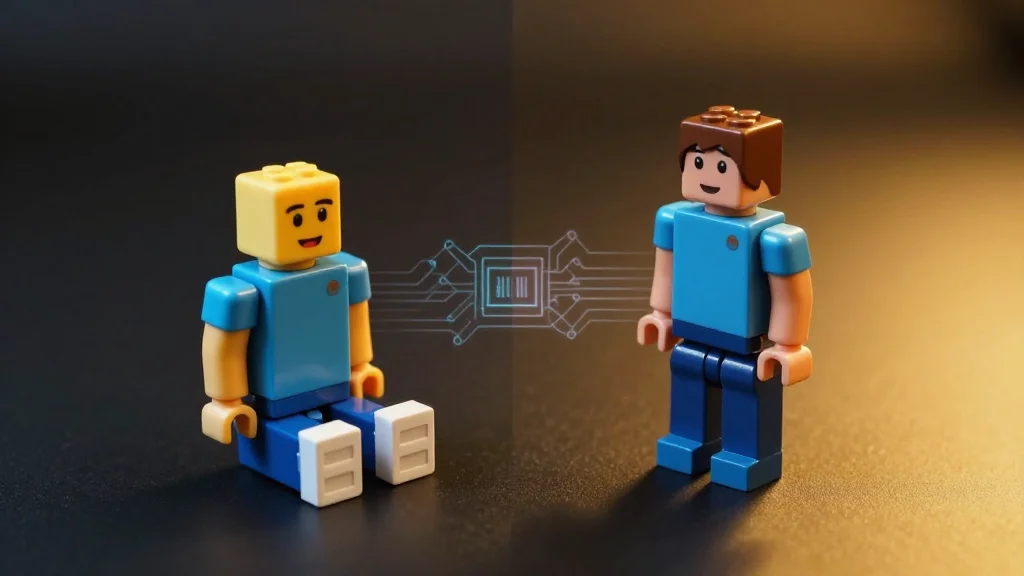
- •Roblox is testing AI that converts blocky assets into photorealistic graphics within Roblox Studio.
- •Developers argue the platform’s core audience prefers the existing low‑poly aesthetic and may experience performance issues.
- •Roblox assures the AI tools will be optional and will not replace the current visual pipeline.
- •A limited beta rollout is planned for early Q4 2026 to gather performance data and community feedback.
- •The debate reflects a wider industry tension between platform‑level AI integration and creator‑driven content identity.
Pulse Analysis
Roblox’s AI initiative arrives at a moment when generative models are reshaping content creation across media. By offering a one‑click photorealism layer, Roblox hopes to lower the entry barrier for developers accustomed to high‑budget pipelines, potentially expanding its ad‑revenue ecosystem. Historically, the platform’s growth has hinged on its accessibility: simple tools, low hardware requirements, and a visual language that encourages imagination. Introducing photorealism risks alienating that base, especially if the new assets strain mobile devices that account for the majority of daily active users.
From a competitive standpoint, Roblox’s move could be a pre‑emptive strike against rivals like Epic Games, which is also exploring AI‑enhanced creation tools for its Unreal Engine and Fortnite Creative mode. If Roblox can demonstrate that AI‑generated realism can coexist with its performance constraints, it may set a new benchmark for sandbox platforms. However, the developer pushback suggests a potential schism: creators who value artistic freedom and performance may gravitate toward alternative engines, while those seeking higher production value may embrace the AI suite.
Looking ahead, the success of the beta will hinge on measurable metrics—frame‑rate stability, battery impact, and user satisfaction scores. Should the data show negligible performance degradation, Roblox could accelerate a broader rollout, positioning itself as the first major user‑generated platform to mainstream AI‑driven graphics. If not, the company may need to recalibrate, perhaps offering tiered visual options that let creators choose between classic and photorealistic modes. Either outcome will inform how the broader gaming industry balances AI innovation with the practical realities of a diverse, global player base.
Roblox's AI Push for Photorealism Meets Developer Resistance
Comments
Want to join the conversation?
Loading comments...