Gaming News and Headlines
  • All Technology
  • AI
  • Autonomy
  • B2B Growth
  • Big Data
  • BioTech
  • ClimateTech
  • Consumer Tech
  • Crypto
  • Cybersecurity
  • DevOps
  • Digital Marketing
  • Ecommerce
  • EdTech
  • Enterprise
  • FinTech
  • GovTech
  • Hardware
  • HealthTech
  • HRTech
  • LegalTech
  • Nanotech
  • PropTech
  • Quantum
  • Robotics
  • SaaS
  • SpaceTech
AllNewsDealsSocialBlogsVideosPodcastsDigests

Gaming Pulse

EMAIL DIGESTS

Daily

Every morning

Weekly

Sunday recap

NewsDealsSocialBlogsVideosPodcasts
GamingNewsRomeo Is a Dead Man's Most Beguiling Spectacle Is Its Astral Fish Tank Menu
Romeo Is a Dead Man's Most Beguiling Spectacle Is Its Astral Fish Tank Menu
Gaming

Romeo Is a Dead Man's Most Beguiling Spectacle Is Its Astral Fish Tank Menu

•February 11, 2026
0
Rock Paper Shotgun
Rock Paper Shotgun•Feb 11, 2026

Why It Matters

The menu showcases how avant‑garde UI design can deepen immersion and differentiate a title in a crowded market, setting a benchmark for artistic game interfaces.

Key Takeaways

  • •Menu features hypnotic fish‑tank with floating planets
  • •Text fragments dissolve into pixel particles when idle
  • •No interactive elements; visual experience is passive
  • •J‑Rap soundtrack loops, adding surreal ambience
  • •Design reinforces game’s multiverse, cyber‑punk narrative

Pulse Analysis

The opening screen of *Romeo is a Dead Man* is more than a simple navigation hub; it acts as a visual overture that primes players for the game’s otherworldly tone. By placing a solitary, shape‑shifting fish in a zero‑gravity aquarium, Grasshopper Manufacture blurs the line between menu and art installation. The floating planets and kinetic coral echo the title’s multiverse premise, while the text’s particle‑burst animation turns mundane options into fleeting constellations, subtly reminding players that reality in this universe is mutable.

From a design perspective, the menu’s lack of interactivity is a deliberate choice that heightens its impact. Rather than inviting clicks, the screen encourages observation, turning the UI into a moment of contemplation before gameplay begins. This restraint aligns with a broader industry trend where developers use non‑functional aesthetics to build brand identity—think of *Journey*’s serene horizon or *Control*’s shifting architecture. The looping J‑Rap verses, paired with airy synth layers, further immerse users in a soundscape that feels both futuristic and oddly nostalgic, reinforcing the game’s cyber‑punk roots.

The significance of such a menu extends beyond visual flair; it demonstrates how UI can serve narrative storytelling. By embedding thematic elements—like the disintegrating fish symbolizing fragmented identity—directly into the interface, the game deepens player engagement from the first click. This approach can inspire other studios to experiment with menu design as a storytelling tool, potentially reshaping expectations for first‑impression experiences in the interactive entertainment market.

Romeo is a Dead Man's most beguiling spectacle is its astral fish tank menu

Carp blimey

The surreal main menu screen in Romeo is a Dead Man

Image credit: Rock Paper Shotgun / Grasshopper Manufacture

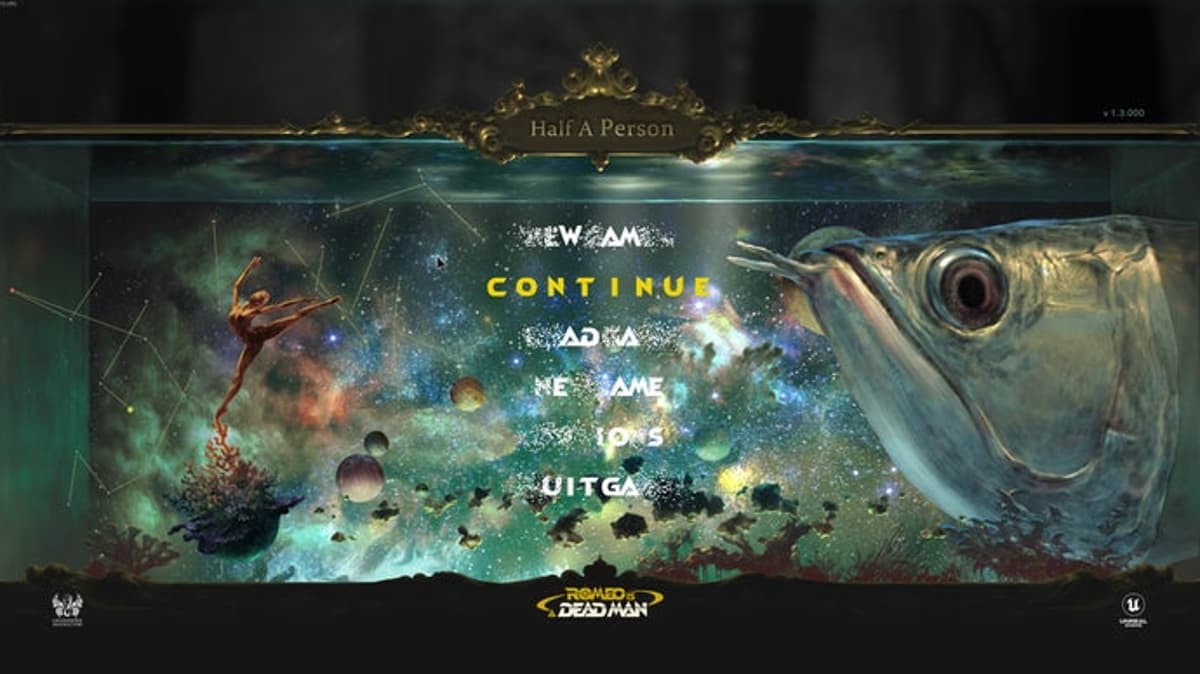
Romeo is a Dead Man, Grasshopper Manufacture’s eccentric new hack‑'n‑slash, is out today. I quite like it. I especially like its main menu screen, a strangely hypnotic fish‑tank in which captive planets float alongside a coral‑ballet trophy, and the menu’s text strings try to escape when you’re not looking. There is, precisely, one fish.

Using boring old words to capture the ethereal atmosphere of this screen—something like a halfway‑lucid dream of visiting Brighton Sea Life after a hearty dinner of paint—may be difficult. The fish, for instance, has transcended the need to swim, instead disintegrating and reforming itself around different corners of the tank. Sometimes it’ll arrange itself right up against the glass, a single, ink‑black fisheye staring out at the confused human before it, as if to ask why you’re not playing the science‑fiction action game you bought.

The surreal main menu screen in Romeo is a Dead Man (second view)

Image credit: Rock Paper Shotgun / Grasshopper Manufacture

The planets and the dancing coral keep a lower profile, not counting how the close grouping of the former would wipe them clean of sapient life through gravity‑induced ecological disasters. But the menu text waits for mere seconds before it, too, begins breaking apart into pixelly atoms, any option not currently selected taking advantage of your disinterest to spread itself like stardust across the underwater cosmos. Press something, and they snap back into selectable form, but this obedience only lasts for a few more moments before they scatter once more, filling the tank in a glittering, slow‑motion “fontsplosion”. All the while, a procession of J‑Rap verses plays in a loop, their aggression blunted by the airy synths that otherwise score the experience.

Unlike a lot of memorable main menus, Romeo is a Dead Man’s aquarium lacks any kind of interactivity—there’s no pulling on noses or dragging of eyeballs. If anything, it’s reliant on you keeping your hands off, lest the dissipated text return to the humdrum functionality of being a menu. Even so, I’ve repeatedly found myself lingering on this screen, following the travels of the teleporting fish and watching individual word‑particles drift into empty water.

Maybe because with studying comes understanding; the boxed‑up galaxy and “Half a Person” embossing make sense in relation to Dead Man’s multiverse plot and cyborg hero, but what’s the deal with the fish? Does it even have one? I must know, and thus, I must stare.

Read Original Article
0

Comments

Want to join the conversation?

Loading comments...