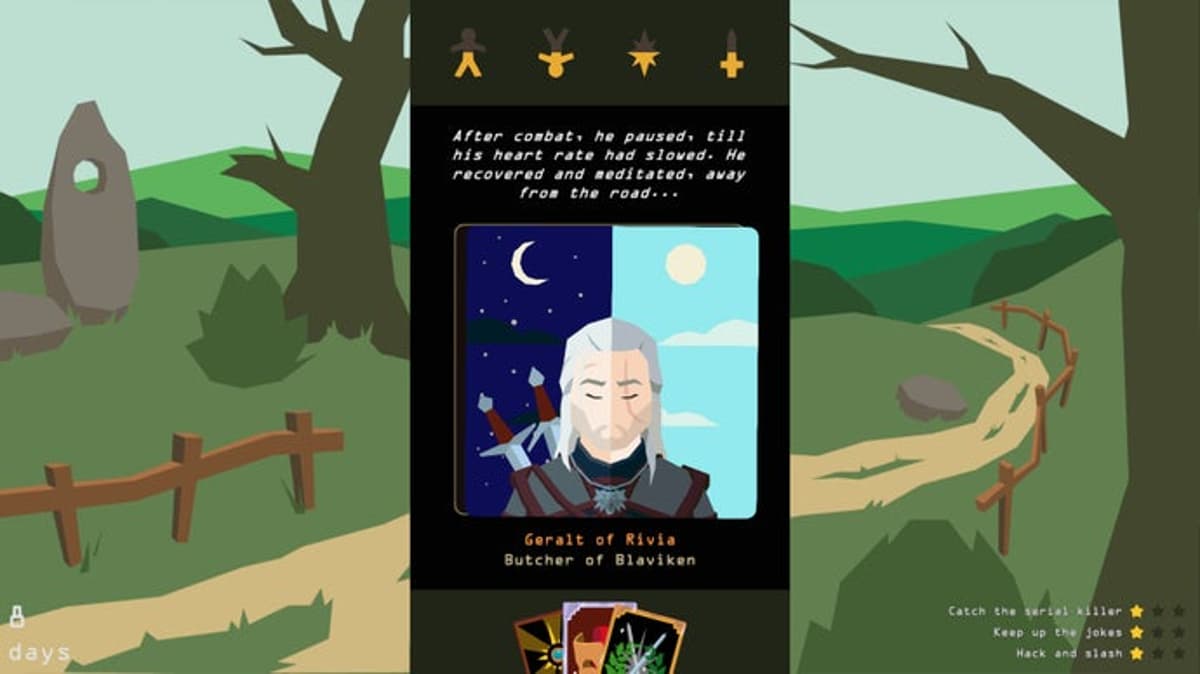
“Sapkowski Is a Kleptomaniac with Mythology” - How Reigns: The Witcher Coaxes Out the Improv Chaos of Geralt's Universe
•February 25, 2026
0
Why It Matters
The release demonstrates a fresh licensed‑game model that blends rapid card mechanics with deep franchise lore, attracting both core fans and casual players. It signals how IP holders can diversify storytelling while preserving brand integrity.
Key Takeaways
- •Card format enables rapid, improvisational storytelling.
- •Dandelion narrates, turning gameplay into fan‑fiction.
- •CD Projekt supplied lore ideas, ensuring canon respect.
- •Game blends mythic references with modern pop culture.
- •Released on Steam and GOG, expanding Witcher audience.
Pulse Analysis
Nerial’s approach to *Reigns: The Witcher* hinges on the simplicity of binary card decisions, yet each swipe carries narrative weight. By casting Dandelion as the unreliable narrator, the game transforms Geralt’s grim adventures into a series of anecdotal songs, allowing developers to inject humor, meme culture, and unexpected anachronisms without breaking immersion. This improvisational design encourages players to experiment, creating a fresh replay loop that feels more like collaborative fan fiction than a scripted quest line.
The partnership with CD Projekt proved crucial for maintaining the series’ mythic backbone. Lore‑masters supplied canonical hooks—such as references to the bubble‑bath scene or the *A Grain of Truth* tale—while granting Nerial latitude to remix myths, echoing Sapkowski’s own practice of borrowing from Arthurian and classical sources. This balance of reverence and subversion ensures the game feels like a playful parody that still respects the world‑building standards fans expect from the Witcher franchise.
From a market perspective, the title expands the Witcher brand into the casual‑strategy niche, reaching players who might shy away from the series’ traditional combat intensity. Its launch on both Steam and GOG broadens accessibility, while the card‑driven format offers a low‑development‑cost avenue for future licensed expansions. As the industry watches the success of such hybrid experiences, *Reigns: The Witcher* could pave the way for more experimental spin‑offs, reinforcing the value of adaptable IP strategies in today’s fragmented gaming ecosystem.
“Sapkowski is a kleptomaniac with mythology” - How Reigns: The Witcher coaxes out the improv chaos of Geralt's universe
0
Comments
Want to join the conversation?
Loading comments...