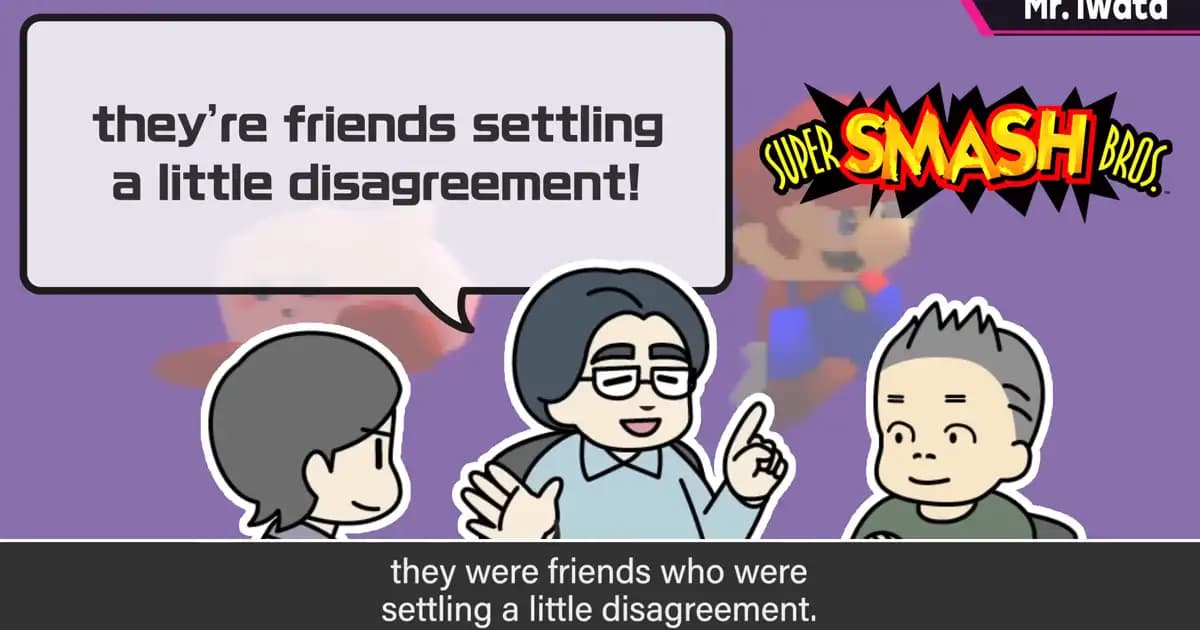
Satoru Iwata Came up with the Title 'Super Smash Bros.' Since It Sounded Like 'Friends Who Were Settling a Disagreement'
•February 16, 2026
0
Why It Matters
Iwata’s naming strategy broadened the series’ appeal, reinforcing Nintendo’s family‑friendly brand and driving massive commercial success. The shift signals how executive vision can shape long‑term franchise viability.
Key Takeaways
- •Iwata suggested “brothers” to soften combat perception
- •Name emphasizes friends settling disagreements, not serious fighting
- •Super Smash Bros. Ultimate sold 37.44 million units
- •Iwata’s push added Nintendo mascots despite initial resistance
- •Series may continue without Iwata, ending his era
Pulse Analysis
The "brothers" element that Satoru Iwata introduced to Super Smash Bros. was more than a linguistic flourish; it was a deliberate branding maneuver. By framing the chaotic brawls as friendly disputes, Nintendo softened the perceived violence, aligning the title with its family‑centric ethos. Iwata’s willingness to challenge internal objections and champion the inclusion of iconic mascots demonstrated his hands‑on approach to product identity, a hallmark of his leadership style that resonated throughout Nintendo’s portfolio.
Commercially, the naming decision proved prescient. Super Smash Bros. Ultimate’s 37.44 million units sold reflect a franchise that transcended its niche roots to become a mainstream staple. The approachable title helped secure an ESRB "E" rating for the original entry, expanding the audience beyond hardcore gamers to families and casual players. This broadened demographic contributed to sustained sales momentum across successive console generations, reinforcing Nintendo’s reputation for inclusive, high‑engagement experiences.
Iwata’s legacy extends beyond a single word. His influence shaped the series’ direction, from early development constraints to the recruitment of Masahiro Sakurai for later titles. As the franchise moves forward without his direct input, it faces the challenge of preserving the balance between competitive depth and universal accessibility that Iwata championed. Observers will watch how new leadership navigates this legacy, potentially redefining the series’ identity while honoring the foundational principles he established.
Satoru Iwata came up with the title 'Super Smash Bros.' since it sounded like 'friends who were settling a disagreement'
0
Comments
Want to join the conversation?
Loading comments...