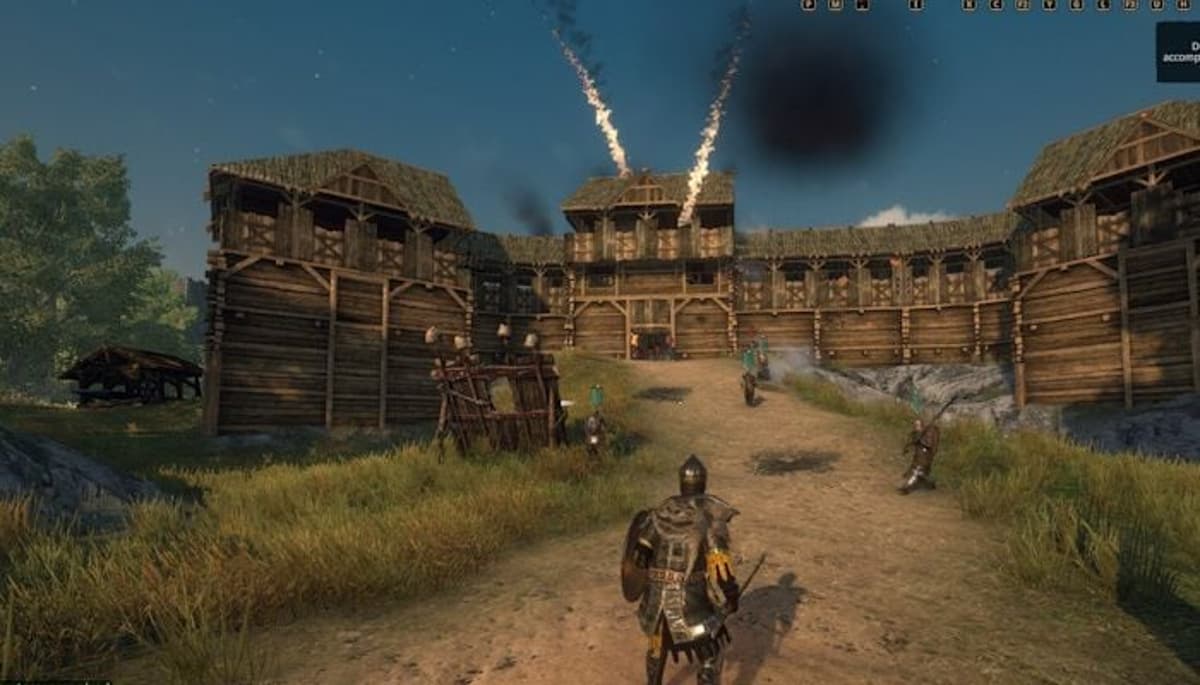
Shuttered Low-Fantasy MMORPG Gloria Victis Is, In Fact, Making A Comeback Under Gamigo
•February 28, 2026
0
Why It Matters
The comeback signals strong publisher confidence in niche, skill‑driven MMOs and could reshape free‑to‑play monetization without compromising competitive integrity.
Key Takeaways
- •Gloria Victis revives under Gamigo with free‑to‑play model
- •Game promises skill‑based PvP, avoiding pay‑to‑win mechanics
- •Unique siege system features catapults, rams, trebuchets, partial destruction
- •Original 2023 launch shut down same year, now revived
- •Discord reopens March 3; official launch date still unannounced
Pulse Analysis
The MMORPG landscape has long been dominated by high‑fantasy, loot‑centric titles, leaving a modest niche for low‑fantasy, player‑driven conflict. Gloria Victis occupies that space with its emphasis on territory control and large‑scale open‑world battles. By partnering with Gamigo—known for managing free‑to‑play staples such as Rift, Trove, and Wizard101—the game gains access to seasoned operational expertise and a broader distribution network, potentially revitalizing interest in under‑served PvP‑focused experiences.
Central to Gloria Victis’s appeal are its siege mechanics, which incorporate catapults, rams, mantlets, trebuchets, and ballistas, allowing partial destruction of fortifications. This level of environmental interaction is rare among MMOs and promises emergent strategies that reward tactical planning over raw gear. The shift to a free‑to‑play model, coupled with a firm stance against pay‑to‑win monetization, suggests a revenue strategy built on cosmetic items, convenience services, and battle passes—approaches that have proven sustainable for Gamigo’s existing portfolio while preserving competitive balance.
From an industry perspective, the revival underscores a growing willingness to resurrect titles with dedicated, albeit smaller, player bases. If Gloria Victis can deliver on its promises, it may encourage other publishers to reconsider dormant projects, especially those offering unique gameplay loops not found in mainstream releases. Moreover, a successful relaunch could set a benchmark for how free‑to‑play models can coexist with deep, skill‑centric mechanics, influencing future design and monetization decisions across the MMO sector.
Shuttered Low-Fantasy MMORPG Gloria Victis Is, In Fact, Making A Comeback Under Gamigo
0
Comments
Want to join the conversation?
Loading comments...