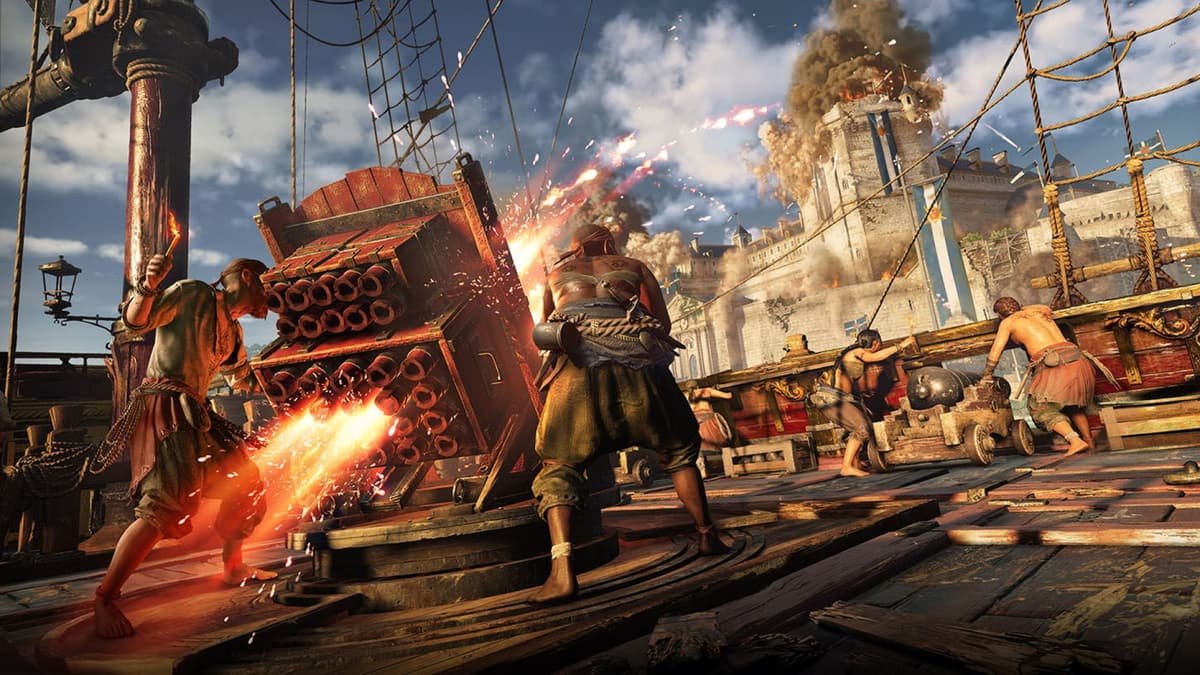
Skull and Bones Development Time Was “Bizarre”, Says Assassin’s Creed 3’s Former Creative Director
•February 25, 2026
0
Why It Matters
The game’s troubled development highlights how studio capability gaps and talent management can inflate costs and damage brand reputation, a cautionary signal for publishers investing in ambitious live‑service titles.
Key Takeaways
- •Development spanned 14 years from concept to release
- •Ubisoft Singapore lacked experience with large‑scale naval gameplay
- •Senior staff treated Singapore stint as vacation, hindering talent growth
- •Game launched 2024 with lukewarm reception despite AAA label
- •Black Flag expansion origins shifted repeatedly, causing scope creep
Pulse Analysis
When Ubisoft first introduced sailing in *Assassin’s Creed 3*, it hinted at a broader ambition to blend historical narrative with open‑sea combat. That seed eventually grew into *Skull and Bones*, announced in 2017 as a multiplayer‑focused naval experience. The title’s origins trace back to 2013, when it was conceived as an expansion for *Black Flag*. Over the years, the project morphed through multiple design pivots, reflecting both Ubisoft’s desire to capitalize on the pirate genre and the challenges of scaling a niche mechanic into a full‑scale live‑service game.
The core of the development slowdown lay at Ubisoft Singapore, a studio originally built as a support hub rather than a lead developer. Lacking deep expertise in large‑scale ship combat, the team attempted to fuse *Black Flag*’s aesthetic with the strategic depth of *World of Tanks* and *World of Warships*. Compounding this, senior developers from Ubisoft’s French and Canadian offices treated year‑long assignments in Singapore as extended vacations, limiting knowledge transfer and preventing a robust talent pipeline. This managerial approach left the studio without the seasoned staff needed to refine the complex systems, resulting in a final product that felt undercooked despite its AAA positioning.
The market’s tepid response to *Skull and Bones* underscores the risks of protracted, poorly resourced development cycles. Ubisoft’s decision to price the game at $70 and market it as a quadruple‑A title raised expectations that the final experience could not meet, eroding consumer trust. For the industry, the case serves as a reminder that ambitious live‑service projects require not only visionary concepts but also mature development infrastructure and disciplined talent cultivation. Publishers must balance innovation with realistic timelines and invest in studio capabilities early to avoid costly delays and brand fatigue.
Skull and Bones Development Time Was “Bizarre”, Says Assassin’s Creed 3’s Former Creative Director
0
Comments
Want to join the conversation?
Loading comments...