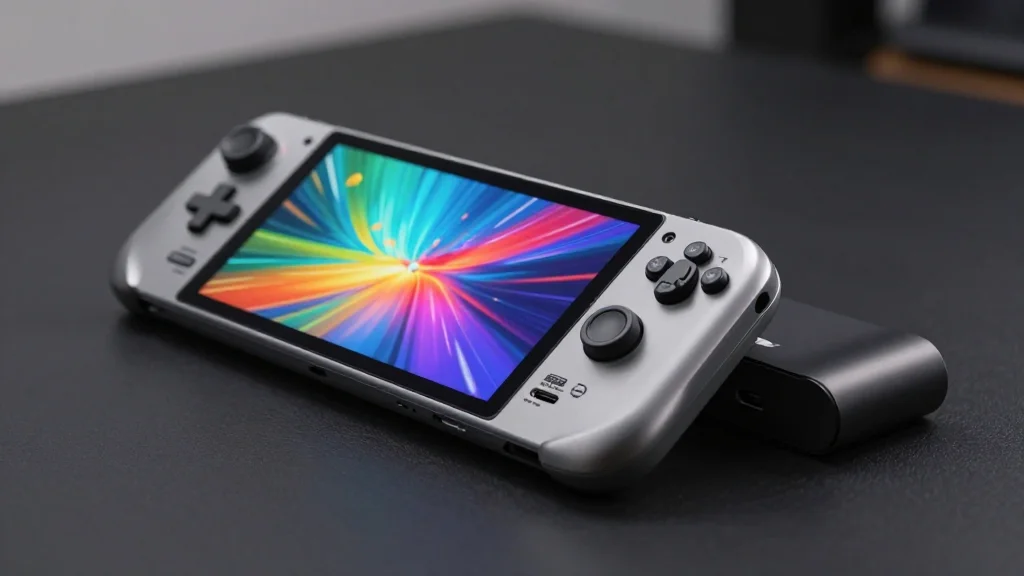
Steam Deck 2 Wishlist Shows Strong Demand for Better Screen, Battery and Ports

Companies Mentioned

Valve
ASUS
2357
Why It Matters
The Steam Deck’s evolution reflects a broader shift in PC gaming toward portable, high‑performance devices that can double as living‑room consoles. By addressing the wishlist’s core demands—display fluidity, battery endurance and connectivity—Valve can capture a larger slice of the $10 billion handheld gaming market and reinforce its position as the bridge between PC ecosystems and console‑style convenience. Moreover, the push for 16 GB of RAM and advanced joystick sensors signals that developers are already planning more demanding titles for handhelds, which could accelerate the convergence of PC and console development pipelines. For hardware manufacturers and game studios, the Steam Deck 2’s spec targets set a new baseline. Competing devices will need to match or exceed a 120 Hz OLED, 70 Wh battery and dual‑port connectivity to stay relevant, driving innovation across the entire handheld segment. This arms race could lower component costs over time, making premium handhelds more affordable for a wider audience.
Key Takeaways
- •Community calls for a 120 Hz OLED panel with built‑in VRR, up from the current 90 Hz screen
- •Desired battery capacity jumps from 50 Wh to around 70 Wh to improve playtime
- •Dual USB‑C ports, one potentially Thunderbolt, are a top hardware request
- •16 GB of RAM is now seen as the minimum for future‑proof handheld PCs
- •Valve’s next hardware cycle is expected to be announced at GDC 2026
Pulse Analysis
Valve’s Steam Deck pioneered the handheld PC category, but the market has matured quickly. Early adopters proved that a Linux‑based, Steam‑integrated device could attract a sizable user base, yet the hardware ceiling remains modest compared with dedicated consoles. The wishlist’s emphasis on a 120 Hz OLED and larger battery mirrors trends seen in flagship smartphones, where display fluidity and all‑day endurance have become non‑negotiable. By adopting these specs, Valve would not only close the performance gap with rivals like the ASUS ROG Ally but also future‑proof the Deck against the next wave of graphically intensive titles that leverage ray tracing and AI‑enhanced assets.
Connectivity is another decisive factor. A single USB‑C port forces users into dongles or dock stations that add cost and friction. Introducing a second port—especially with Thunderbolt 4—would unlock high‑speed external GPU (eGPU) support, fast SSD expansion and seamless multi‑display setups. This could transform the Deck from a portable console into a true PC workstation, expanding its appeal to content creators and power users who currently rely on laptops.
Finally, the push for 16 GB of RAM signals that developers are already planning games that exceed the Deck’s current 8 GB ceiling. If Valve delays this upgrade, it risks alienating studios that could otherwise optimize titles for the platform. Conversely, a timely hardware refresh would encourage developers to prioritize the Deck in their release strategies, reinforcing Valve’s ecosystem and potentially driving higher Steam revenue. In short, the wishlist is not just a list of nice‑to‑haves; it outlines the competitive benchmarks that will determine whether the Steam Deck 2 can dominate the handheld PC niche or be eclipsed by more aggressive challengers.
Steam Deck 2 Wishlist Shows Strong Demand for Better Screen, Battery and Ports
Comments
Want to join the conversation?
Loading comments...