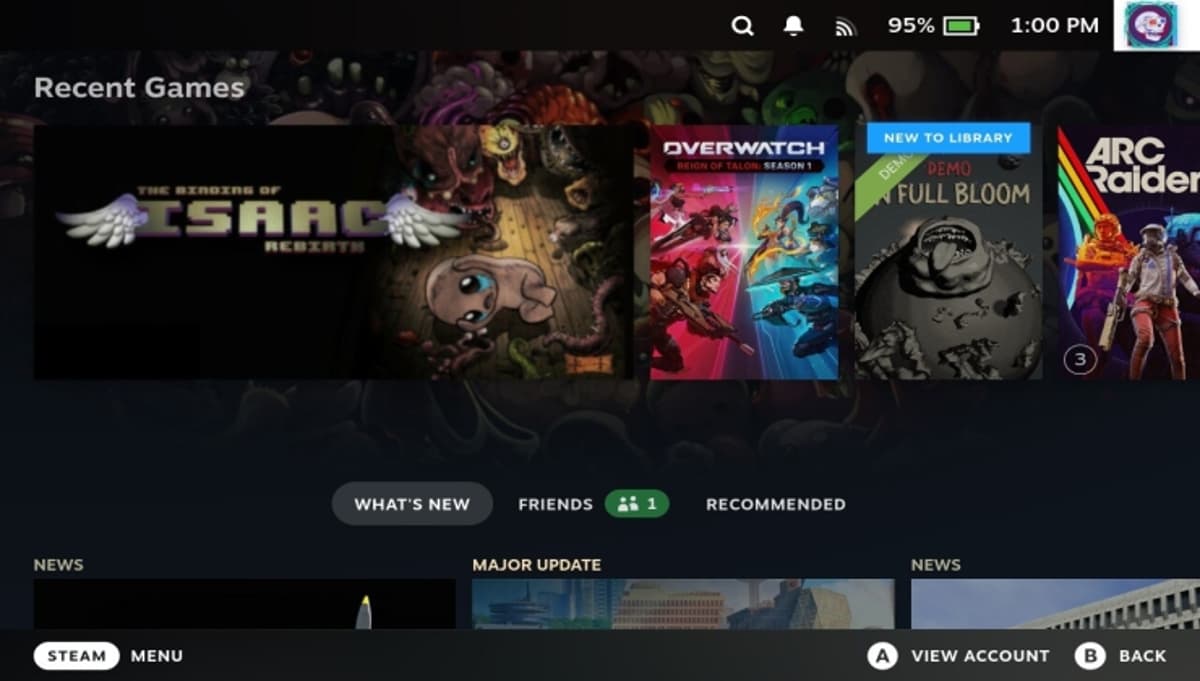
SteamOS 3.7.20 Released with NTSync Driver, Plus Big New Steam Client Update for All
•March 10, 2026
0
Why It Matters
The updates boost game performance and compatibility on Valve’s Linux stack while strengthening platform security, reinforcing Steam’s position as the dominant cross‑platform gaming ecosystem.
Key Takeaways
- •NTSync driver adds Windows NT sync primitives to Linux
- •SteamOS patches address CVE‑2025‑66005 and CVE‑2025‑14338
- •Client now lets users attach hardware specs to reviews
- •New framerate sharing beta targets SteamOS device performance
- •Deck lock‑screen options merged for smoother login experience
Pulse Analysis
The inclusion of the NTSync driver marks a subtle but significant shift in Valve’s Linux strategy. By exposing Windows NT synchronization primitives directly to the kernel, Proton and other compatibility layers gain a more native timing source, reducing latency spikes that can affect fast‑paced titles. While Proton already emulates these primitives, the kernel‑level implementation promises modest performance gains for games that rely heavily on precise thread coordination, especially on newer hardware that can exploit the driver’s low‑overhead design.
Beyond the kernel tweak, the Steam Client’s all‑platform refresh focuses on data transparency and user control. Attaching hardware specifications to reviews gives prospective buyers clearer performance expectations, while the beta framerate‑sharing feature—initially limited to SteamOS devices—signals Valve’s intent to crowdsource performance metrics without compromising privacy. UI enhancements, such as tool icons and refined achievement notifications, streamline daily interactions, and a slew of stability fixes—from TPM reporting on Windows to VRAM accuracy on Linux—reduce friction for power users with extensive libraries.
Strategically, these updates reinforce Valve’s dual‑track approach: nurturing the Steam Deck as a first‑class gaming PC while keeping the broader Steam ecosystem competitive against emerging cloud and console services. Security patches address recent vulnerabilities, preserving trust among developers and gamers alike. By continuously iterating on both the operating system and client experience, Valve not only safeguards its massive user base but also positions Steam as a more attractive launch platform for cross‑play titles, potentially influencing future negotiations with publishers and hardware partners.
SteamOS 3.7.20 released with NTSync driver, plus big new Steam Client update for all
0
Comments
Want to join the conversation?
Loading comments...