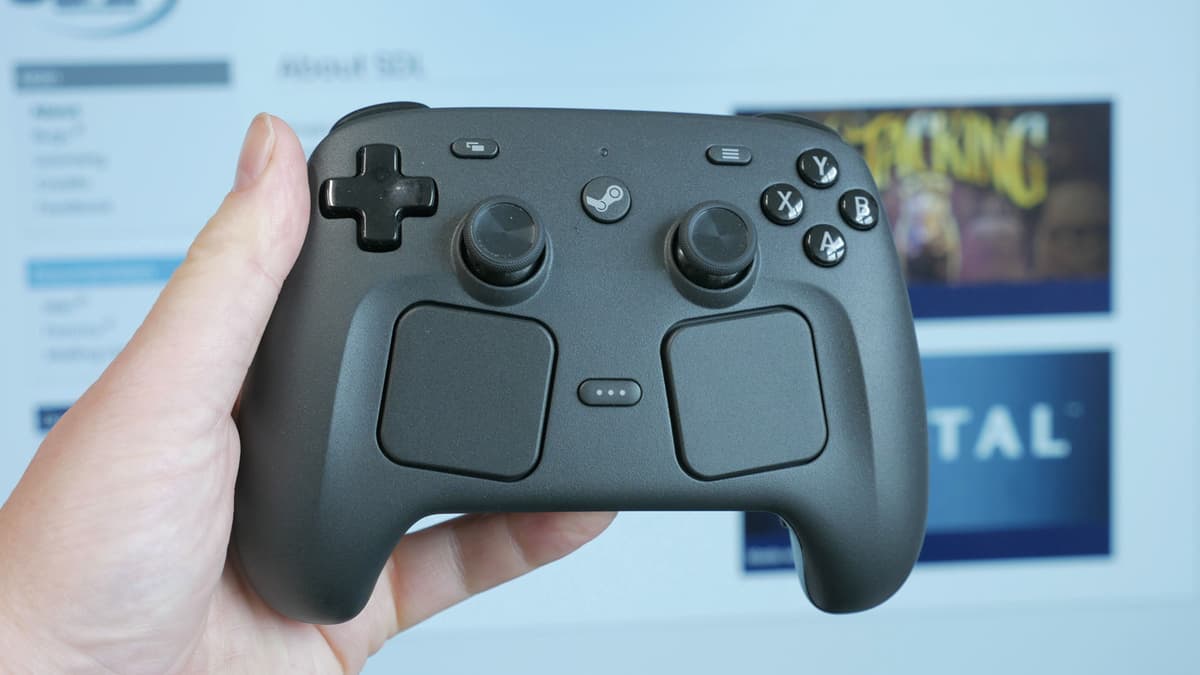
The Steam Controller No Longer Needs Steam to Get the Most From It
Companies Mentioned

Valve
Why It Matters
By decoupling the controller from Steam, Valve opens a path for indie and retro titles to leverage its advanced inputs, potentially boosting adoption and extending the controller’s lifespan.
Key Takeaways
- •SDL integration enables full Steam Controller features without Steam client
- •Touchpad, grip, and capacitive stick support now available to SDL apps
- •Cross‑platform library expands controller use to Android, iOS, Linux, macOS
- •Developers must add explicit support for new inputs in their games
- •Enhanced controller utility may revive interest in older or emulated titles
Pulse Analysis
The Steam Controller, launched in 2015 as Valve’s answer to the Xbox and PlayStation gamepads, has long been praised for its dual touchpads and customizable inputs. Until now, accessing its advanced features required the Steam client to translate raw signals, limiting its appeal to non‑Steam environments. The recent addition of full controller support to Simple DirectMedia Layer (SDL) changes that equation. SDL acts as a hardware abstraction layer used by thousands of games and emulators, and its cross‑platform design means the controller’s touchpads, grip sensors, and capacitive stick can be read directly on Windows, macOS, Linux, Android, and iOS.
For developers, the SDL update removes a technical barrier and opens a low‑cost path to integrate Valve’s nuanced controls. Indie studios and open‑source projects, which already rely on SDL for portability, can now experiment with mouse‑centric gameplay using the controller’s trackpads, a feature that once required bespoke Steam APIs. Emulators stand to benefit most, as the controller can replace keyboard and mouse inputs for legacy titles, potentially improving accessibility and performance. However, the onus remains on developers to program support for the new inputs.
The move reflects a broader industry shift toward hardware agnosticism and modular input ecosystems. By decoupling the Steam Controller from its native platform, Valve positions the device as a universal peripheral, competing with mainstream controllers that lack touch‑based interfaces. If game makers adopt the feature set, the controller could see a resurgence among retro‑gaming enthusiasts and mobile gamers seeking precise analog input. Ultimately, SDL integration may extend the Steam Controller’s relevance beyond its original niche, offering a modest but meaningful boost to Valve’s peripheral portfolio.
The Steam Controller no longer needs Steam to get the most from it
Comments
Want to join the conversation?
Loading comments...