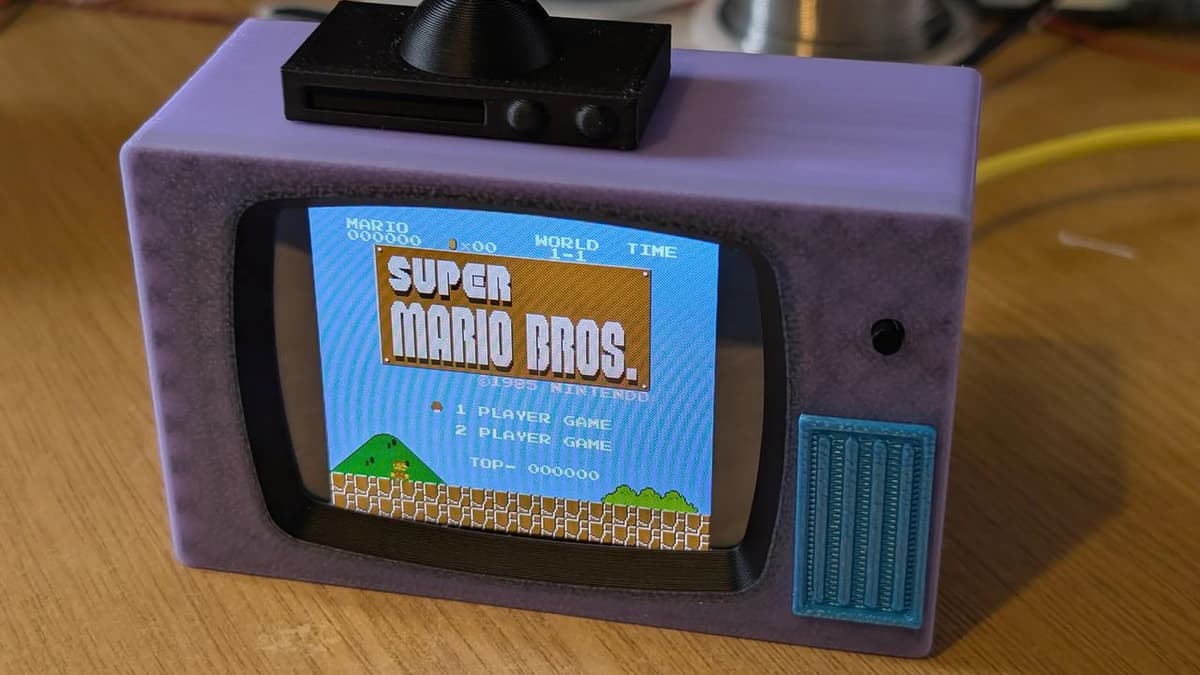
This DIY Retro-Style Mini-TV Looks Like It's From the Simpsons, and Plays Classic NES Games and Movies — and Yes Please, I Want One

Companies Mentioned
Why It Matters
The project showcases how low‑cost, open‑source hardware can deliver full‑featured retro gaming and media playback, lowering barriers for makers and expanding the DIY entertainment market.
Key Takeaways
- •ESP32 CYD board powers a 2.8‑inch retro TV with Wi‑Fi/Bluetooth
- •Custom launcher runs NES, Doom, Duke Nukem 3D, plus video playback
- •3D‑printed case mimics classic TV aesthetic from The Simpsons
- •Build guide freely available, encouraging community replication
Pulse Analysis
The resurgence of maker‑centric platforms like the ESP32 has turned hobbyist projects into viable consumer experiences. Developers gravitate toward the CYD (Cheap Yellow Display) board because it bundles a microcontroller, Wi‑Fi, Bluetooth, and a compact LCD, eliminating the need for separate components. This integration accelerates prototype cycles and fuels a wave of retro‑themed gadgets that appeal to both nostalgia seekers and tech enthusiasts, reinforcing the DIY ecosystem’s relevance in a market dominated by mass‑produced electronics.
Technically, the mini‑TV leverages the ESP32’s dual‑core processor to run emulators for classic consoles and early PC titles, while its modest 2.8‑inch screen delivers crisp pixel art. The custom launcher streamlines game selection and adds a simple channel‑switch button, mirroring the tactile feel of vintage sets. Video support up to 90 minutes demonstrates the board’s ability to handle compressed media streams, and YouTube conversion scripts expand content options without additional hardware. For makers, the open‑source firmware and 3D‑printed enclosure provide a template that can be adapted for other form factors or integrated with sensors and IoT services.
Beyond the novelty factor, projects like this democratize access to retro entertainment and serve educational purposes. Students can explore embedded programming, hardware design, and multimedia processing on a single, affordable platform. The community‑driven documentation on Instructables encourages iterative improvements, potentially spawning commercial kits or niche accessories. As low‑cost microcontrollers continue to evolve, we can expect a broader range of DIY media devices that blur the line between hobby projects and mainstream consumer products.
This DIY retro-style mini-TV looks like it's from the Simpsons, and plays classic NES games and movies — and yes please, I want one
Comments
Want to join the conversation?
Loading comments...