Gaming News and Headlines
  • All Technology
  • AI
  • Autonomy
  • B2B Growth
  • Big Data
  • BioTech
  • ClimateTech
  • Consumer Tech
  • Crypto
  • Cybersecurity
  • DevOps
  • Digital Marketing
  • Ecommerce
  • EdTech
  • Enterprise
  • FinTech
  • GovTech
  • Hardware
  • HealthTech
  • HRTech
  • LegalTech
  • Nanotech
  • PropTech
  • Quantum
  • Robotics
  • SaaS
  • SpaceTech
AllNewsDealsSocialBlogsVideosPodcastsDigests

Gaming Pulse

EMAIL DIGESTS

Daily

Every morning

Weekly

Sunday recap

NewsDealsSocialBlogsVideosPodcasts
GamingNews"This Is the Best Case Scenario": Microsoft Withdraw DMCA Takedown Notice on Voxel Sandbox Allumeria
"This Is the Best Case Scenario": Microsoft Withdraw DMCA Takedown Notice on Voxel Sandbox Allumeria
GamingEntertainment

"This Is the Best Case Scenario": Microsoft Withdraw DMCA Takedown Notice on Voxel Sandbox Allumeria

•February 11, 2026
0
Rock Paper Shotgun
Rock Paper Shotgun•Feb 11, 2026

Companies Mentioned

Microsoft

Microsoft

MSFT

Valve

Valve

Why It Matters

The episode underscores how automated copyright enforcement can jeopardize indie developers and highlights the need for clearer IP boundaries in the crowded voxel‑sandbox market.

Key Takeaways

  • •Microsoft retracted DMCA claim against Allumeria.
  • •Valve reinstated Allumeria’s Steam page after withdrawal.
  • •Automated flagging can target games with similar aesthetics.
  • •No counter‑claim filed, avoiding potential lawsuit.
  • •Incident stresses IP clarity in voxel sandbox market.

Pulse Analysis

The Allumeria incident illustrates how the DMCA process can quickly disrupt a small studio’s launch plans. When Microsoft’s automated system flagged Allumeria for alleged Minecraft content, Valve’s compliance engine promptly delisted the game, cutting off sales and visibility. Fortunately, Microsoft’s subsequent withdrawal of the claim allowed the Steam page to be reinstated without the developer needing to file a counter‑claim, sparing them from costly legal exposure and preserving their release timeline.

Voxel sandbox games have long walked a fine line between inspiration and infringement. Minecraft’s block‑based aesthetic has become a genre hallmark, spawning titles like Hytale and numerous indie projects that echo its visual language. While similarity in style is commonplace, the legal threshold hinges on whether actual assets or code are copied. Allumeria’s case suggests that automated detection tools may conflate aesthetic resemblance with copyright violation, raising concerns for developers who innovate within established visual frameworks.

For the broader industry, this episode signals a need for more nuanced content‑identification systems and clearer guidance from platform holders. Over‑zealous takedowns can erode trust among indie creators and potentially stifle competition in a lucrative market segment. Investors and publishers will watch how platforms like Steam refine their DMCA workflows, balancing rights‑holder protection with the agility required for emerging developers to bring fresh sandbox experiences to market.

"This is the best case scenario": Microsoft withdraw DMCA takedown notice on voxel sandbox Allumeria

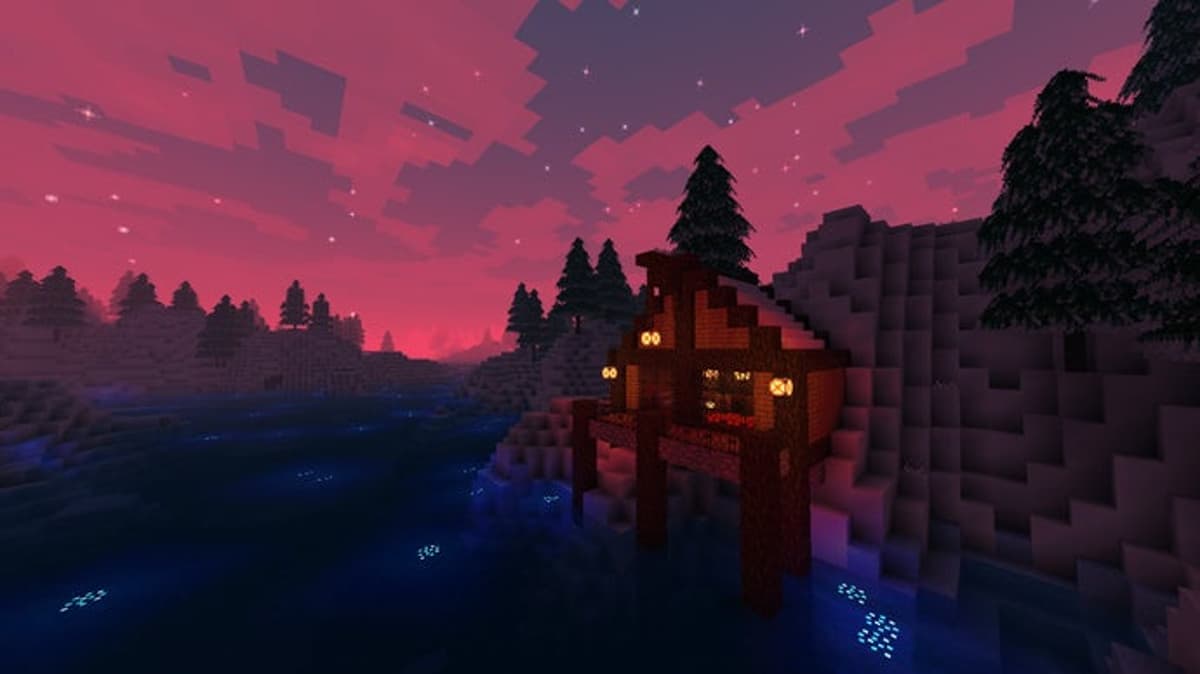
Image 1: A house by a river in Minecraft‑y sandbox game Allumeria.

[https://assetsio.gnwcdn.com/allumeria-microsoft-dmca-strike-minecraft-withdrawn-01.jpg?width=690&quality=85&format=jpg&dpr=3&auto=webp]

The developer behind voxel sandbox Allumeria claims Microsoft have withdrawn a DMCA takedown filed against the game over alleged copyright infringement. According to an email posted on Discord by Allumeria developer Unomelon on February 10, the strike accused their work of using content from Minecraft without Microsoft’s permission.

“Judith Woodward, on behalf of Microsoft Corporation, alleges that Microsoft is the copyright owner of the content found at https://www.minecraft.net/en‑us and that your use of Minecraft content, including but not limited to gameplay and assets, without their authorization infringes their rights.”

A comparison between a screenshot from Allumeria’s Steam page and an official screenshot of Minecraft was cited as an example of the alleged infringement. As is the procedure, Valve automatically yanked the game’s Steam page in response to the takedown notice being filed.

That brings us to today, February 11. In another post to Allumeria’s Discord server, Unomelon shared a follow‑up email from Valve’s DMCA team noting that Microsoft have “withdrawn the copyright claim.” Naturally, the developer is happy with that outcome.

“This is the best case scenario,” they wrote. “I just woke up from a nap so I am still not sure about the details, but whatever happened, it worked. The Steam page and game has been fully restored, and I did not need to file a counter claim, meaning there will be no chance of a lawsuit!”

I’ve reached out to Microsoft for comment. Currently, it looks like the issuing of the takedown might have been an instance of automated flagging prompted by Allumeria’s visual resemblance to Minecraft. The game certainly does look a fair bit like Minecraft, but so does every other voxel sandbox which has riffed on the premise of a blocky world players can survive or build in at will. Hytale is a recent example. That resemblance, of course, doesn’t prove actual bits of Minecraft have been used to create such games.

So, Allumeria’s Steam page is back up, with the game set for release at some point this year. It currently has a demo released in January that you can try, although some users have reported “license errors” after the Steam page’s return.

Steam page: https://store.steampowered.com/app/3516590/Allumeria/

YouTube coverage: https://www.youtube.com/watch?v=eMPa5aPOWV0

Read Original Article
0

Comments

Want to join the conversation?

Loading comments...