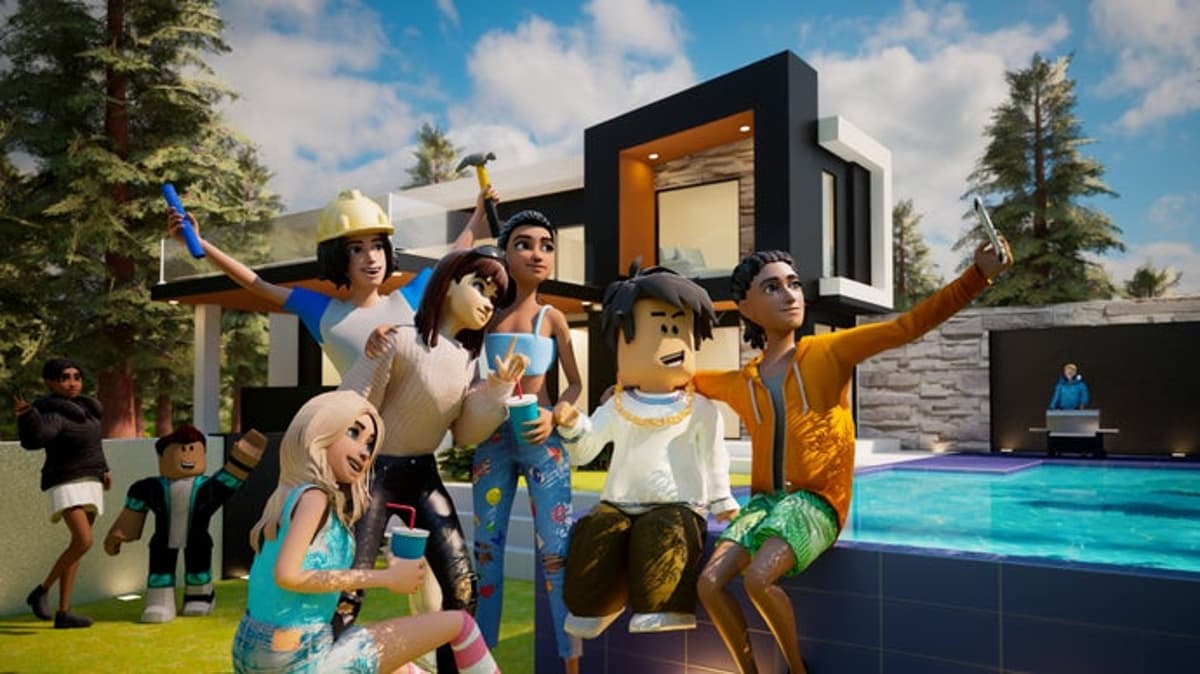
"Turning Solitary AI Dreams Into a Social, Playable Reality" Is the Aim of Roblox's New Upscaling Tech, Which Will Make Sentient Blobs Photorealistic
Companies Mentioned
Why It Matters
By lowering the technical barrier to high‑fidelity content, Roblox Reality could attract more professional developers and boost monetization, while reshaping expectations for real‑time AI graphics in multiplayer platforms.
Key Takeaways
- •Roblox Reality adds AI upscaling for photorealistic game visuals
- •Hybrid architecture separates engine logic from visual generation
- •Current version requires costly compute, cost reduction planned
- •Goal: three‑person team can build a photoreal masterpiece in a week
- •Tech aims to democratize high‑fidelity creation and increase revenue
Pulse Analysis
Roblox’s new "Roblox Reality" platform represents a strategic leap toward AI‑enhanced graphics in a sandbox environment. By pairing the proven Roblox Game Engine with a Video World Model, the system preserves core physics, collision detection, and persistent state while a neural renderer paints photorealistic details onto each frame. The approach mirrors Nvidia’s DLSS 5 in intent—upscaling lower‑resolution assets—but diverges by integrating generative visual layers directly into the multiplayer pipeline, a move that could set a new standard for real‑time visual fidelity.
The promise of democratizing high‑fidelity creation is central to Roblox’s narrative. Baszucki’s claim that a trio of developers could produce a narrative‑driven, photorealistic title in a single week signals a shift from hobbyist blocky worlds to professional‑grade experiences. If the compute cost curve follows typical AI hardware trends, the technology could become affordable for indie studios, expanding Roblox’s creator ecosystem and opening fresh revenue streams through premium content, subscriptions, and in‑game commerce. Competitors like Minecraft have already seen community‑driven visual overhauls, but Roblox’s integrated solution could outpace ad‑hoc modding by offering native, scalable photorealism.
Despite its allure, Roblox Reality faces technical headwinds. Neural world models struggle with temporal coherence, low latency, and consistent multiplayer state—critical factors for competitive gameplay and large‑scale social interactions. Baszucki acknowledges the current need for "expensive compute," implying that early adopters may encounter higher operating costs and potential performance bottlenecks. Overcoming these challenges will require advances in model efficiency, edge computing, and robust integration with the existing engine. Success could redefine the balance between creative freedom and technical constraints, positioning Roblox as a pioneer in AI‑augmented, high‑fidelity multiplayer gaming.
"Turning solitary AI dreams into a social, playable reality" is the aim of Roblox's new upscaling tech, which will make sentient blobs photorealistic
Comments
Want to join the conversation?
Loading comments...