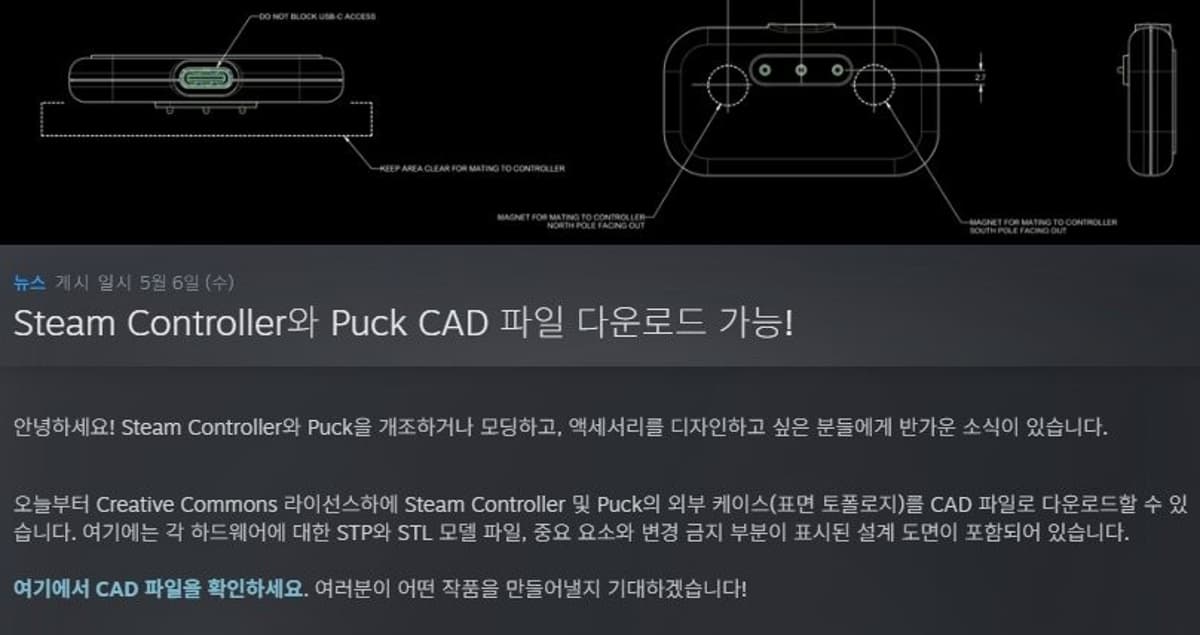
Valve Releases Full External Specifications for 'Steam Deck' Accessory Manufacturing
Companies Mentioned

Valve
Why It Matters
Opening the design files lowers entry barriers for developers, potentially expanding the Steam Deck’s functionality and prolonging its market relevance. The strategy also positions Valve to benefit from a vibrant accessory market while retaining control over commercial licensing.
Key Takeaways
- •Valve released STL and STP files for Steam Deck and Dock.
- •Files enable 3D‑printed accessories and potential hardware mods.
- •Commercial use requires Valve permission; personal use is unrestricted.
- •Open specs aim to grow a community‑driven accessory ecosystem.
- •Restrictions forbid logo use and enclosure of redistributed designs.
Pulse Analysis
Valve’s decision to publish STL and STP files for the Steam Deck and its Dock reflects a broader shift toward open‑hardware models in the gaming industry. By providing precise geometric data, Valve empowers hobbyists and small manufacturers to prototype cases, grips, and docking solutions without reverse‑engineering the device. This transparency not only accelerates innovation but also aligns with the growing maker culture that values customization and rapid iteration. The move signals that hardware vendors can leverage community creativity to extend product lifecycles while avoiding the overhead of a proprietary accessory line.
For third‑party developers, the availability of official CAD files removes a significant technical barrier. Designers can now generate printable prototypes in hours rather than days, testing ergonomics, thermal solutions, or aesthetic variations directly on the device. The open files also invite more ambitious modifications, such as re‑engineering the grip or repositioning rear buttons, which could lead to niche accessories that address specific gamer needs. However, the licensing terms—allowing personal use but restricting commercial exploitation without Valve’s consent—create a clear delineation between hobbyist tinkering and profit‑driven manufacturing, prompting companies to seek partnerships or licensing agreements to bring products to market.
From a business perspective, Valve’s strategy balances ecosystem expansion with brand protection. By encouraging a vibrant accessory community, the company can increase the Steam Deck’s perceived value, driving higher platform engagement and potentially boosting game sales on Steam. At the same time, the prohibition on using Valve trademarks and patented elements safeguards intellectual property while still permitting innovation. This hybrid approach may become a template for other hardware firms seeking to harness user‑generated content without relinquishing revenue streams, positioning Valve as a pioneer in open‑hardware commercialization within the gaming sector.
Valve Releases Full External Specifications for 'Steam Deck' Accessory Manufacturing
Comments
Want to join the conversation?
Loading comments...