Why It Matters
Offloading demanding 3D workloads to the cloud frees local resources and accelerates release cycles, giving studios a competitive edge in delivering high‑quality real‑time experiences. The scalability and flexibility of UPA also lower operational costs for enterprises handling massive asset pipelines.
Key Takeaways
- •UPA offloads compute‑intensive 3D tasks to Unity Cloud
- •Custom, parameterized pipelines integrate Unity and third‑party tools
- •Parallel execution and conditional logic cut processing time dramatically
- •Scales CAD translation, asset processing, and live‑ops workflows enterprise‑wide
- •Visual graph debugging simplifies maintenance and error tracing
Pulse Analysis
Real‑time 3D production has become a data‑heavy discipline, with artists and engineers juggling massive CAD models, texture pipelines, and live‑ops updates. Traditional on‑premise workstations often stall under the load, creating bottlenecks that slow iteration and inflate costs. Cloud‑native automation platforms address this gap by providing elastic compute resources that scale on demand, allowing teams to focus on creative output rather than queue management. Unity Pipeline Automation (UPA) enters this space as a purpose‑built orchestrator, marrying Unity’s native services with external tools through a unified, graph‑based workflow engine.
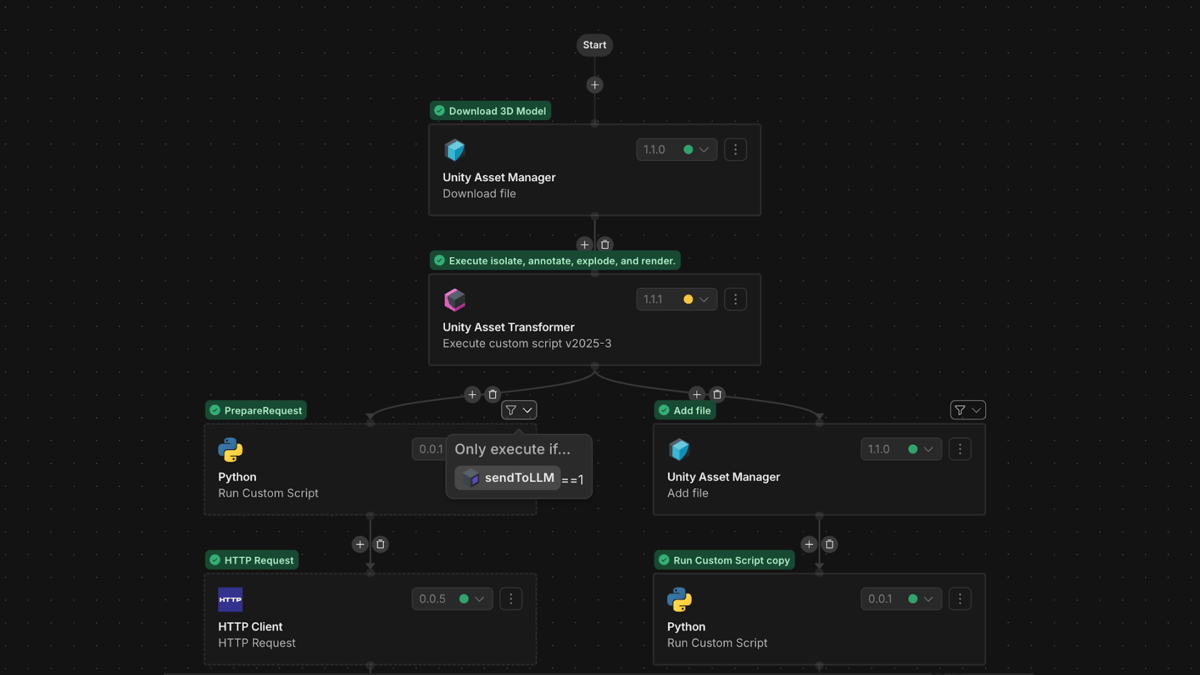
At its core, UPA treats each pipeline as a directed graph where nodes represent discrete actions—downloading assets, running Python scripts, converting files to USD, or sending notifications. Parameterization lets a single pipeline handle diverse datasets without code changes, while conditional steps and dynamic parallelism adapt execution paths in real time. Integration extends beyond Unity’s ecosystem, supporting Virtual Private Cloud deployments and third‑party messaging platforms, which ensures secure data flow and seamless collaboration across enterprise architectures. The result is a dramatic reduction in processing latency; tasks that once tied up workstations for hours can now complete in minutes across distributed cloud instances.
For studios and enterprises, the strategic implications are clear. By centralizing and automating heavy‑lift operations, UPA reduces hardware procurement expenses and minimizes downtime, directly impacting project budgets and time‑to‑market. The platform’s visual debugging tools simplify maintenance, making it easier to pinpoint failures in complex pipelines. As the industry pushes toward larger, more immersive experiences—metaverse environments, digital twins, and live‑service games—scalable cloud automation like UPA will become a foundational component of the production stack, enabling teams to iterate faster and deliver richer real‑time content.
What is Unity Pipeline Automation?
Comments
Want to join the conversation?
Loading comments...