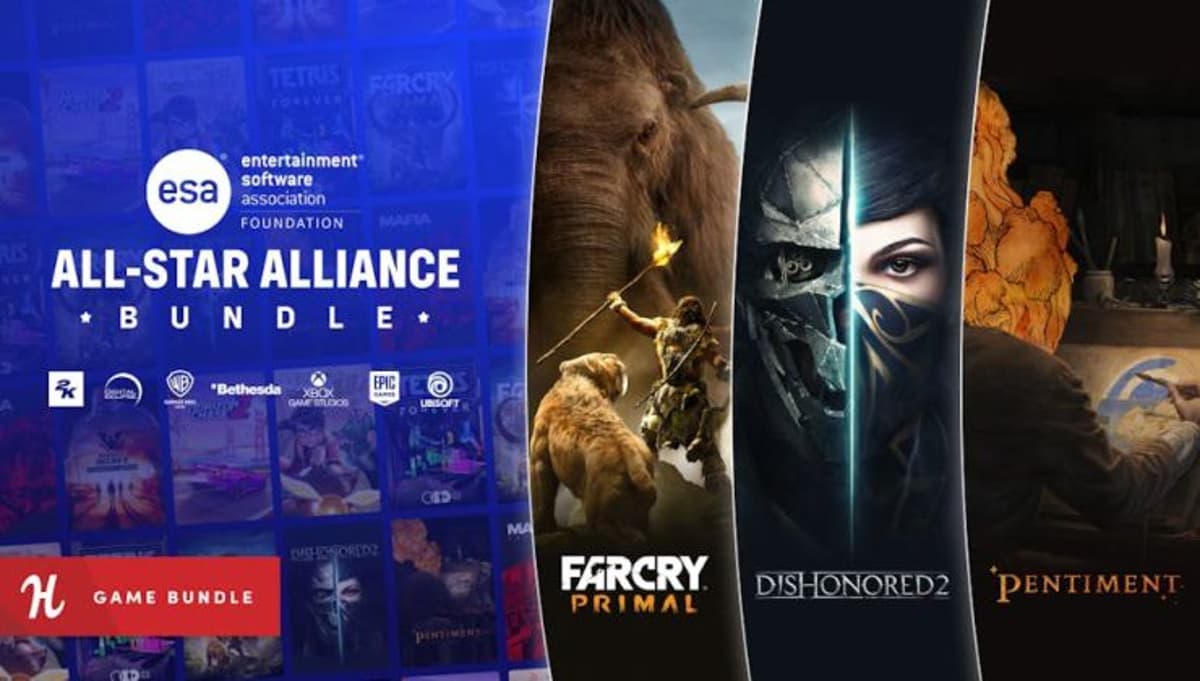
You Can Grab the Mafia: Trilogy, Far Cry Primal, Pentiment and More in This Game Bundle
•March 9, 2026
0
Why It Matters
The bundle demonstrates how curated discount packages can drive volume sales while boosting Linux‑compatible game adoption. It also underscores Humble’s strategic use of partnerships to deliver cross‑platform value.
Key Takeaways
- •Bundle priced at £16.21, over 10 games.
- •Includes Mafia Trilogy with high Steam ratings.
- •Many titles have ProtonDB Gold/Platinum, Linux-friendly.
- •Offers titles across genres, from RPG to sports.
- •Humble Bundle leverages ESA All-Star Alliance partnership.
Pulse Analysis
The latest ESA All‑Star Alliance Humble Bundle showcases a growing trend in the PC gaming market: high‑value, low‑price collections that bundle both legacy franchises and newer indie titles. Priced at just £16.21, the offering includes heavyweight names like Mafia: Trilogy, Far Cry Primal, and Dishonored 2 alongside niche experiences such as Pentiment and Tetris Forever. By aggregating titles across multiple genres, Humble provides a one‑stop shop for gamers looking to diversify their libraries without the financial friction of individual purchases. This approach not only stimulates immediate revenue but also encourages longer‑term engagement with the platform.
A standout feature of this bundle is its emphasis on Linux compatibility, as reflected in the ProtonDB Gold and Platinum ratings for the majority of games. ProtonDB serves as a community‑driven benchmark for how well Windows‑only titles run on Linux via Valve’s Proton layer. By highlighting these scores, Humble signals to the expanding Linux gaming audience that these high‑profile games are accessible, reducing the perceived risk of platform switching. This focus aligns with broader industry movements toward cross‑platform support, where developers and distributors recognize the commercial potential of catering to Linux users alongside Windows and macOS.
The partnership between Humble Bundle and the ESA All‑Star Alliance adds another layer of strategic value. ESA’s network of publishers and developers brings a curated selection of titles that might otherwise remain siloed, while Humble’s distribution expertise ensures seamless delivery across Steam, Epic, and third‑party launchers like Heroic. This collaboration illustrates how bundling can serve as a marketing conduit, amplifying visibility for both established franchises and emerging indie projects. As bundles continue to evolve, we can expect deeper integrations that leverage platform‑specific optimizations, further blurring the lines between traditional retail and digital subscription models.
You can grab the Mafia: Trilogy, Far Cry Primal, Pentiment and more in this game bundle
0
Comments
Want to join the conversation?
Loading comments...