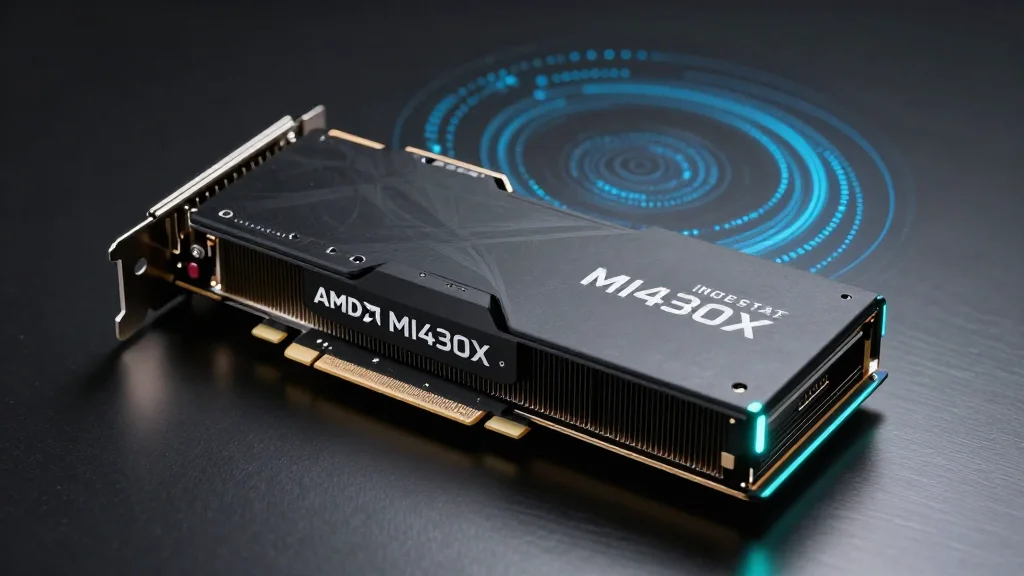
AMD Highlights Instinct MI430X GPU, Future HPC Systems at HPC User Forum
Key Takeaways
- •MI430X targets >200 TFLOPs FP64, six times NVIDIA Rubin
- •AMD positions MI430X as foundation for AI‑for‑Science pipelines
- •Discovery supercomputer (2028) will use MI430X and EPYC CPUs
- •Europe’s Alice Recoque exascale system will run MI430X GPUs
- •HPCUF panel to debate FP64 precision, reduced precision, emulation
Pulse Analysis
The launch of AMD's Instinct MI430X marks a pivotal shift in high‑performance computing, where double‑precision (FP64) throughput has become a decisive factor for scientific discovery. By delivering over 200 teraflops of native FP64 performance, the MI430X not only eclipses the upcoming NVIDIA Rubin architecture but also consolidates AMD's full‑stack approach—pairing the GPU with next‑generation EPYC CPUs. This synergy is critical for workloads that demand both massive numerical fidelity and AI acceleration, such as climate modeling, materials simulation, and nuclear engineering, where even minor precision errors can cascade into flawed predictions.
Beyond raw performance, the MI430X is poised to power the next wave of national supercomputers. The U.S. Department of Energy’s Discovery system, slated for 2028, will integrate the MI430X alongside EPYC processors to create an "AI factory" capable of training large‑scale models and running exascale simulations. Across the Atlantic, Europe’s Alice Recoque project will similarly rely on the MI430X to achieve exaflop‑class HPL performance, underscoring AMD’s growing foothold in sovereign AI and HPC infrastructure. These deployments signal a strategic move toward open, high‑efficiency ecosystems that can sustain both scientific and commercial AI workloads.
In the broader market, AMD’s aggressive positioning challenges NVIDIA’s dominance by emphasizing precision as a market differentiator rather than sheer AI inference speed. The emphasis on FP64, coupled with reduced‑precision and software emulation discussions at the HPCUF panel, reflects an industry trend toward heterogeneous computing models that balance accuracy with energy efficiency. As organizations increasingly adopt AI‑for‑Science pipelines, the ability to generate high‑quality simulation data will become a competitive moat, and AMD’s MI430X appears engineered to be the cornerstone of that emerging paradigm.
AMD Highlights Instinct MI430X GPU, Future HPC Systems at HPC User Forum
Comments
Want to join the conversation?