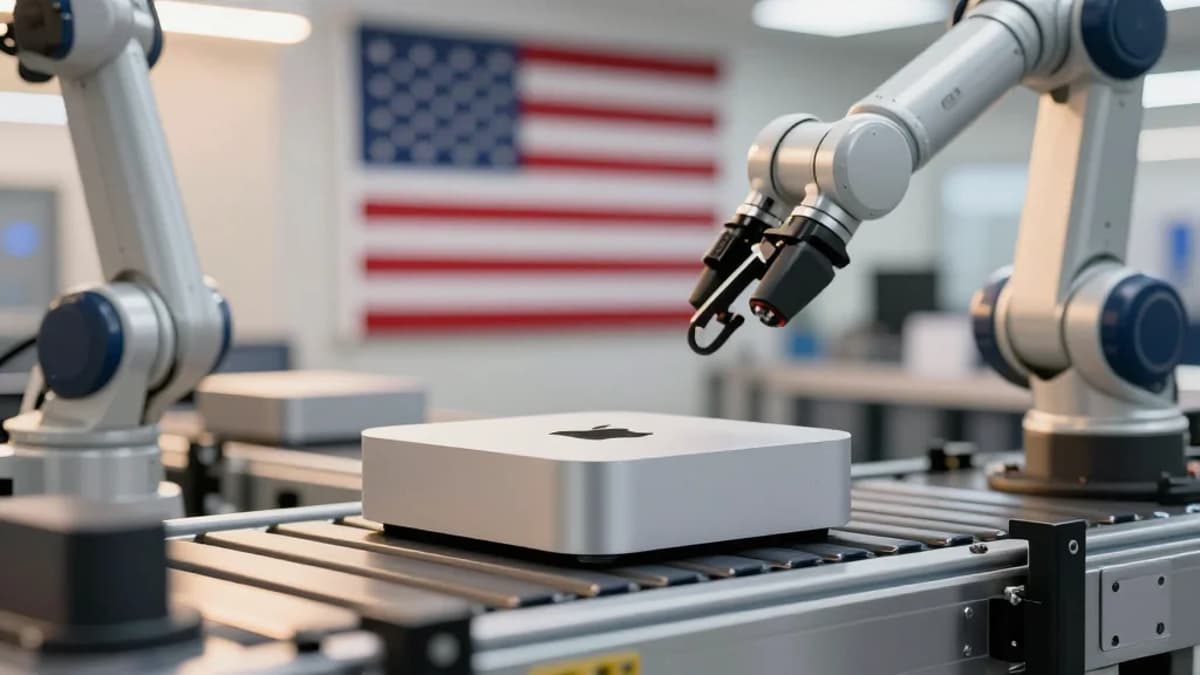
Apple to Start Assembling Mac Mini in the United States This Year
•February 24, 2026
0
Why It Matters
Domestic assembly secures supply chain resilience and reduces exposure to import tariffs, strengthening Apple’s position in the growing low‑cost AI hardware market.
Key Takeaways
- •Mac mini assembly moves to U.S. in 2026
- •Represents ~5% of global Mac sales
- •New M4/M4 Pro chips debut in redesign
- •Apple orders >100M chips from Arizona TSMC
- •Domestic production mitigates tariff and supply risks
Pulse Analysis
Apple’s decision to begin assembling the Mac mini in the United States marks a notable pivot for a product that, while only accounting for roughly five percent of the company’s global Mac shipments, has become a cornerstone for developers and cost‑conscious consumers. The 2024 refresh introduced the first major redesign since 2010, pairing the compact chassis with Apple’s latest M4 and M4 Pro silicon, which promise higher AI‑centric performance at a base price of $599. By bundling powerful processors with a low entry price, Apple positions the Mac mini as an accessible gateway to its expanding personal‑AI ecosystem.
The assembly shift dovetails with Apple’s broader push to localise its supply chain. The company has already committed to purchasing more than 100 million chips from TSMC’s Arizona fab this year, securing a domestic source for the M4 family and insulating production from escalating tariffs on Asian imports. By moving final‑stage assembly stateside, Apple can reduce logistics latency, gain tighter quality control, and respond more quickly to fluctuating demand spikes, especially as Mac mini sales climb amid growing interest in on‑premise AI workloads.
Analysts see the U.S. manufacturing move as a strategic hedge against geopolitical risk while also signaling confidence in domestic demand for affordable, AI‑ready hardware. The localized production could eventually lower unit costs through economies of scale, potentially enabling Apple to introduce new configurations or price tiers without eroding margins. Moreover, the initiative reinforces the company’s narrative of “Made in America” products, which may resonate with enterprise buyers and government contracts that prioritize locally sourced technology.
Apple to Start Assembling Mac mini in the United States This Year
0
Comments
Want to join the conversation?
Loading comments...