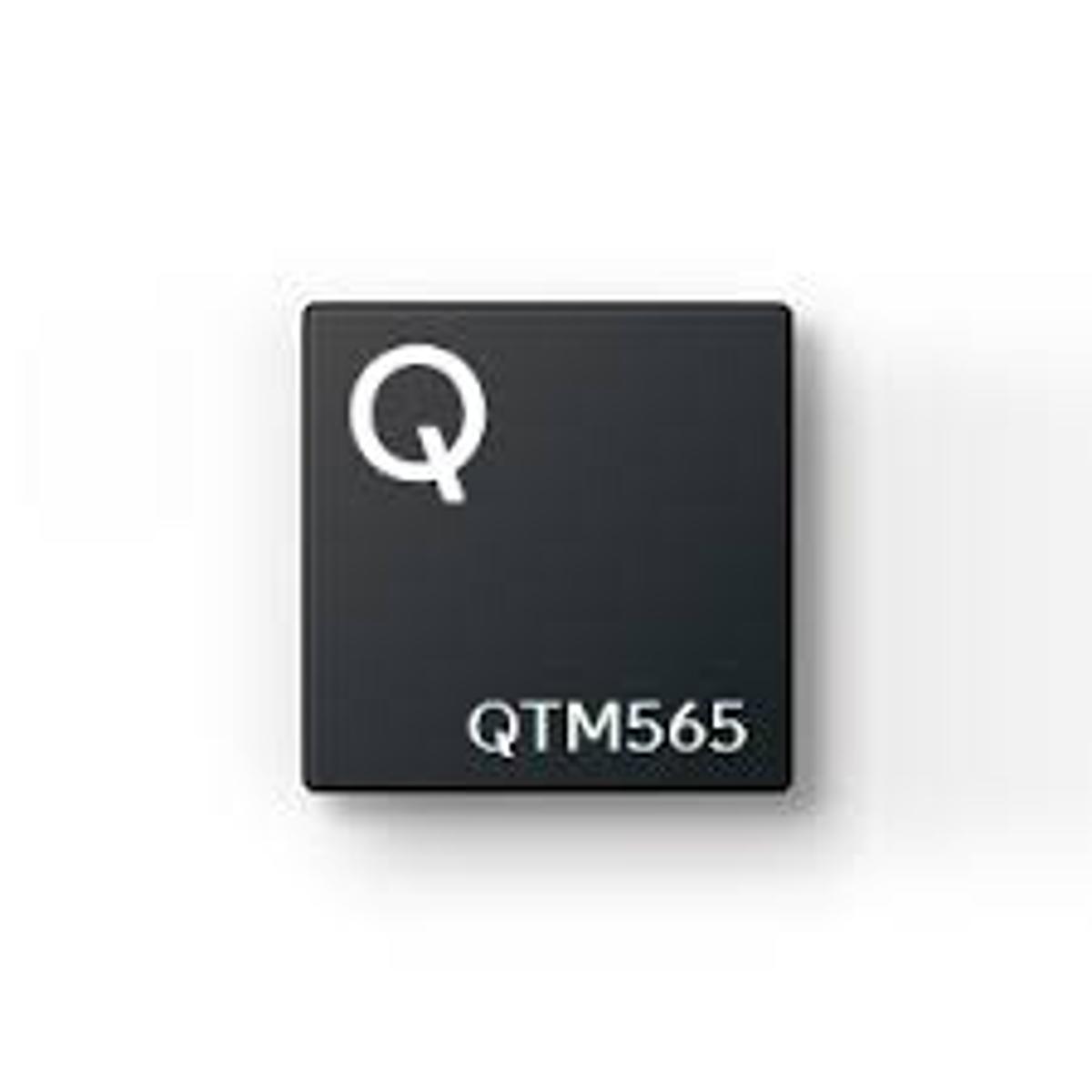
Apple’s iPhone 17 Series 5G mmWave Antenna Module Revealed to Be Powered by Soitec FD-SOI Substrates
•March 2, 2026
0
Key Takeaways
- •iPhone 17 uses Qualcomm QTM565 mmWave module
- •Module built on Soitec FD‑SOI substrates via GlobalFoundries 22FDX
- •FD‑SOI enables tighter antenna spacing and lower parasitics
- •Integration reduces BOM, saves space, improves battery life
- •Marks industry shift to monolithic mmWave SoCs for smartphones
Summary
Independent teardowns confirm that Apple’s iPhone 17, 17 Pro and 17 Pro Max use Qualcomm’s QTM565 mmWave antenna‑in‑package module, which is fabricated on Soitec’s Fully Depleted Silicon‑On‑Insulator (FD‑SOI) substrate via GlobalFoundries’ 22FDX process. The finding validates FD‑SOI as a high‑volume substrate for FR2 5G applications, highlighting its role in achieving tighter antenna element spacing and superior RF isolation. Analysts note that the technology enables monolithic integration of baseband, beamforming, power management and RF front‑end on a single die, shrinking the bill of materials and footprint. This represents a pivotal shift toward highly integrated mmWave SoCs in premium smartphones.
Pulse Analysis
The emergence of Soitec’s FD‑SOI substrate in Apple’s flagship iPhone 17 line underscores a broader industry transition from discrete RF components to fully integrated silicon solutions. By leveraging a thin buried oxide layer, FD‑SOI dramatically cuts parasitic capacitance and enhances electrostatic control, allowing Qualcomm’s QTM565 front‑end die to operate efficiently across the FR2 mmWave band. This architectural advantage not only meets the stringent spacing requirements of phased‑array antenna elements but also delivers the linearity and gain stability essential for reliable high‑speed 5G links.
From a product design perspective, the monolithic integration enabled by FD‑SOI translates into tangible benefits for manufacturers and consumers alike. Consolidating baseband processing, beamforming logic, power regulation and RF front‑end onto a single die reduces the bill of materials, frees valuable PCB real estate, and minimizes interconnect losses that traditionally sap performance. For Apple, these efficiencies support thinner chassis designs or larger battery cells, while the low‑voltage operation of FD‑SOI helps sustain 5G throughput without a proportional increase in power draw—addressing a key consumer concern as carriers expand high‑band spectrum.
Strategically, the commercial validation of FD‑SOI in one of the world’s highest‑volume premium smartphones signals a new standard for the semiconductor ecosystem. Foundries and substrate suppliers are likely to accelerate FD‑SOI capacity, and other OEMs may adopt similar approaches to stay competitive in the evolving 5G and nascent 6G landscape. As mobile connectivity demands higher data rates, tighter integration and power efficiency become decisive factors, positioning FD‑SOI as a cornerstone technology for future wireless platforms.
Comments
Want to join the conversation?