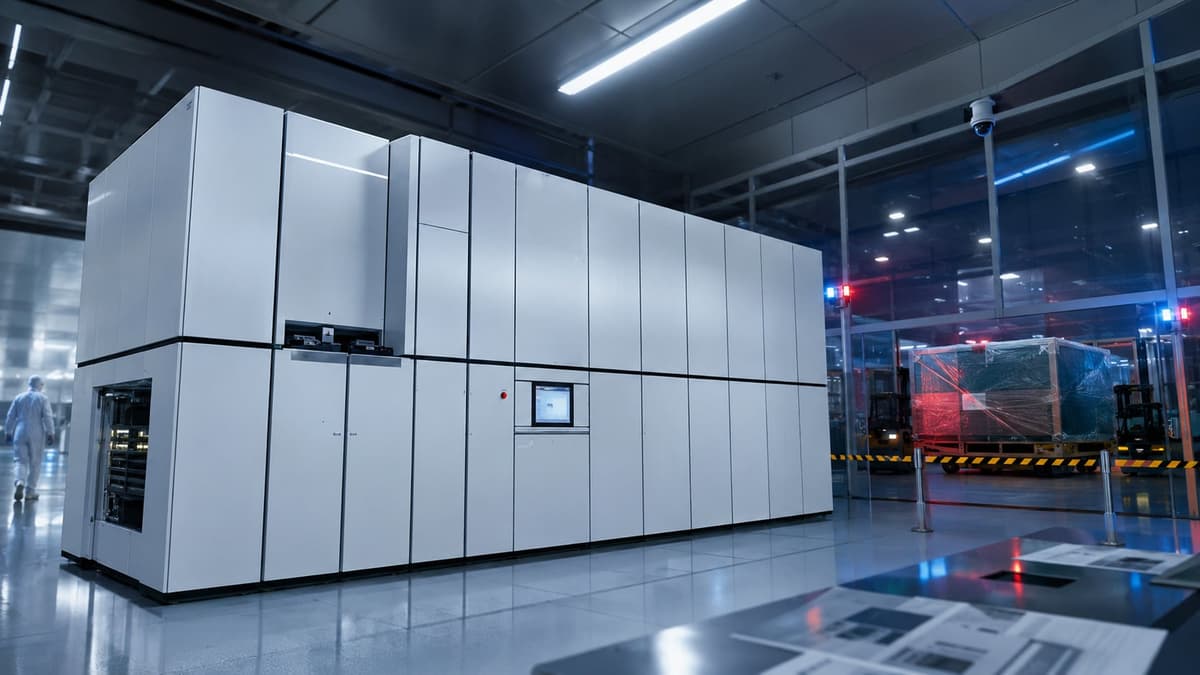
ASML Rejects EUV Allegation: No Lithography System or Special Components Delivered to China
Key Takeaways
- •ASML explicitly denied shipping any EUV machine or related components to China
- •EUV systems weigh ~180 tons and require extensive logistics, making covert delivery unlikely
- •China has DUV lithography tools, but EUV technology remains absent from its fabs
- •US concerns focus on preventing indirect transfer of EUV knowledge and advanced DUV equipment
- •Export compliance relies on strict Dutch and EU dual‑use licensing regimes
Pulse Analysis
Extreme‑ultraviolet lithography is the linchpin of the most advanced semiconductor nodes, and ASML remains the sole supplier of commercial EUV machines. The sheer scale of an EUV system—about 180 tons, 100,000 parts, and a multi‑modal transport chain—means that any legitimate export would generate a massive paper trail, from export licences to freight manifests. This physical reality bolsters ASML’s claim that a clandestine delivery to China is implausible, even as geopolitical tensions heighten scrutiny of the supply chain.
Export controls on dual‑use technology have tightened dramatically since the United States flagged EUV equipment as a strategic asset. The Dutch government, aligning with EU regulations, requires explicit licences for any component that could support EUV production, and it enforces these rules rigorously. While the United States has signaled concern—citing possible leaks of advanced DUV and EUV‑related knowledge—the lack of publicly disclosed evidence keeps the matter in the realm of suspicion rather than proven violation. This regulatory environment creates a delicate balance for ASML, which must navigate market demand while safeguarding compliance.
For China, the absence of a native EUV platform forces reliance on complex multi‑patterning with deep‑ultraviolet (DUV) tools, inflating costs and reducing yield. The country’s parallel effort to develop an indigenous EUV prototype, reportedly involving former ASML engineers, reflects a strategic push to close the technology gap. However, replicating the full EUV ecosystem—optics, lasers, metrology, and service networks—remains a formidable challenge. The ongoing debate highlights how control over a single class of equipment can shape global chip manufacturing dynamics and influence the broader US‑China technology rivalry.
ASML rejects EUV allegation: No lithography system or special components delivered to China
Comments
Want to join the conversation?