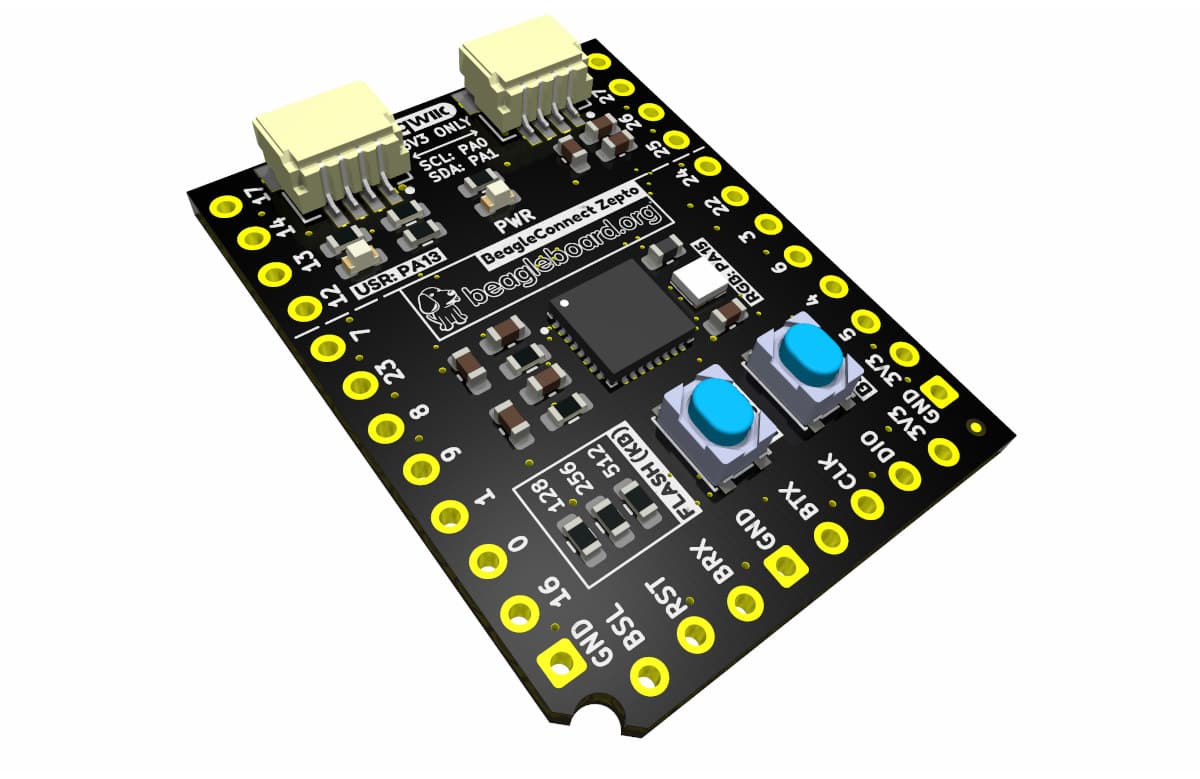
BeagleConnect Zepto – A “$1 Computer” Based on TI MSPM0L1117 Cortex-M0+ MCU
Key Takeaways
- •BeagleConnect Zepto targets $1 price using TI MSPM0L117 MCU
- •Board offers mikroBUS, Qwiic, and optional USB‑C for expansion
- •Zephyr SDK provides MCUBOOT bootloader and Greybus Linux integration
- •Open‑source hardware files and firmware repos are already on GitHub
- •Competing one‑Euro RVPC kit runs on WCH CH32V003 MCU
Pulse Analysis
The BeagleConnect Zepto represents a bold attempt to democratize embedded development by pricing a fully functional MCU board at roughly $1 (USD). Leveraging TI's low‑cost MSPM0L117, the board delivers a 32 MHz Cortex‑M0+ core, 16 KB SRAM, and 128 KB dual‑bank flash in a compact QFN32 package. Its mikroBUS headers give access to an estimated 2,000 Click‑compatible add‑on modules, while dual Qwiic connectors provide I²C, UART, ADC, and GPIO interfaces familiar to the Grove ecosystem. This hardware flexibility, combined with an optional USB‑C power option, makes the Zepto a versatile bridge between hobbyist prototyping and more advanced Linux‑based hosts such as BeaglePlay or BeagleBadge.
On the software side, the foundation is delivering a Zephyr‑based SDK that includes an MCUBOOT‑enabled USB bootloader, ensuring safe firmware updates and a low risk of bricking the device. The Greybus implementation allows the Zepto to expose its mikroBUS peripherals directly to a Linux or Zephyr host, eliminating the need for custom microcontroller firmware in many use cases. Additional firmware stacks—MicroPython for rapid scripting and a Microblocks/Arduino core for educational environments—expand the board’s appeal to developers of varying skill levels. All source code, hardware schematics, and KiCad files are publicly available on GitHub, reinforcing the project’s open‑source ethos.
The $1 price point is not merely a marketing gimmick; it signals a sustainable supply‑chain model where TI, PCB assemblers, and distributors retain modest margins while the board remains affordable for a decade. This approach could reshape the low‑cost IoT market, prompting competitors like Olimex to offer comparable one‑Euro kits based on the WCH CH32V003 MCU. As educational institutions and startups seek ultra‑affordable development platforms, the Zepto’s blend of hardware extensibility, open‑source tooling, and near‑zero cost positions it as a catalyst for broader adoption of edge computing and sensor‑fusion projects.
BeagleConnect Zepto – A “$1 computer” based on TI MSPM0L1117 Cortex-M0+ MCU
Comments
Want to join the conversation?