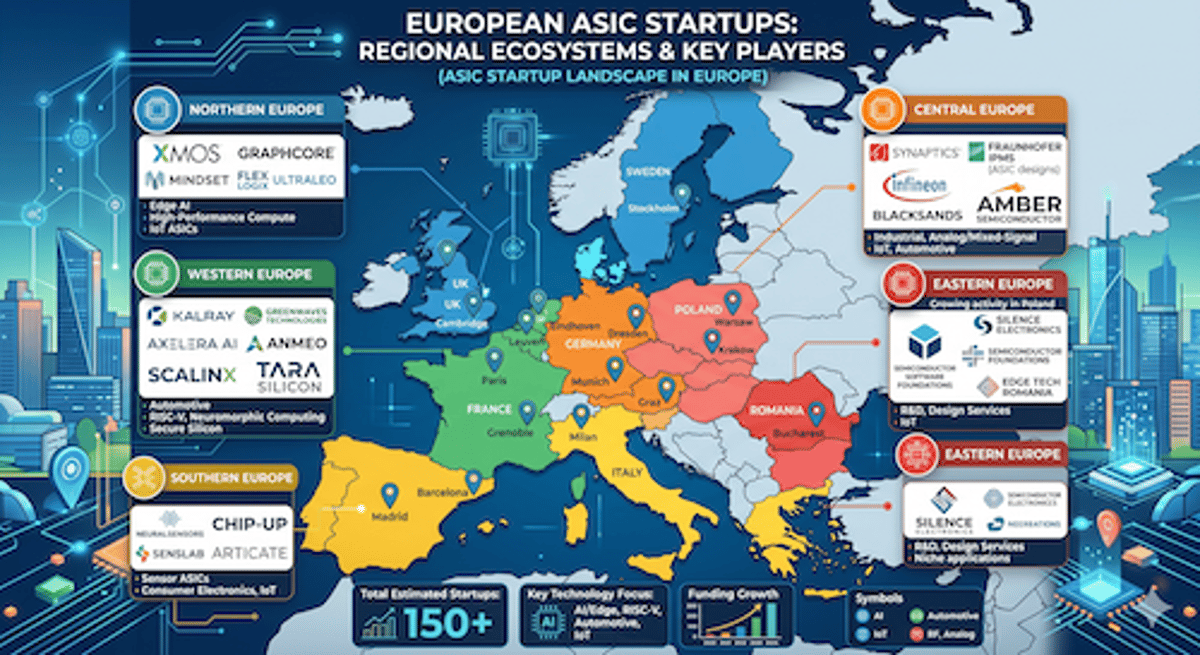
Europe Is Getting Serious About ASIC Innovation
Key Takeaways
- •European ASIC startups raised over $470 M in 2024 funding.
- •EU Chips Act targets 20% global chip market share by 2030.
- •EuroCDP gives startups access to Siemens EDA tools at fixed pricing.
- •Defense spending drives self‑reliant chip development across Germany and Nordics.
- •NXP, Infineon, ST expand into edge AI hardware and software.
Pulse Analysis
European chipmakers are riding a wave of capital that reflects both market optimism and geopolitical urgency. In the past year, a cohort of ASIC startups—Fractile, Axelera, Arago, Vertical Compute and others—have collectively secured more than $470 million, a scale that rivals early‑stage funding in the United States. This influx is not accidental; it follows a strategic pivot toward self‑sufficiency after years of lagging behind US and Asian rivals. Defense budgets in Germany and the Nordic region now earmark funds for home‑grown silicon, turning national security concerns into a catalyst for private‑sector innovation.
Policy scaffolding under the European Chips Act amplifies that momentum. The Act’s sovereign guarantees and VC‑matching funds lower financing risk, while the Chips Joint Undertaking’s European Chips Design Platform (EuroCDP) democratizes access to high‑end electronic design automation tools, notably through Siemens’ EDA suite. By standardizing pricing and providing shared infrastructure, EuroCDP shortens development cycles for small firms and academic spin‑outs, enabling them to compete on a level playing field with industry giants. This public‑private synergy is designed to hit the EU’s ambitious target of capturing 20% of the global chip market by 2030.
If Europe can sustain its funding pipeline and keep regulatory red tape minimal, the continent could reshape the semiconductor landscape. A stronger domestic ASIC ecosystem would not only diversify supply chains but also create export opportunities in automotive, industrial IoT and data‑center AI workloads—segments where European firms already have deep engineering expertise. Investors watching the sector should note the convergence of capital, policy support and defense demand as a potent trifecta that may deliver outsized returns and strategic relevance in the coming decade.
Europe is Getting Serious About ASIC Innovation
Comments
Want to join the conversation?