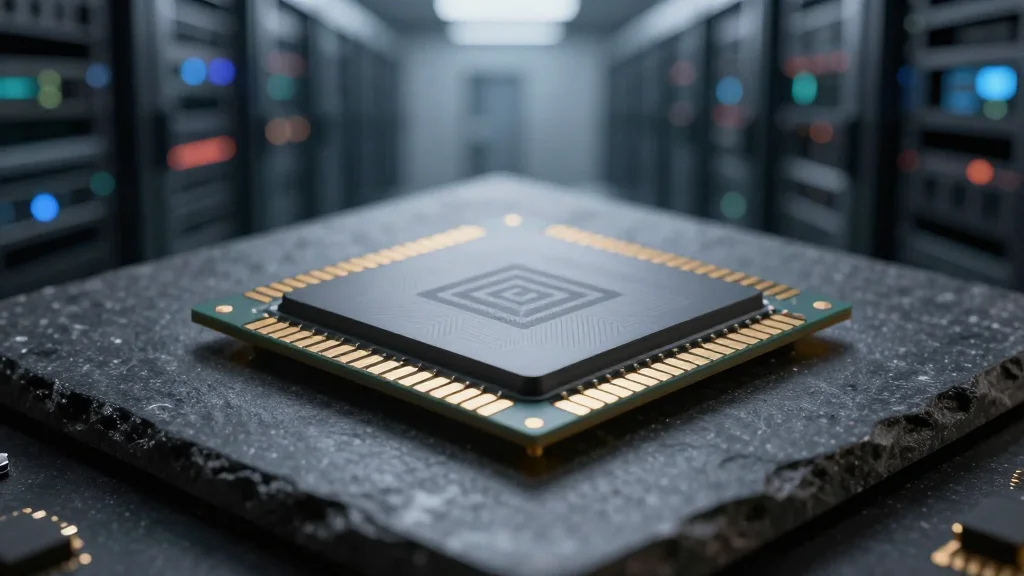
Google to Sell TPU Chips as Gemini Shows Returns
Key Takeaways
- •Google will sell custom TPUs to select data‑center customers.
- •Move challenges Nvidia’s dominance in AI accelerator market.
- •New TPU 8t (training) and 8i (inference) unveiled.
- •Anthropic signed multi‑gigawatt TPU deal, chips due 2027.
- •Multibillion‑dollar chip agreement reached with Meta.
Pulse Analysis
Google’s decision to sell its custom Tensor Processing Units shifts the company from a rental‑only model to a hardware‑product strategy. Enterprises can now install TPUs in their own data centers, gaining lower latency, data‑sovereignty, and predictable costs—areas where Nvidia’s GPUs have long led. The move positions Google to capture a slice of the AI accelerator market, where Nvidia currently holds over 80% of shipments, and could diversify Alphabet’s revenue beyond cloud services. The shift also aligns with a broader industry trend where hyperscale operators are monetizing silicon designs through direct sales, echoing similar moves by Amazon’s Graviton and Microsoft’s Azure‑based chips.
During the Q1 earnings call Google unveiled the TPU 8t, optimized for large‑scale training, and the TPU 8i, tuned for inference workloads. Shortly after, Alphabet announced a multi‑gigawatt agreement with Anthropic, with the next‑generation chips slated for deployment in 2027, and a multibillion‑dollar chip partnership with Meta that could see Meta’s AI infrastructure powered by Google silicon. These collaborations underscore the growing demand for specialized AI hardware and validate Google’s confidence in its TPU roadmap. By supplying TPUs to rivals, Google may also create a new ecosystem that challenges Nvidia’s software stack dominance, encouraging developers to adopt TensorFlow‑compatible tools.
Alphabet reported Q1 revenue of $110 billion, a 22% year‑over‑year rise, with cloud services climbing 63% to $20 billion and operating margins expanding by 220 basis points. The TPU sales initiative could further boost cloud margins by offering higher‑value hardware, while also attracting non‑Google customers seeking on‑prem AI acceleration. As AI becomes a core driver of search and advertising revenue, Google’s expanded hardware portfolio may pressure rivals to reconsider their own chip strategies, accelerating competition in the AI infrastructure space. Investors have responded positively, with Alphabet’s stock gaining 5% after the earnings release, reflecting confidence that hardware diversification will sustain long‑term growth.
Google to sell TPU chips as Gemini shows returns
Comments
Want to join the conversation?