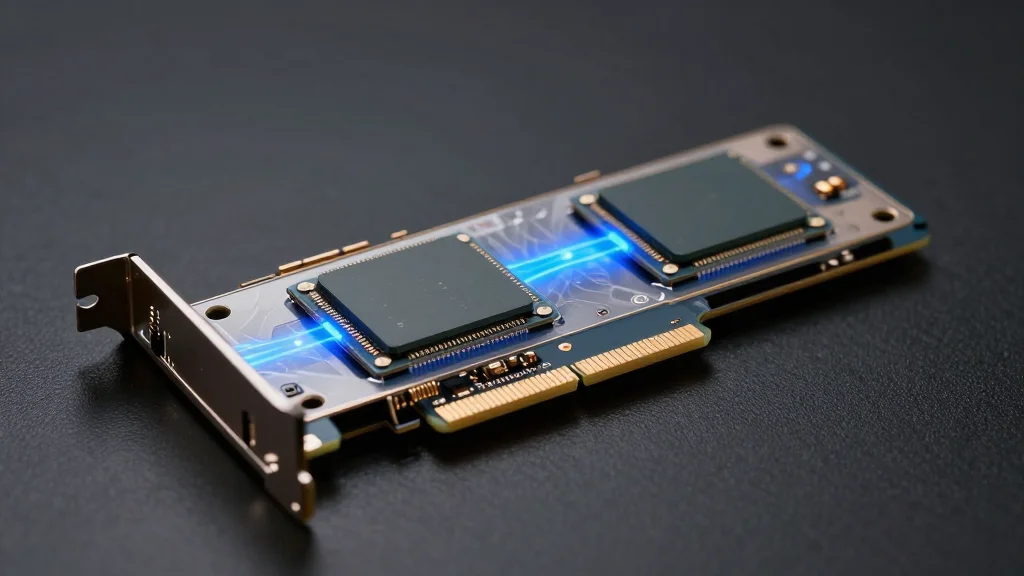
Initial Linux Driver Patches For Smart Data Accelerator Interface "SDXI"

Key Takeaways
- •SDXI driver patches land on Linux kernel mailing list.
- •Supports PCIe-hosted SDXI 1.0 hardware per spec v1.0a.
- •Enables user‑mode, zero‑CPU data movement offload.
- •Developed by AMD, HPE, Microsoft and other contributors.
- •Future roadmap adds character device and configurable contexts.
Pulse Analysis
The Smart Data Accelerator Interface (SDXI) emerged from a collaborative request‑for‑comments process that began last year, aiming to standardize memory‑to‑memory data movement across heterogeneous accelerators. By defining a vendor‑neutral PCIe‑based protocol, SDXI addresses the fragmentation that has long hampered seamless integration of specialized hardware such as AI inference chips, compression engines, and storage offload units. The recent Linux driver patches translate the specification into a usable kernel module, laying the groundwork for broader ecosystem support.
For Linux users and system architects, the SDXI driver unlocks a compelling performance advantage: data can be transferred directly between memory regions under hardware control, bypassing the CPU entirely. This zero‑CPU offload reduces latency, frees core cycles for compute‑heavy tasks, and aligns well with containerized and virtual machine environments where direct device access is critical. Early adopters can already leverage the basic driver to experiment with PCIe‑hosted SDXI 1.0 cards, while the roadmap promises a character‑device interface that will expose contexts to user‑space applications, enabling fine‑grained control and custom operation types.
Looking ahead, the involvement of industry heavyweights—AMD, HPE, Microsoft and others—signals strong momentum toward standardizing accelerator communication on Linux. As data‑centric workloads such as AI training, real‑time analytics, and high‑throughput storage continue to grow, SDXI could become a cornerstone for building scalable, cost‑effective infrastructure. Wider hardware support and the eventual addition of configurability features will likely drive adoption across cloud providers and enterprise data centers, cementing Linux’s role as the de‑facto OS for next‑generation accelerator ecosystems.
Initial Linux Driver Patches For Smart Data Accelerator Interface "SDXI"
Comments
Want to join the conversation?