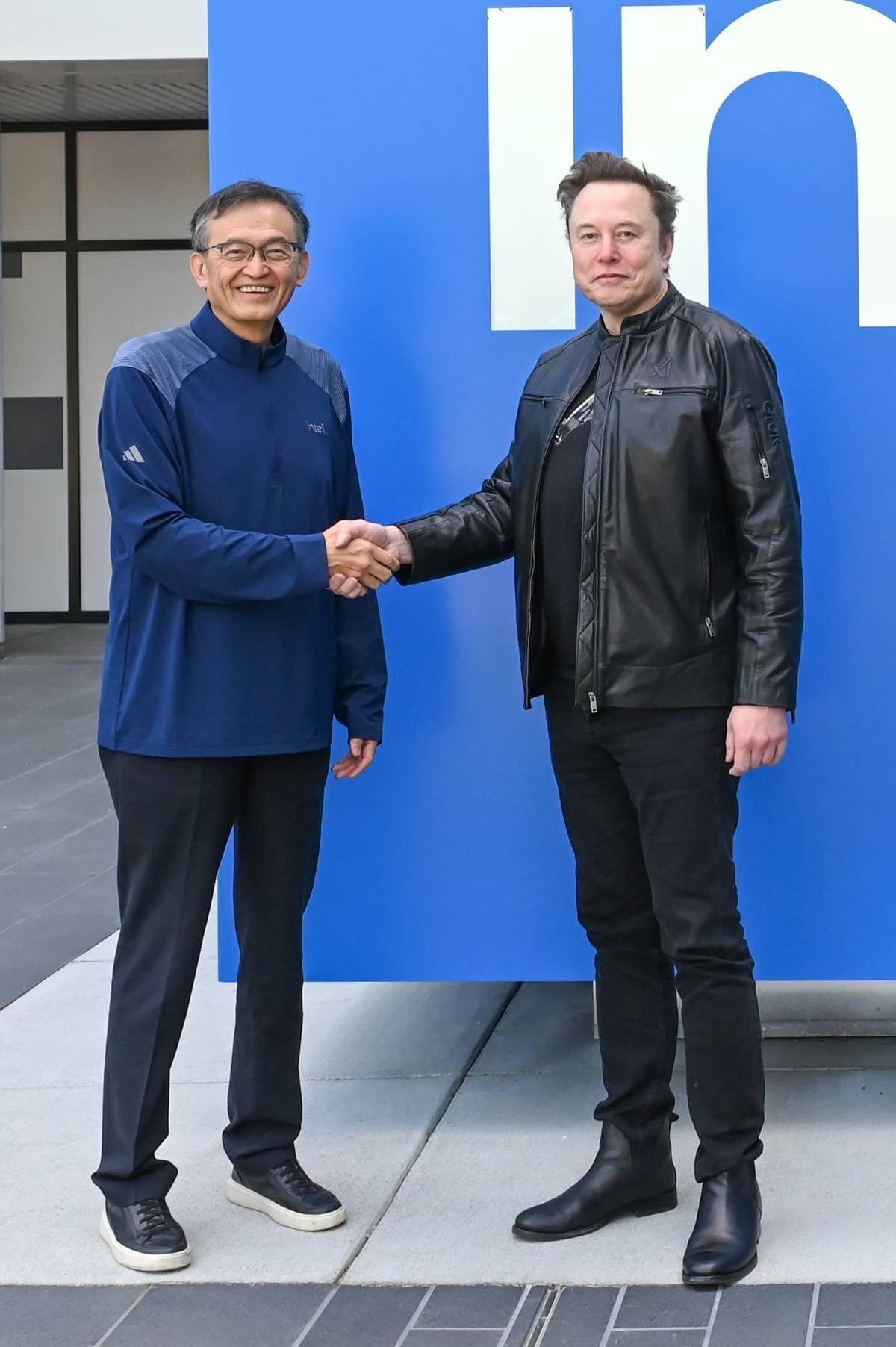
Intel Partners with Tesla and SpaceX on Terafab

Key Takeaways
- •Intel, Tesla, SpaceX, xAI launch Terafab joint venture.
- •Target: 1 terawatt AI compute annually in Austin.
- •Intel’s 18A node in high‑volume production, 60‑75% yields.
- •Government backing: $7.86B grant, $11B loans, 9.9% stake.
- •Advanced packaging positions Intel as TSMC alternative for AI chiplets.
Pulse Analysis
The race to power next‑generation artificial intelligence is no longer a question of algorithmic breakthroughs but of raw silicon horsepower. Industry analysts estimate that global AI training workloads will exceed several exa‑flops by 2030, a demand Intel’s new Terafab venture is designed to meet. By co‑locating logic, high‑bandwidth memory, advanced packaging, testing and photomask production under one roof in Austin, the joint venture can ship roughly one terawatt of compute each year—enough for billions of autonomous robots, robotaxi fleets and space‑qualified processors. This scale dwarfs the output of any single existing foundry.
Intel’s contribution hinges on its 18A (1.8 nm) node, which entered high‑volume manufacturing in early 2026 and already delivers yields in the 60‑75 % range, targeting 80 %+ by 2027. Coupled with the company’s EMIB and Foveros chiplet‑level packaging, the technology offers a fast feedback loop for Tesla’s AI5/AI6 chips, SpaceX’s D3 space‑grade silicon, and xAI’s Grok training accelerators. The integrated approach sidesteps the long lead times typical of external foundry contracts and positions Intel as a credible alternative to TSMC for high‑margin AI workloads.
The project is underpinned by robust U.S. government support: a $7.86 billion CHIPS Act grant, up to $11 billion in low‑interest loans, and an $8.9 billion equity infusion that gives the federal stake a 9.9 % ownership share. This backing not only de‑risks the massive capital outlay but also aligns the fab with national‑security objectives, ensuring a domestic supply chain for critical AI and space technologies. If successful, Terafab could reshape the competitive landscape, accelerate Intel’s Foundry First turnaround, and force rival foundries to rethink capacity and pricing strategies.
Intel Partners with Tesla and SpaceX on Terafab
Comments
Want to join the conversation?