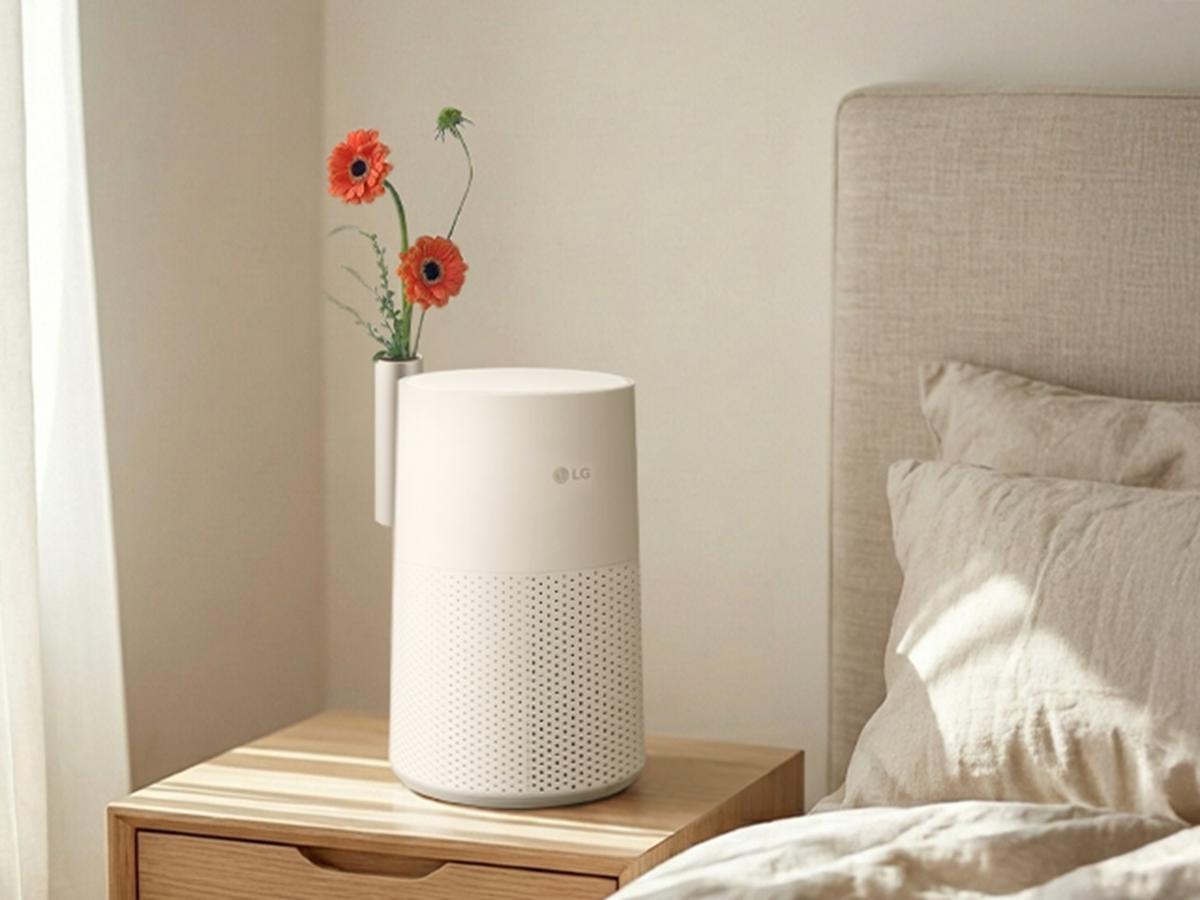
LG Built a Flower Vase Into an Air Purifier
•February 27, 2026
0
Why It Matters
By marrying high‑grade filtration with home‑decor aesthetics, LG could redefine air‑purifier buying criteria in dense urban markets where style and space are premium concerns.
Key Takeaways
- •37% smaller footprint than LG PuriCare 360°
- •Covers 27 m², ideal for single rooms
- •99.999% particle removal, 0.01 µm filtration
- •Whisper‑quiet 26 dB Sleep Mode
- •Modular accessories include leather handle and flower vase
Pulse Analysis
The air‑purifier market has long been dominated by utilitarian designs that prioritize function over form, leaving a gap for products that can blend seamlessly into modern interiors. LG’s AeroMini arrives at a moment when compact living spaces in Southeast Asia are expanding, and prolonged haze seasons are driving demand for effective indoor air solutions. By shrinking the device’s footprint while retaining the proven H‑Filter technology, LG positions the AeroMini as a viable alternative to bulkier tower units, appealing to renters and apartment dwellers who cannot sacrifice aesthetics for health.
Beyond its sleek silhouette, the AeroMini’s performance metrics hold up to its larger siblings. The three‑layer filtration stack removes 99.999% of ultra‑fine dust, bacteria, viruses, and mold spores, and its 360‑degree airflow ensures consistent purification regardless of placement. Sleep Mode’s 26 dB noise level makes it suitable for bedrooms and home offices, while the integrated flower holder leverages upward airflow to keep blossoms fresher—a subtle yet practical benefit that reinforces the product’s lifestyle positioning. The leather carry handle further underscores mobility, allowing users to relocate the purifier as daily routines shift.
From a business perspective, LG’s move signals a broader industry shift toward design‑centric home tech. Competitors such as Dyson, Molekule, and Coway have already introduced aesthetically pleasing units, but LG’s modular accessory strategy could set a new benchmark for product ecosystems. If priced competitively against Xiaomi and Coway’s entry‑level models, the AeroMini may capture a sizable share of the compact‑appliance segment, prompting rivals to explore similar modular concepts. Successful adoption could also accelerate LG’s brand perception from pure electronics to holistic smart‑home solutions, opening doors for future integrations with IoT platforms and subscription‑based filter services.
LG Built a Flower Vase Into an Air Purifier
0
Comments
Want to join the conversation?
Loading comments...