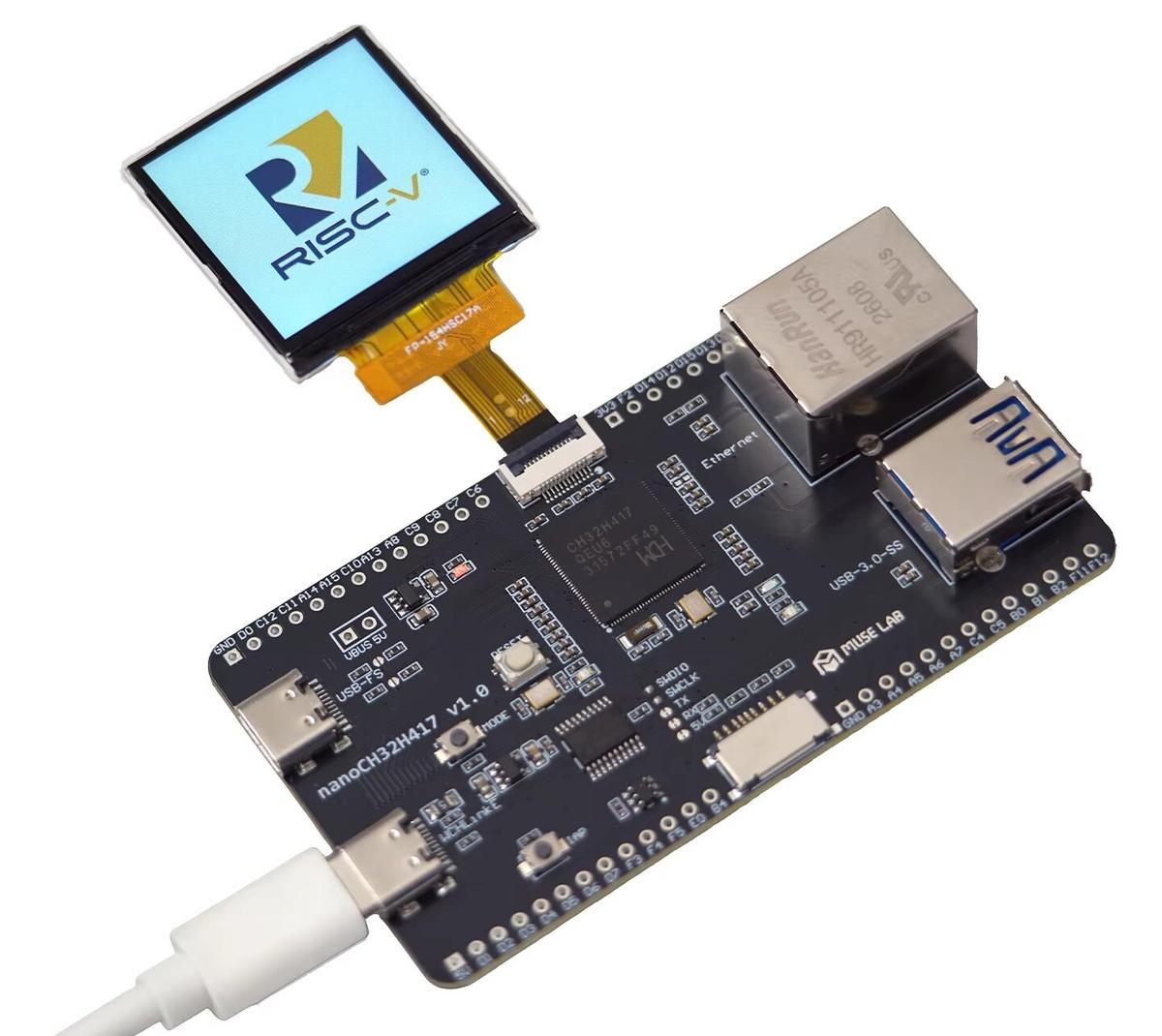
MuseLab nanoCH32H417 – A $17 WCH CH32H417 RISC-V MCU Development Board with USB 3.0, Fast Ethernet
Key Takeaways
- •MuseLab offers third‑party CH32H417 board with onboard debugger.
- •Board supports USB 3.0, dual USB‑C, and 100 Mbps Ethernet.
- •Priced from $17, undercutting official WCH board’s cost.
- •Compatible with MounRiver Studio and open‑source GCC toolchains.
- •Includes microSD slot and SPI LCD connector for rapid prototyping.
Pulse Analysis
RISC‑V’s open‑source instruction set is reshaping the embedded processor landscape, and WCH’s CH32H417 MCU is a notable example of a high‑performance, dual‑core silicon offering up to 400 MHz. While the official development kit provides basic access, the ecosystem has been limited by price and peripheral integration. MuseLab’s nanoCH32H417 board fills that gap, delivering a compact, cost‑effective solution that brings enterprise‑grade interfaces—USB 3.0 SuperSpeed, dual USB‑C, and Fast Ethernet—directly to hobbyists and engineers. This democratization of advanced I/O lowers the barrier for developers to experiment with bandwidth‑intensive workloads such as video streaming, data acquisition, and edge AI.
The board’s hardware design emphasizes rapid prototyping. An integrated WCHLink‑E debugger removes the need for separate programming hardware, while four 13‑pin headers expose GPIO, power rails, and serial lines for straightforward expansion. Storage options include a 960 KB on‑chip flash, 896 KB SRAM, and a microSD slot for larger datasets. The inclusion of a 12‑pin FPC connector for SPI LCDs enables quick visual feedback, making the platform suitable for UI‑driven devices. At a starting price of $17, it undercuts the official kit by a significant margin, positioning MuseLab as a cost‑leader in the RISC‑V development space.
Software support rounds out the offering. The board works with WCH’s MounRiver Studio IDE, which provides a familiar Windows‑centric workflow, and the open‑source ch32fun GCC toolchain offers a Linux‑friendly alternative. MuseLab’s GitHub repository supplies schematics, documentation, and a starter GPIO project, reducing time‑to‑first‑blink for newcomers. As more companies adopt RISC‑V for low‑power, high‑performance applications, development boards like the nanoCH32H417 will become essential reference designs, fostering a richer ecosystem and accelerating time‑to‑market for innovative embedded solutions.
MuseLab nanoCH32H417 – A $17 WCH CH32H417 RISC-V MCU development board with USB 3.0, Fast Ethernet
Comments
Want to join the conversation?